By Joseph Heilemann
Discovery of Hydrothermal Vents
Found deep along the ocean floor, hydrothermal vent systems are some of the most extreme environments on Earth. When scientists discovered the existence of hydrothermal vent systems in 1977 during an exploration of the Galápagos Rift, they were surprised to find thriving biological communities living in complete darkness. The existence of these communities contradicted previous scientific beliefs that ecosystems ultimately depend on solar energy.
How Hydrothermal Vents Form
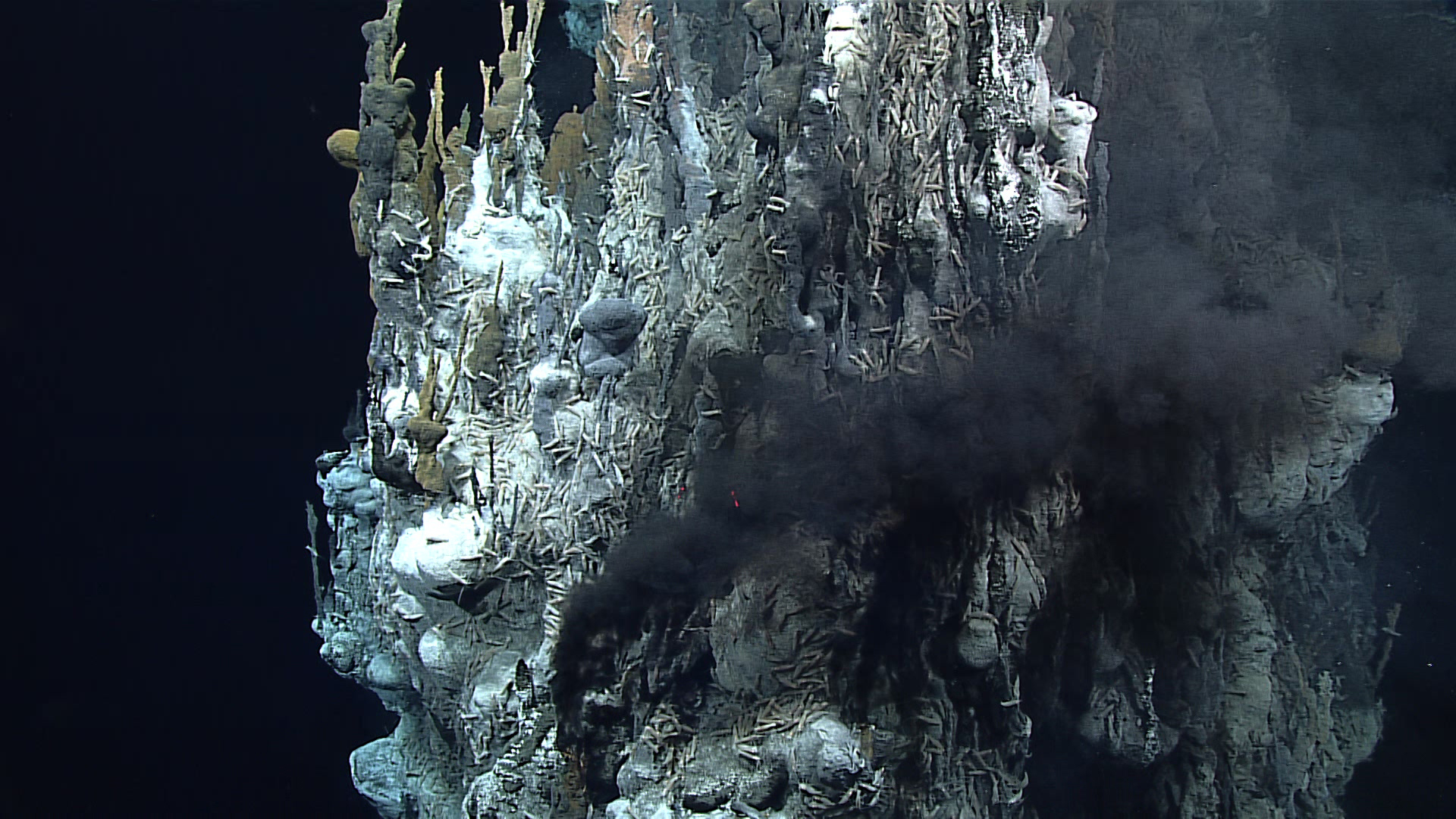
Hydrothermal vent systems are made along mid-ocean ridges where tectonic plates pull apart and allow seawater to penetrate cracks in the crust, where it comes into contact with hot magma below the crust. As the water heats up and rises back toward the ocean floor, it dissolves various minerals and forms superheated fluids that emerge from these vents as black smokers.
The heated water undergoes chemical reactions that remove oxygen, magnesium, and sulfates while dissolving metals such as iron, zinc, copper, lead, and cobalt from the surrounding rock. When the mineral-rich fluid comes into contact with cold ocean water, black-smoker chimneys begin to form from dissolved minerals and sulfides falling out of solution.
Chemosynthesis and Deep-Sea Life
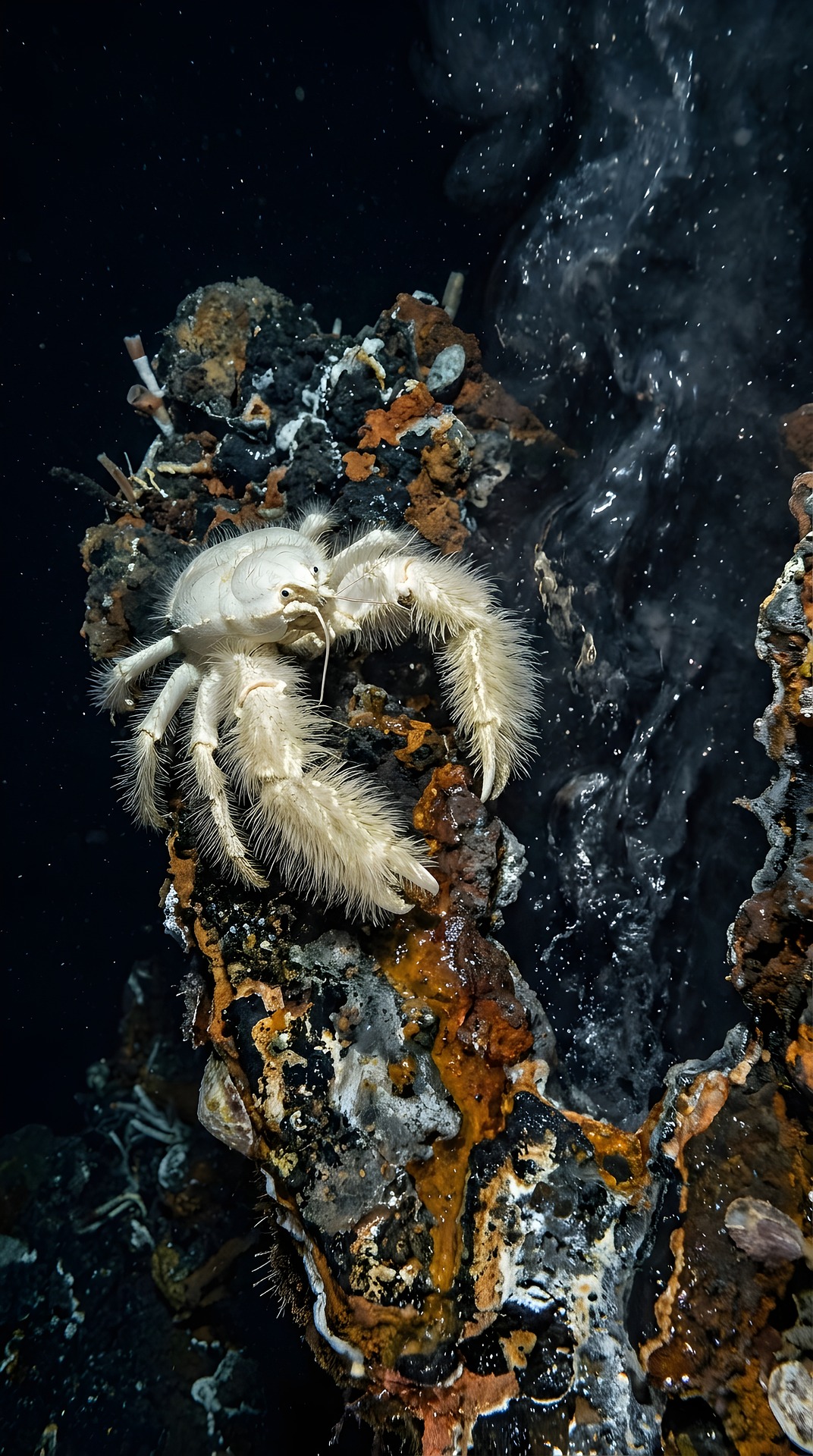
A vast majority of the world’s ecosystems derive energy from sunlight; however, the biological communities along the margins of hydrothermal vents depend on chemosynthesis as the mechanism for deriving energy to survive. Instead of relying on photosynthesis as a source of energy, microorganisms living near hydrothermal vents derive their energy from chemical compounds present in vent fluids, most notably hydrogen sulfide.
These microorganisms also serve as the foundation of the hydrothermal vent food web for many other forms of life. Some of the more noticeable organisms found at hydrothermal vents include tube worms, mussels, shrimp, and crabs. Tube worms are especially interesting because they depend upon a mutualistic relationship with chemosynthetic bacteria living inside their tissues in order to survive in the complete absence of sunlight.
Why Hydrothermal Vents Matter
The discovery of hydrothermal vents has profoundly impacted our understanding of the ocean and the boundaries of where we can find life on Earth. Hydrothermal vent ecosystems are considered unique systems because they arise from the heat and dissolved minerals that flow, unimpeded, from beneath the Earth’s crust into the surrounding seawater. Furthermore, scientists are keenly interested in the organisms that live at these vents owing to their biochemical adaptations; this could lead to promising biotechnological and medical applications. Additionally, scientists consider hydrothermal vent ecosystems possible analogs of the origins of life on Earth and potential indicators of where other life exists elsewhere in the universe (i.e., on other planets or moons that contain subsurface oceans).
However, the mineral-rich deposits found surrounding hydrothermal vents continue to attract the attention of mining companies; therefore, vent ecosystems are increasingly at risk due to human-induced activities, such as those carried out by companies in search of deep-sea mining opportunities.