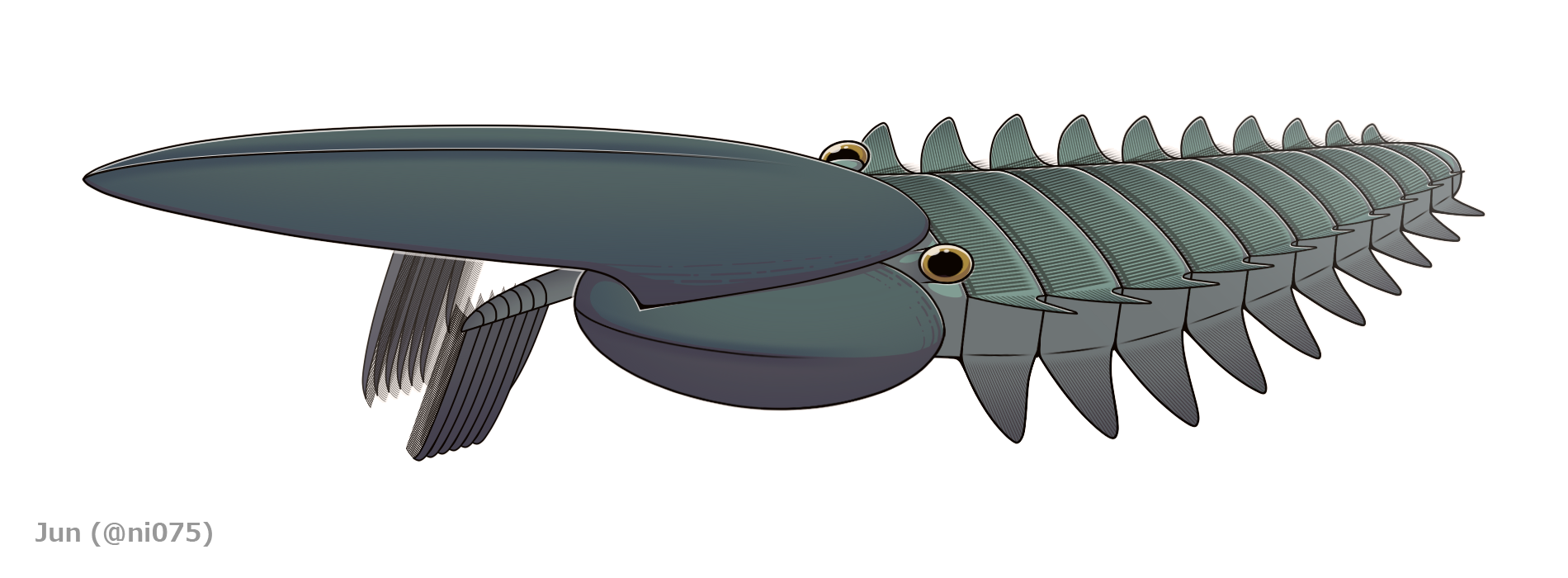
Large animals over 99 pounds or 45 kilos are defined as Megafuana. Given this definition, we can look at what time period this first evolved. We are starting this investigation in the Ordovician Period, starting around 500 Mya, because prior to this period, most organisms were far too small to be Mega fauna. Many organisms in this period are considered Megafauna. The earliest known Megafauna is an arthropod called Aegirocassis benmoulae, which lived 480 Mya. The key reason that this animal was so large, 6’6” and around 99 pounds, was that they were filter feeders. Which leads to the question of why being so huge is so beneficial.
In the Ordovician it was supremely beneficial to be larger, as not only could animals better filter feed, they also had very few natural predators. As time went on and more and more mutations occurred and animals became larger and larger, for those two exact reasons. However, as animals got larger, and structures got more complex, jaws evolved, as well as other predatory structures. In this evolutionary period, the larger an organism is, the better it is at being an apex predator. These more complex structures helped benefit apex predator survival. So not only were there virtually no animals that predated upon the apex predator, it had many prey to choose from. Furthermore, there are even more benefits to being large. Such as sexual selection, and thermal regulation against colder weather. Which helps explain why we find more large organisms closer to the poles.
However, animals continued to evolve larger body sizes once they became Megafauna. They were further naturally selected to be larger eventually producing organisms like placoderms. Nearly 8 meter long heavily plated monsters, that well exceeded the weight of Megafauna, some reaching over 4 tons. This suggests the need for a new threshold of giant animals, as the difference between 100 pounds and 1000 is very vast. These would be organisms that reach a weight of one ton that would be defined as Tortafauna. These organisms first started to emerge in the post cambrian period and are present in the modern day. The reason that this worked so well is due to filter feeding animals, as well as many other species evolving to be bigger over time as well. Predatory Tortafauna organisms would not be able to survive if most other species remained small as they need high amounts of calories in order to retain their lifestyle.
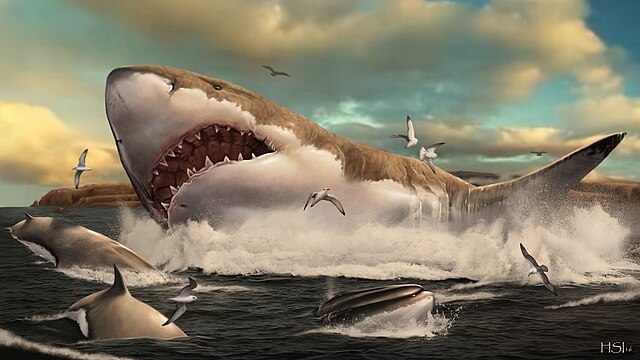

Looking even a million years ago from today, there were many Tortafauna that we no longer see. Looking at the fossil record it is more than clear that we have lost much of Tortafauna diversity. This is due to a multitude of factors, but to sum up why we see so much less of them, is that the environment just doesn’t support their niche as much anymore. Think of how recently the Megalodon was alive, it only went extinct 3.4 million years ago. The food supply simply wasn’t around anymore, and they died out. There’s also the human element to consider. Humans took out many Tortafauna, such as whales or the Stellar’s Sea Cow.
The environment of the modern day is far better suited for smaller, faster animals, rather than dueling behemoths. However, none of this is to take away from the giant predatory organisms we still do have today. Such as the sperm whale, giant and colossal squid, elephant seals, crocodiles, and a handful of sharks. The other marine Tortafauna we have today are filter feeders, such as baleen whales, and large filter feeding sharks. It is disheartening to see how few we have remaining on this earth. Which is why it is integral that we ensure their survival, otherwise we could face an issue of Tortafauna extinction. So losing them could result in catastrophic results for the oceanic ecosystem. The vast majority of these species are keystone species, as they occupy the niche of filter feeders and apex predators.
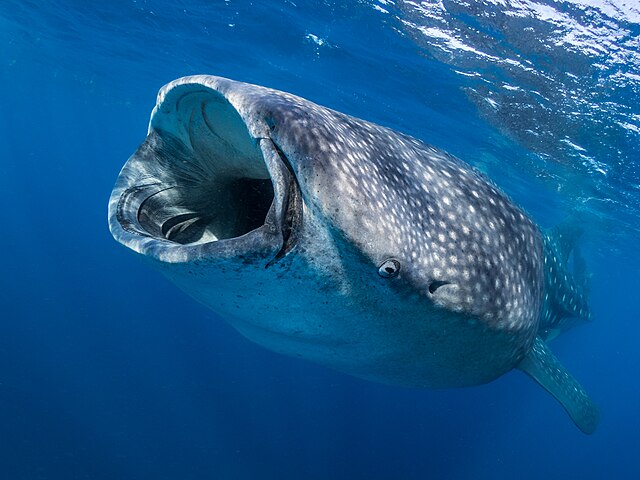
Featured image of whale shark filter feeding is provided by wikimedia user MarineMegafuana
