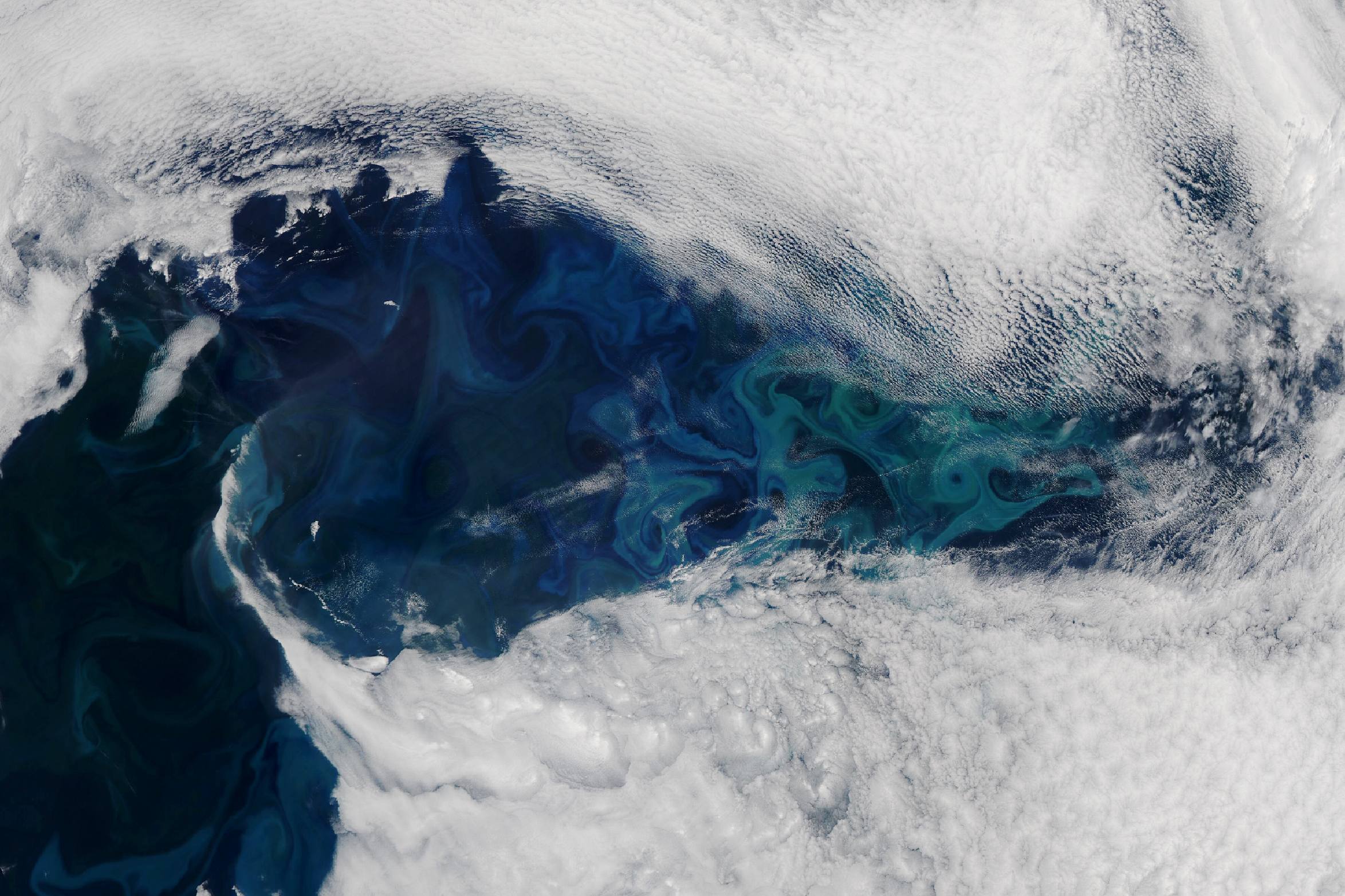
As spring arrives in the North Atlantic, the anticipation for a yearly smorgasbord builds. The violent winter storms that mixed the water column, pushing phytoplankton far below the maximum depth where photosynthesis can occur, subside, and the ocean stratifies, concentrating phytoplankton near the surface. Increased, consistent light availability, combined with nutrient-rich water pulled from deeper ocean layer, creates optimal conditions for the spring bloom, building the foundation for entire ecosystems.
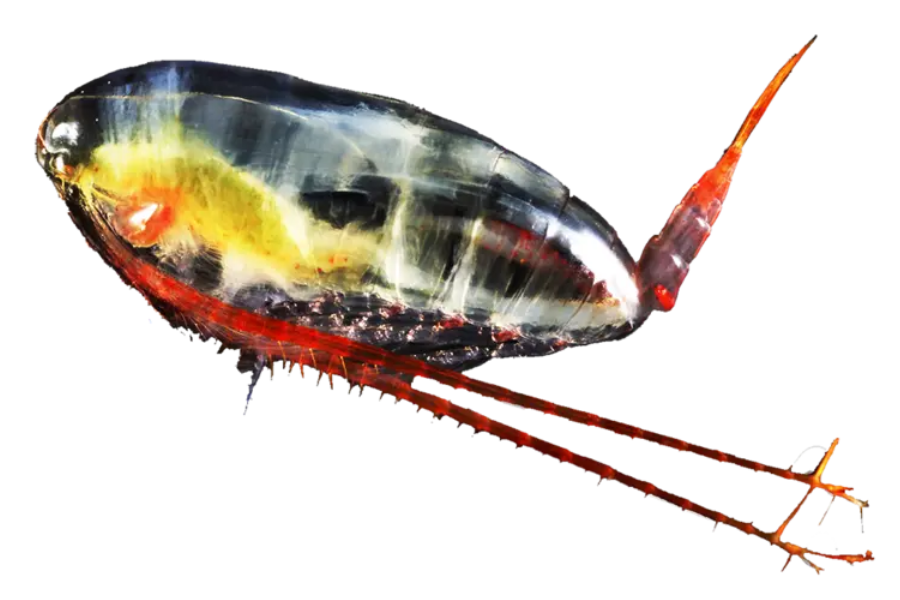
One noteworthy participant in this yearly cycle is a copepod, Calanus finmarchicus. It is a dominant species, being one of the most ubiquitous zooplankton and forming a major share of pelagic biomass. During its feeding season, C. finmarchicus becomes extremely lipid-rich and -dense, with fatty acid concentrations reaching as high as 76%. Combined with its tendency to aggregate in dense patches, it is a keystone prey species for commercially important species, such as herring, capelin, cod, and lobster. Baitfish such as herring and capelin are in turn food sources for organisms in higher trophic levels, including tuna, striped bass, salmon, and seabirds. Additionally, baleen whales, such as the critically endangered North Atlantic Right Whale, feed heavily on C. finmarchicus-dominated copepod aggregations.
However, record-breaking warming in the North Atlantic is forcing C. finmarchicus aggregations to move north. These shifts have also been observed in the species’ predators. Lobster stocks have moved northward more than 100 miles over the last century, a trend correlated with crashes in the southern New England lobstering industry. While Maine has enjoyed a boom in lobster landings, catches are already decreasing, from 123-133 million pounds in 2012-16, to around 100 million pounds in more recent years. Other species more commonly found in the mid-Atlantic such as black sea bass, butterfish, and longfin squid are steadily moving northward, further pressuring already threatened species.
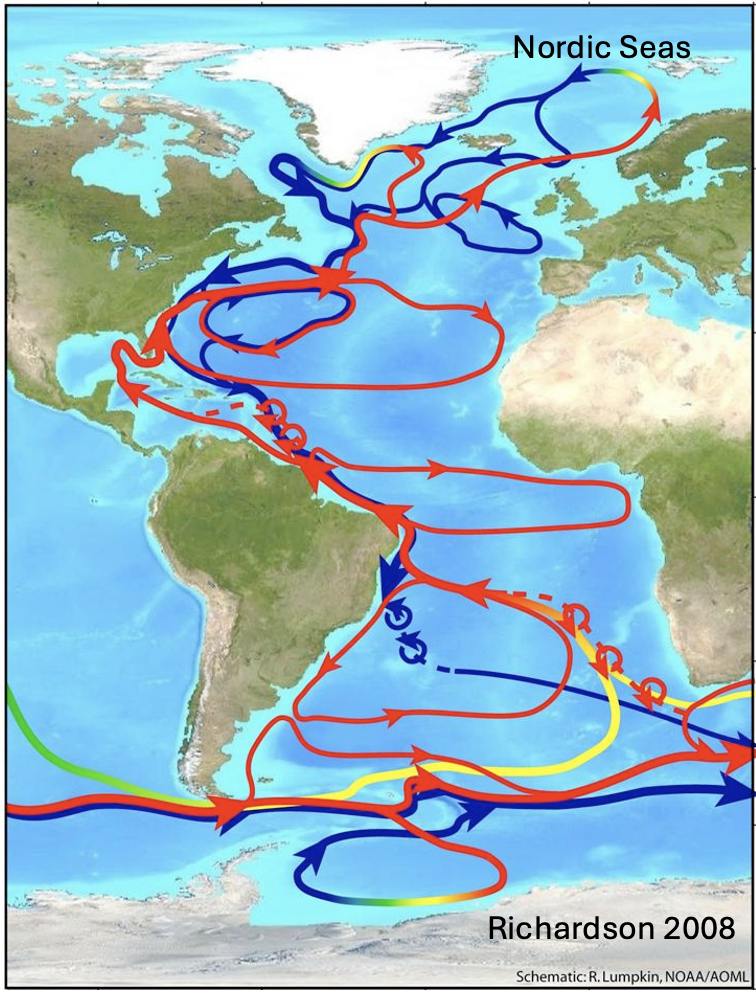
The future of the spring phytoplankton bloom itself is also uncertain. As glaciers melt due to global warming, Greenland and Labrador Sea surface water is being diluted, becoming less saline. This weakens the AMOC (Atlantic Meridional Overturning Circulation) since less surface water downwells in the Arctic as the salinity-induced density contrast between surface and bottom water decreases. As the AMOC weakens, the northward arm of the Gulf Stream will likely follow as reduced downwelling means that less warm water needs to move north to replace it, reducing the temperature contrast between the North Atlantic and the Arctic. Therefore, the winter storms that bring the deep, nutrient-rich water necessary for the spring bloom could wane, consequently reducing the magnitude of the spring bloom.
While a total collapse of the North Atlantic spring phytoplankton bloom is unlikely, we as Earth’s stewards are responsible for the preservation of the diverse, interconnected nature of the oceans, the weather, and the organisms experiencing all of it. Life as a whole would persist even if the spring bloom were to disappear. However, a planet without oceans dense with so much microscopic life that they are visible from space is certainly duller.
Cover Image:
Spring bloom from space, NASA Earth Observatory image by Lauren Dauphin, using MODIS data from NASA EOSDIS LANCE and GIBS/Worldview