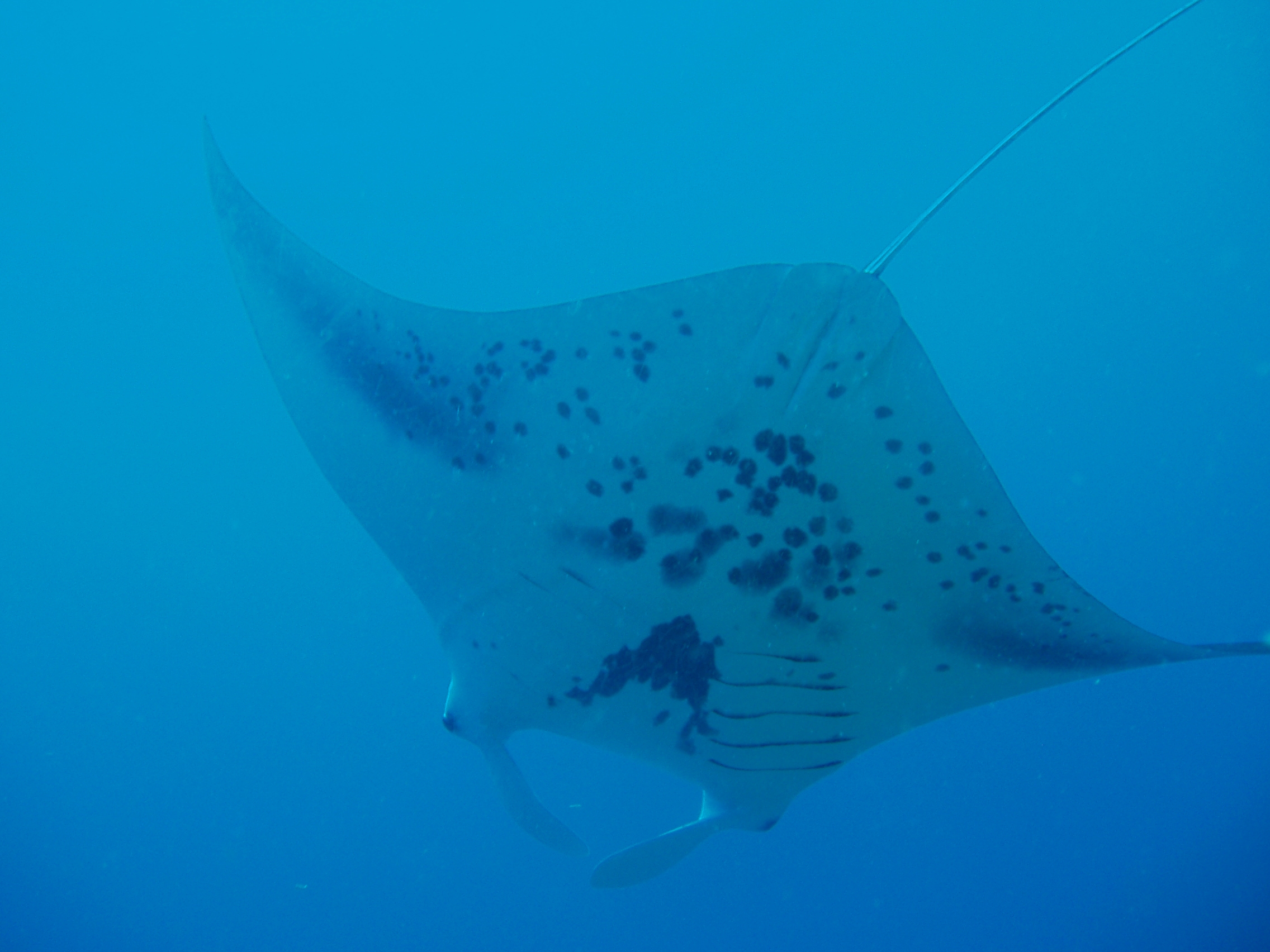
Imagine something the size of a small car gliding effortlessly through the ocean. That’s what it’s like to see a manta ray. Despite their large size and powerful appearance, manta rays are completely harmless, which is why they are often called “gentle giants of the ocean.”
Manta rays, including Manta birostris and Mobula alfredi, are found in warm waters around the world. Unlike many large marine animals they don’t hunt other fish. Instead, they feed on plankton which are tiny organisms that drift in the water. As they swim, they open their mouths and use specialized fins near their heads to guide water and food inside. It may look dramatic, but they are simply filtering their meals from the ocean.
One of the most interesting things about manta rays is their behavior. Divers often report that mantas approach slowly and seem curious rather than scared or territorial. They may circle nearby or return multiple times, which has led scientists to believe they may have relatively high intelligence for fish. Research on manta ray ecology and cognition also points to their unusually large brain-to-body ratio compared to other fish.
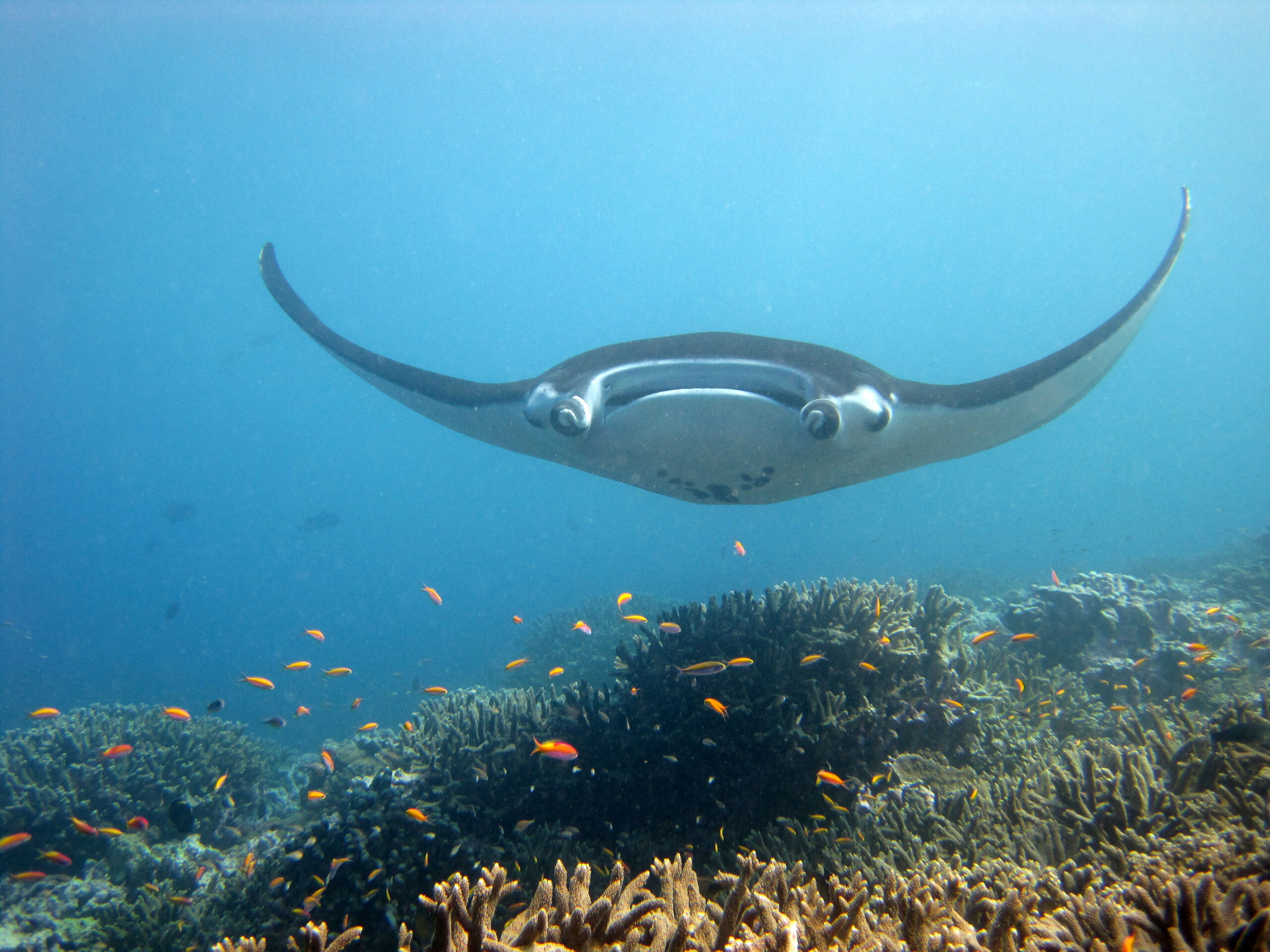
Manta rays also visit “cleaning stations” where small fish remove parasites from their bodies. At these sites, mantas will hover or move slowly to allow cleaner fish to do their job. This relationship benefits both species and highlights how interconnected marine ecosystems are.
Despite being extremely calm, manta rays do face serious threats. They are often caught accidentally in fishing gear, and in some places they are targeted for their gill plates. This is a threat because they reproduce slowly and typically produce only one offspring every few years. This means their populations are especially vulnerable to decline and slow to recovery when fishing pressure is added.
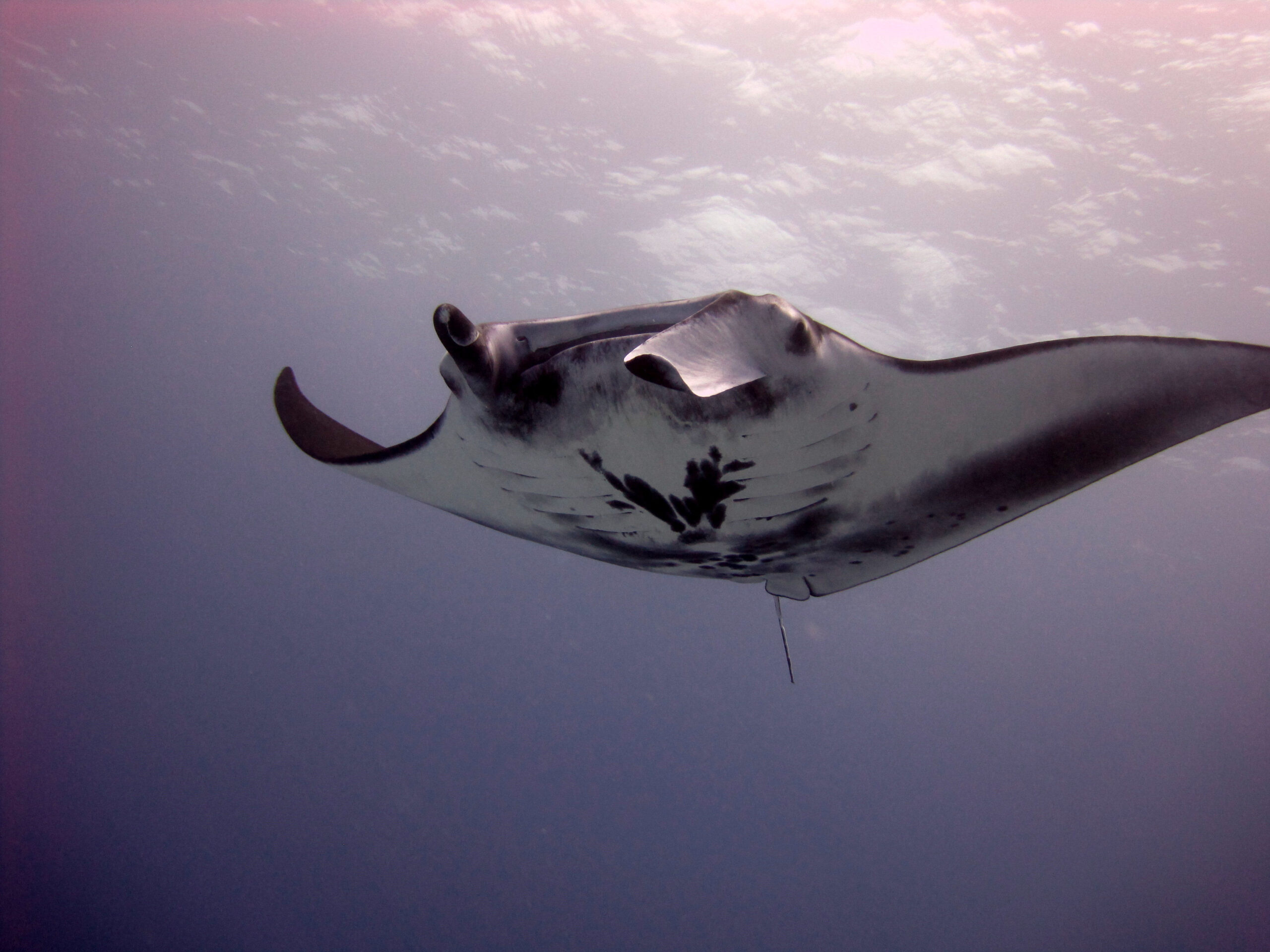
Manta rays are more than just impressive animals, they are an important part of ocean ecosystems. Their presence usually indicates a healthy environment, and their loss could create harmful algal blooms as they are no longer controlling the plankton levels. Protecting them is not only about conserving a single species, but also about maintaining balance in the ocean.
All in all, manta rays challenge the idea that large ocean animals are something to fear. Instead, they show that some of the biggest creatures in the sea are also the most peaceful. On top of that, they are worth protecting for their benefit and the benefit of all ocean life.