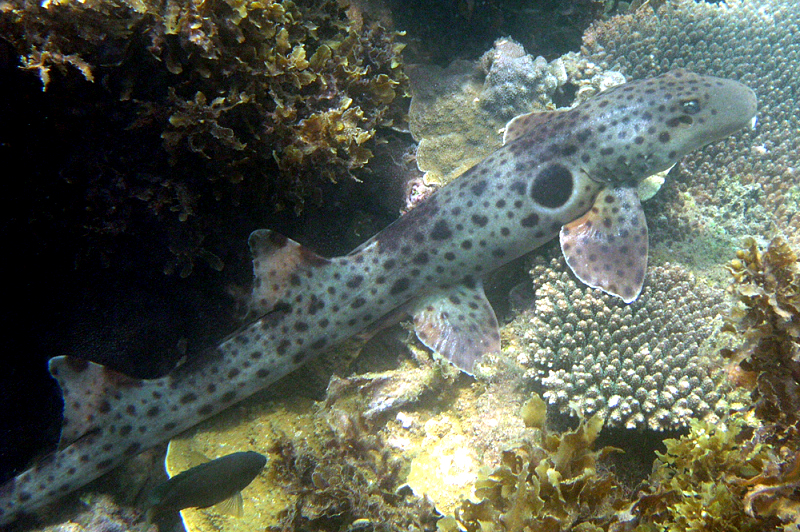
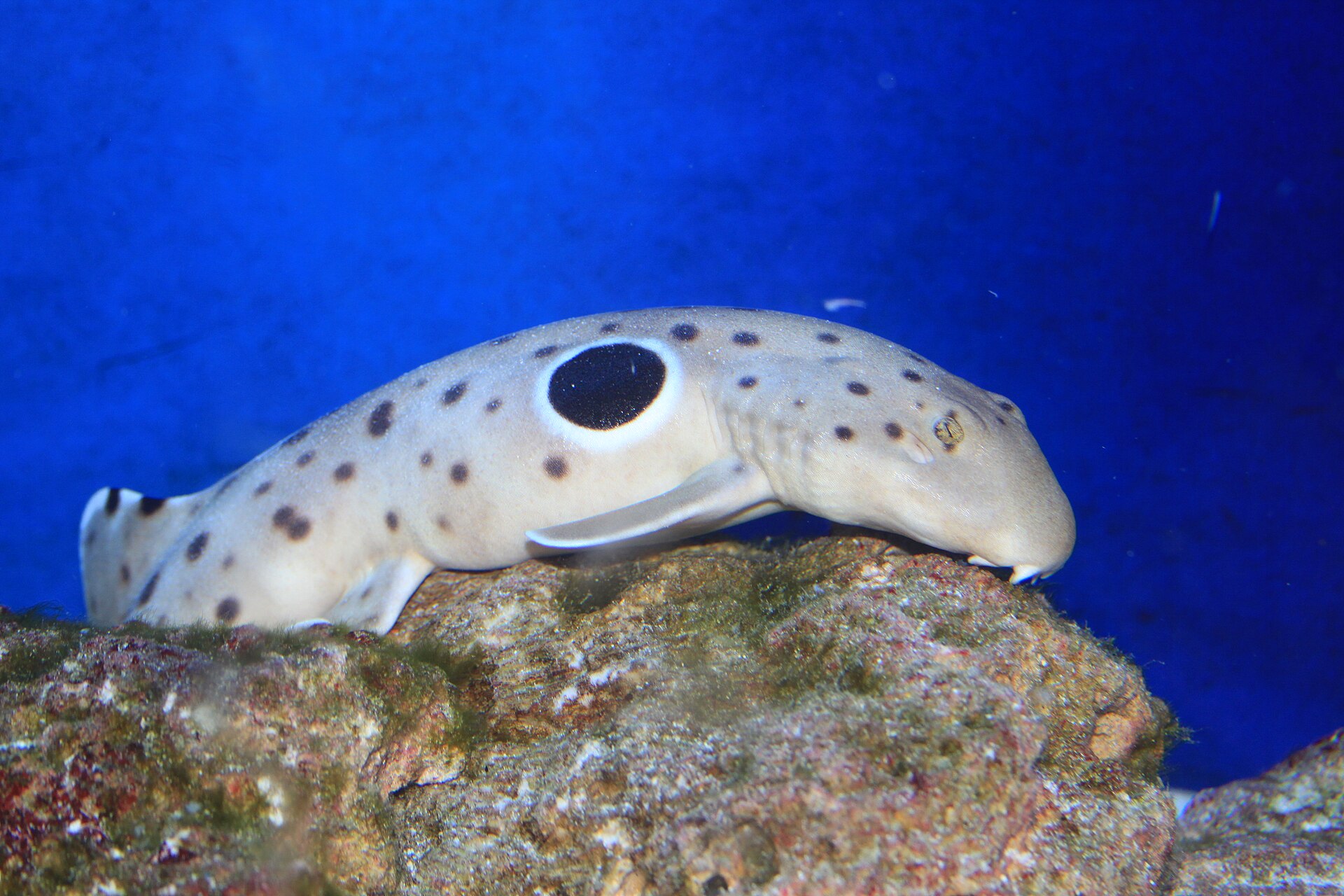
The Epaulette shark is one of Australia’s most bizarre coastal marine organisms. They are part of the phylogenetic family Hemiscylliidae and are one of 12 species in that family. Generally, these species of shark are categorized by their smaller appearance, long-tail, short snouts, and nasal barbels. The Epaulette shark in particular has a yellowish-brown body coloration and is dotted with dark spots. In addition to these physiological features Epaulette sharks typically have a large white-ringed black spot on their side behind the pectoral fin which is where the name “Epaulette” originated from. Because of their appearance they are frequently referred to as blind sharks, carpet sharks, and cat sharks.

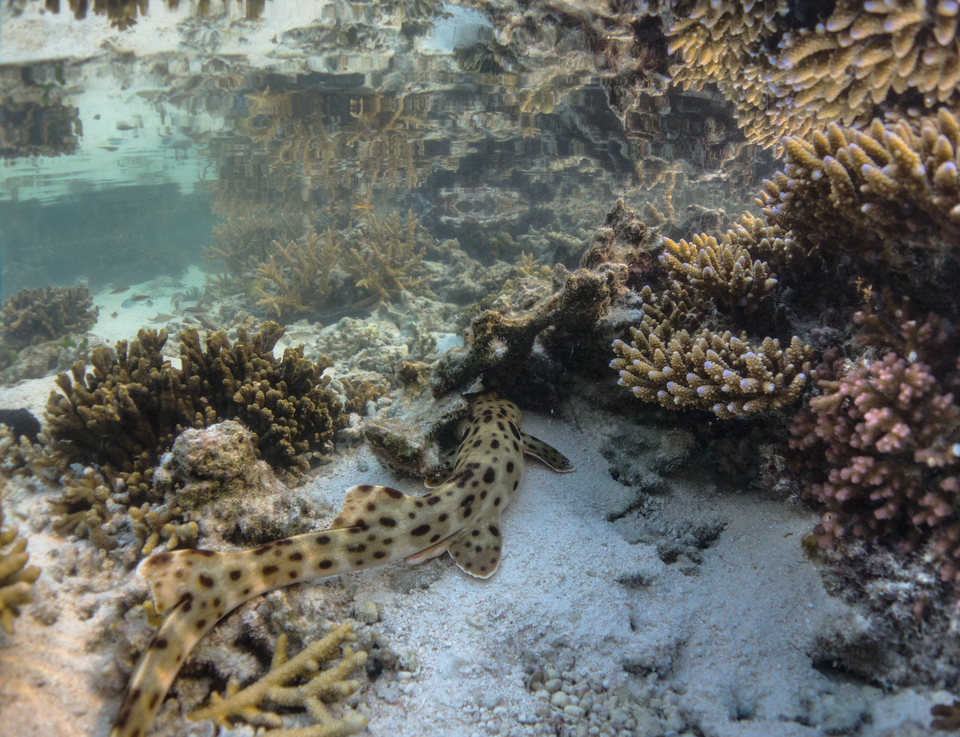
As aforementioned the Epaulette sharks inhabit coastal regions. Their range is thought to be from the Southwest Pacific including New Guinea to Australia. They are particularly abundant on the Great Barrier Reef though generally these organisms do prefer to dwell at the bottom of shallow water bodies, tide pools, and other benthic spaces. These environments are where Epaulette sharks actively hunt their prey which predominantly are worms, crustaceans, and small fishes in addition to other small marine organisms. Though being in the intertidal zone can be a challenging feat.
The constant changing nature of tidal zones means that organisms have to be extremely adaptable. A challenge in intertidal ecosystems for many marine organisms is desiccation (drying out) and being unable to escape an unsuitable environment such as a shrinking tidal pool. The Epaulette shark have evolved the unique ability to utilize their fins as prototype legs that enable them to travel upwards of 30 meters across land. This ability allows them to extend their range and travel further inland without the threat of being trapped. In addition to the ability to walk, these incredible sharks also have the ability to resist hypoxia (the lack of oxygen) through metabolic and ventilatory repression. This further enables them to be effective predators on shallow-reef shelves that they inhabit. These evolutionary traits are valuable to understanding intertidal organisms and how they may adapt in the Anthropocene.
_at_Heron_Island,_Queensland.png)
Studying the behavior of the Epaulette sharks in their habitats can shed light on how coastal ecosystem fauna can change in the face of climate change and rising ocean temperatures. Due to the evolutionary traits of the Epaulette shark they make an excellent organism model to study. They exhibit a wide range of physiological and morphological adaptations that may be essential for other coral reef flat species to survive future ocean conditions. Epaulette sharks are more than just an ecological outlier, if studied further they may offer valuable tools and lessons for scientists as they try to understand and mitigate the impacts of the Anthropocene on coastal waters. and how to mitigate challenges for coastal waters.
Cover Image: Hemiscyllium ocellatum. Image: Andy Lewis, Wikimedia Commons
