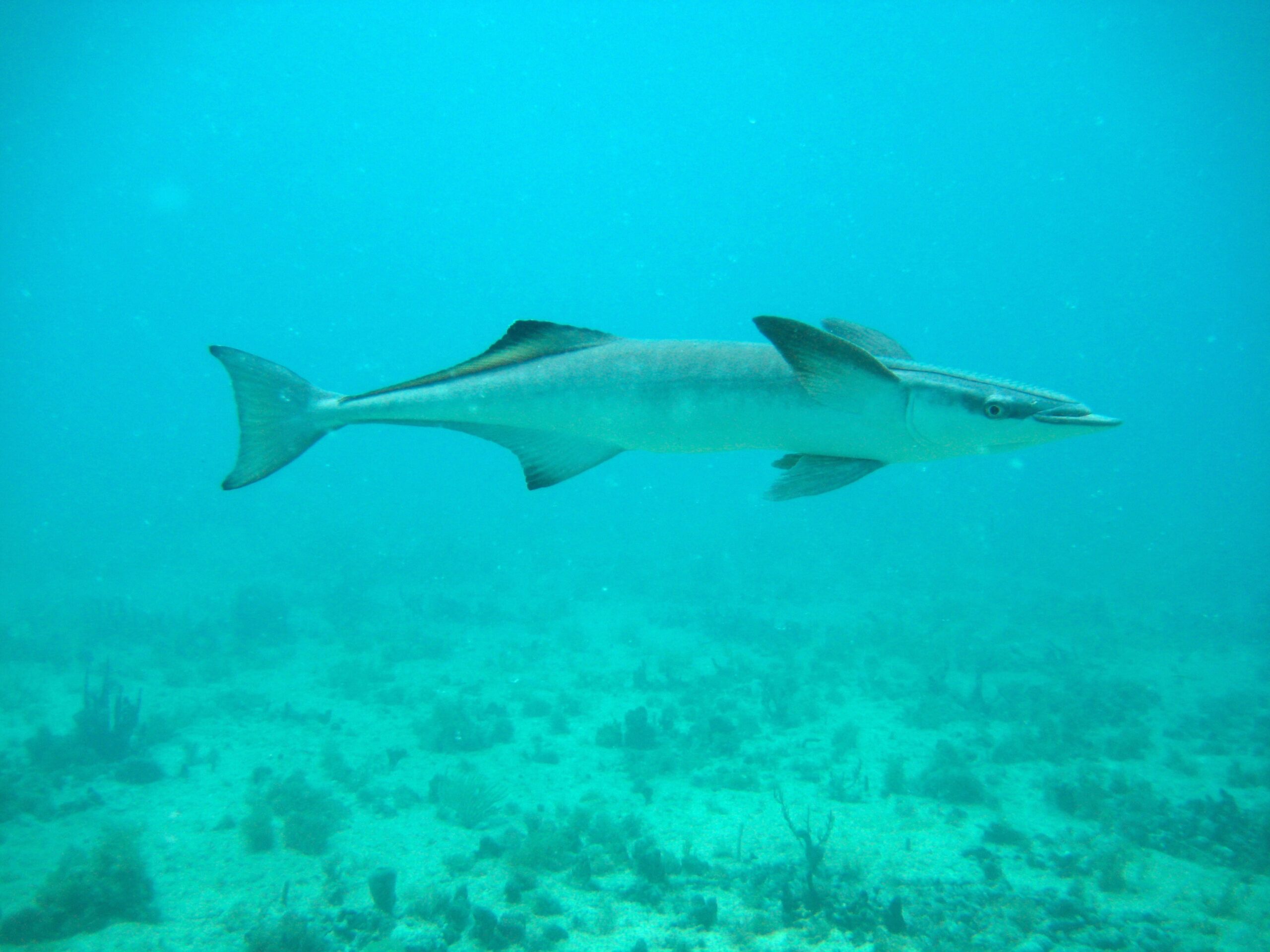
Often in the ocean you’ll encounter a shark gliding through the ocean with a smaller fish attached to its side, chances are you were looking at a remora. Often called “suckerfish,” remoras are fascinating marine creatures best known for their ability to latch onto larger animals. But there’s much more to them than just catching a free ride.
Remoras belong to the family Echeneidae, a group of ray-finned fish. What makes them instantly recognizable is the flat, oval-shaped suction disc on the top of their heads. This disc is classified as a modified dorsal fin that has evolved into a powerful attachment tool, allowing them to cling to larger marine organisms including sharks, whales, sea turtles, and even boats. They can be classified by their elongated, streamlined bodies, darker coloration, and can grow between 30 to 90 centimeters depending on any of the 8 species.
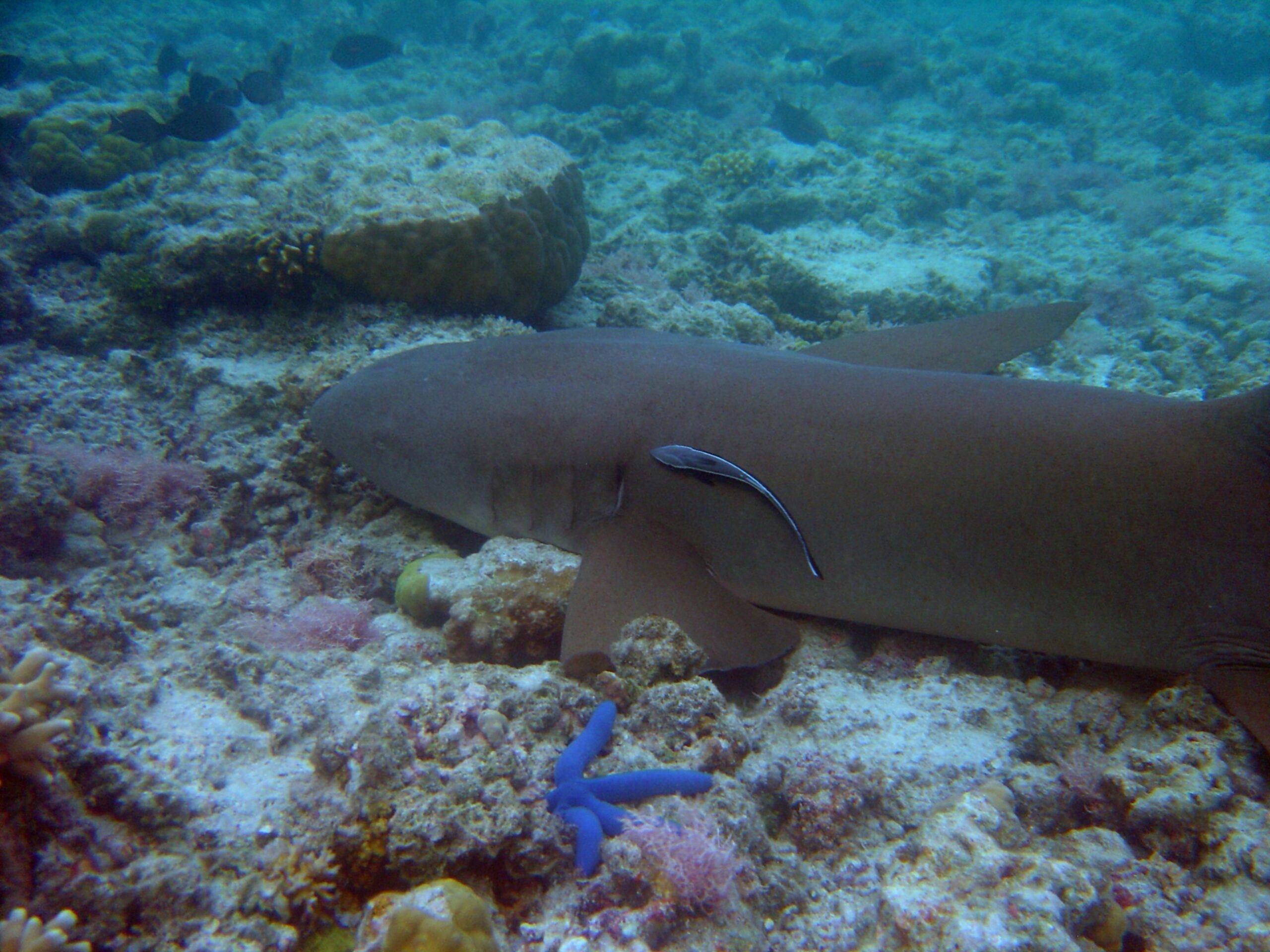
These fish are found in warm and tropical waters across the globe, especially in the Atlantic Ocean and Mediterranean Sea. Because they rely on host animals, their distribution is thought to follow the migration patterns of large marine species. When it comes to diet, remoras are considered opportunistic feeders. They eat leftover scraps from their host’s meals, plankton, and even parasites found on the host’s skin. This flexible feeding strategy allows them to survive in a variety of ocean environments.
The most interesting aspect of remoras is their symbiotic relationship with other marine organisms. This relationship is typically classified as commensalism, meaning the remora benefits while the host is unaffected. By attaching themselves to larger animals, remoras gain transportation, protection from other predators, and a supply of food. By conserving energy while still accessing the following resources, it’s a very efficient lifestyle.
In some cases, the relationship may even be slightly beneficial to the host. Remoras sometimes remove parasites or dead skin from their hosts, which can contribute to improved health. Because of this, some consider the interaction to occasionally shift toward mutualism, although the remora still gains the overall benefit.
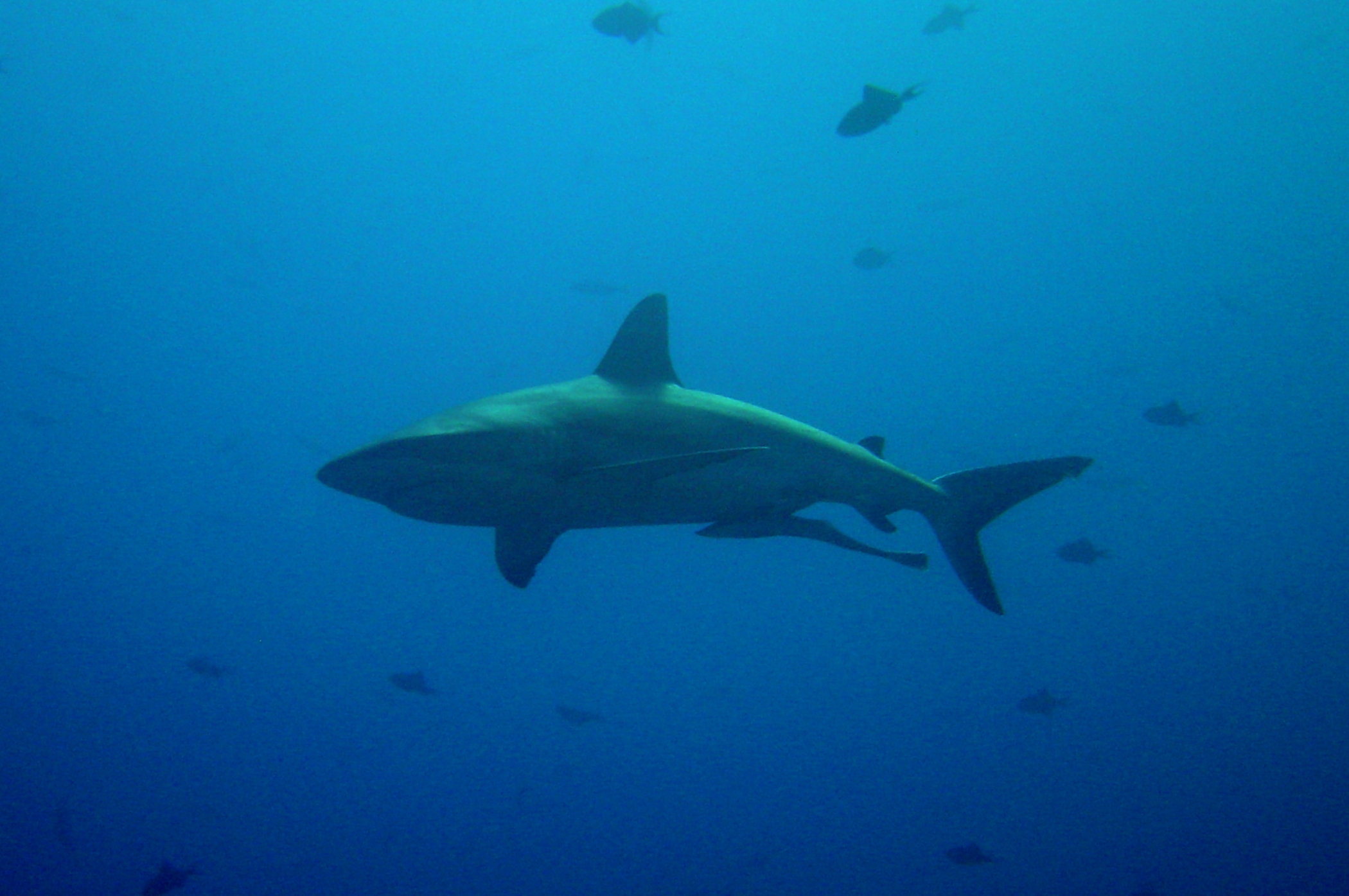
Diving deeper into the fascinating feature of remoras, is the structure of their suction disc. It works through tiny barbs aligning the dorsal fin that create friction and pressure, allowing the fish to stay attached even when the host is swimming quickly through the water column. This adaptation fits the species into a very specific ecological niche that few species can reside in.
Remoras are more than just hitchhikers, they have developed an almost perfect survival strategy, relying on unique adaptations and relationships within their ecosystem to maximize resources while conserving energy.
Featured Image – A remora swimming freely through the euphotic zone. Image courtesy of NOAA.