The Doomsday Fish: What are oarfish and how they got their nickname
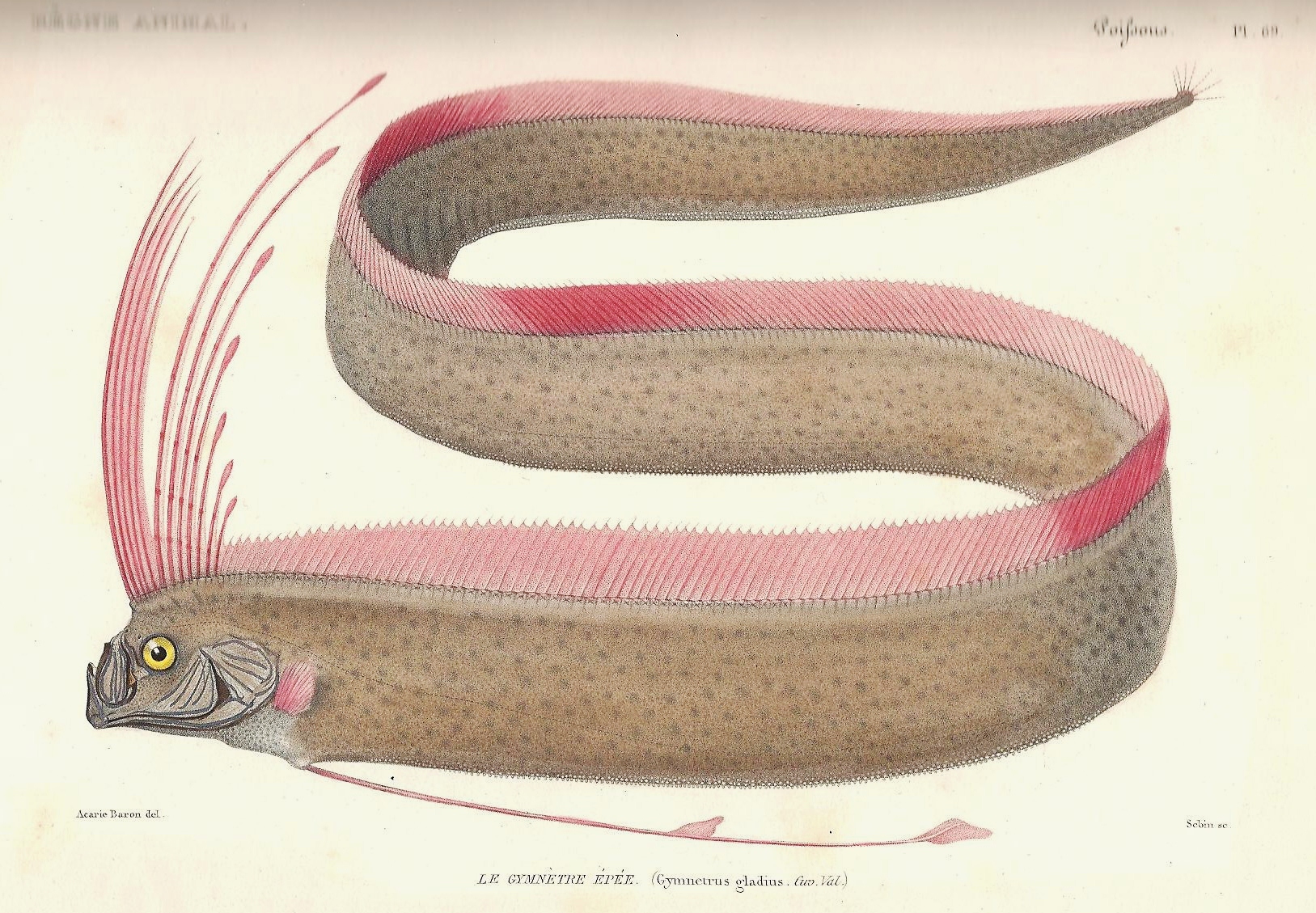
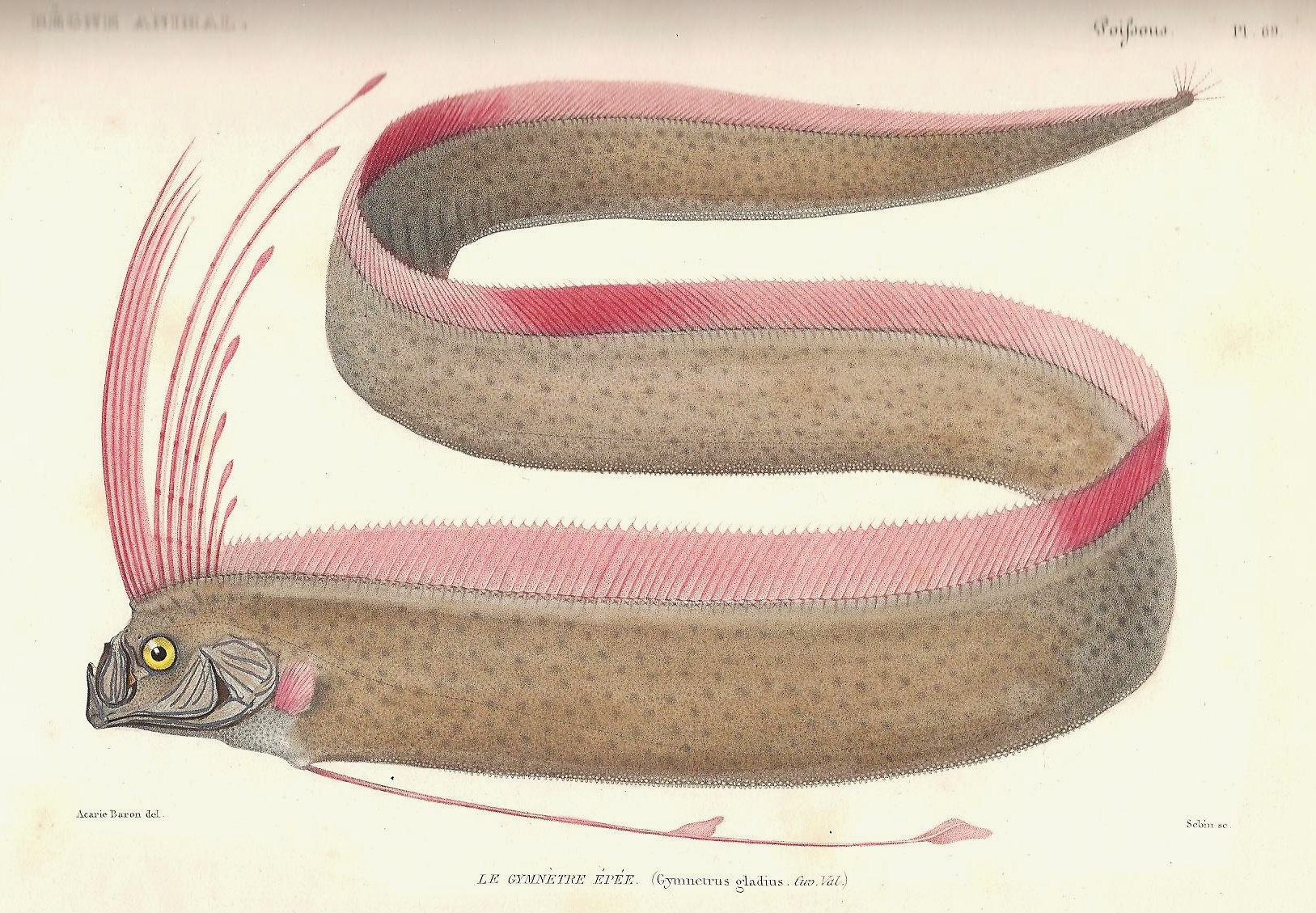
While there are many species of oarfish, the most commonly talked about one is the giant oarfish, scientifically known as Regalcus gleshe. The name oarfish is thought to come from one of two things, either the shape of their body resembling an oar or the rowing motion their dorsal fins make while swimming. With a habitat consisting of a wide range of tropical and temperate waters, it’s no wonder these fish are known throughout the world, showing up in myths and legends across cultures. These fish look like they came swimming straight out of a storybook with their tapered shiny silver bodies, large eyes, and distinct red fin running the length of their back with a crest on top of their head. It’s no wonder they are thought to be one possible origin of sea serpent sightings.
With their bodies growing 30 feet or more, these deep-sea fish are considered the largest bony fish in the world and can look very menacing. While they might look scary, the oarfish poses no real known threat to humans outside of mythology and legends. In fact, these fish are rarely seen as they are deep-sea fish, spending most of their time in the mesopelagic zone, where they mainly float vertically in the water column by swaying their long dorsal fin in a undulating motion also known as amiiform swimming, although they are able to swim horizontally as well.
Their silver shiny body acts as a source of camouflage, helping them to exist inconspicuously in the deep ocean. Even if they were to come in contact with humans, they would pose little to no threat as they are filter feeders possessing a gill rake for filter feeding rather than teeth. So, if these fish pose no real danger to people with their physical or biological features, then how did they get the nickname the doomsday fish?
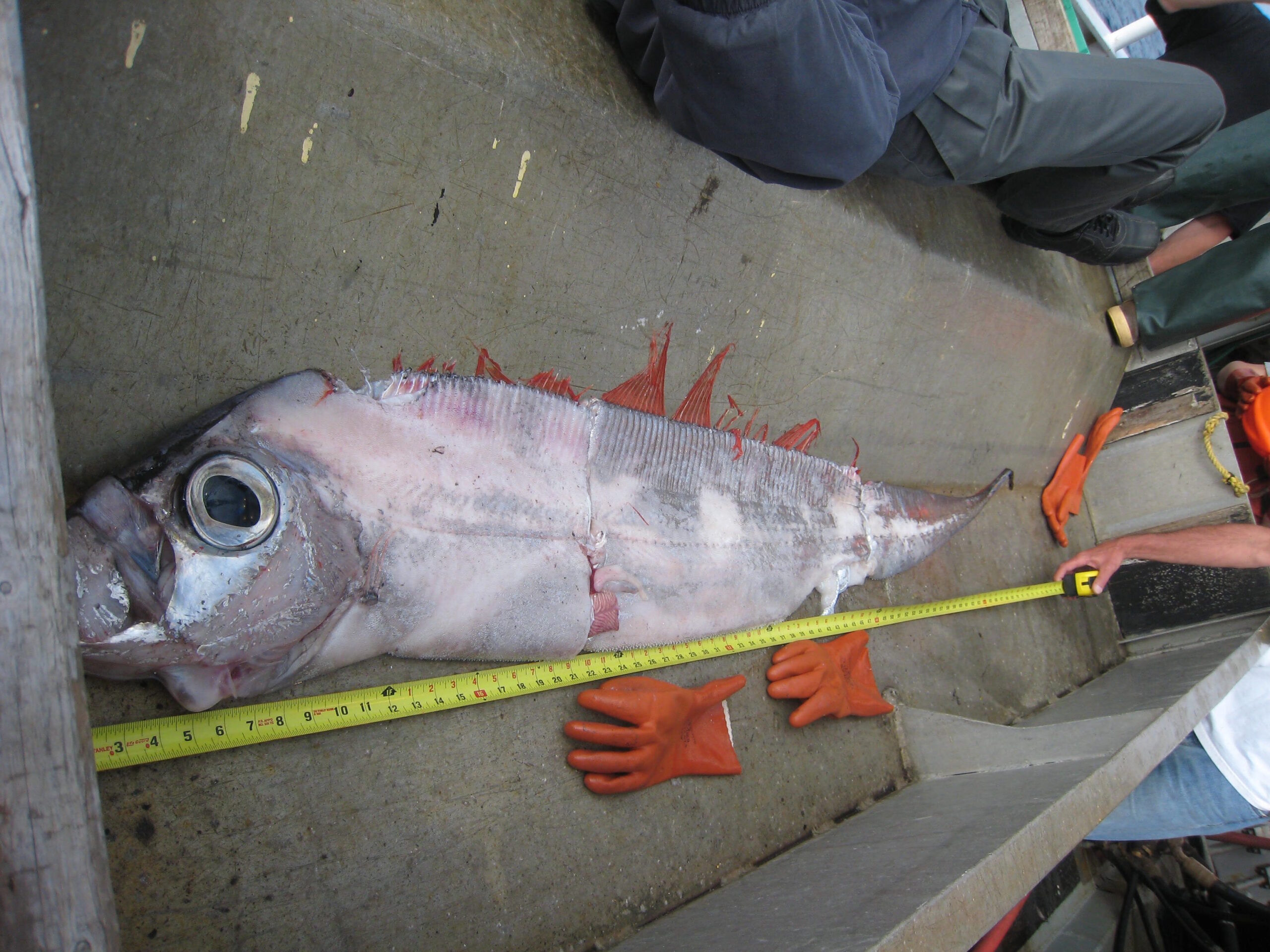
The remains of an oarfish ( Regalcus gleshe) next to a tape measure for size comparison (photo from NOAA photo library with Credit to the Crew and officers of NOAA Ship MILLER FREEMAN on 2009 July 1)
Well, the nickname doomsday fish comes from legends rather than scientific facts. It’s thought that they first appeared in legends in 17th-century Japan, where they received the name “ryugu no tsukai,” which translates to the messenger from the palace of the sea god. So, if they are thought to be a messenger, the question is, of what. Well, as the name doomsday fish would imply, they are seen as a messenger of disaster, typically a natural one. This belief of oarfish as an omen of disaster has lasted for hundreds of years in the mariner and fisherman community and still exists today.
This belief was bolstered in 2011 when roughly 20 oarfish washed ashore in Japan shortly before their devastating 9.0 magnitude earthquake that was then followed by a tsunami that led to a nuclear reactor failing, causing a nuclear disaster. There have also been reports of sightings a month before an earthquake on the US West Coast. As well as a reported sighting in the Philippines in 2017, just days before they were hit by a 6.7 magnitude earthquake.
All these instances have helped fuel the myths behind the name that these fish, when spotted, are a sign of big trouble. There have, however, also been instances where their landings or washing ashore simply resulted in no disaster at all. And in 2019, the myth was busted by a study indicating there is no correlation between the fish and disasters. With this study the thought that the precursors of natural disasters are very unlikely to drive these fish to shore. The more likely answer to them was that they are sick and confused rather than sensing disasters.

Scientist holding an oarfish ( Regalcus gleshe) (photo from the NOAA photo library with Credit to the Crew and officers of NOAA Ship MILLER FREEMAN 2005 June 26)
Featured image: Depiction of Gymnetrus gladius (image from Plate No. 69 from Georges Cuvier’s “The Animal Kingdom” (Volume 8, 1828))