Dolphins and sea lions are highly intelligent marine mammals, and since 1959, the United States Navy has been training them alongside sailors and marines to support underwater operations. After testing dozens of other marine mammals, sharks, rays, turtles, and marine birds, they narrowed it down to two species. The California sea lion and bottlenose dolphin were chosen for their adaptability and responsiveness. They have been trained to detect, locate, and recover potential threats in harbors or at sea. Any explosive, mine, unknown divers, or vessels would be discovered by the dolphins and sea lions. These animals are far superior in underwater navigation than any man or technology.
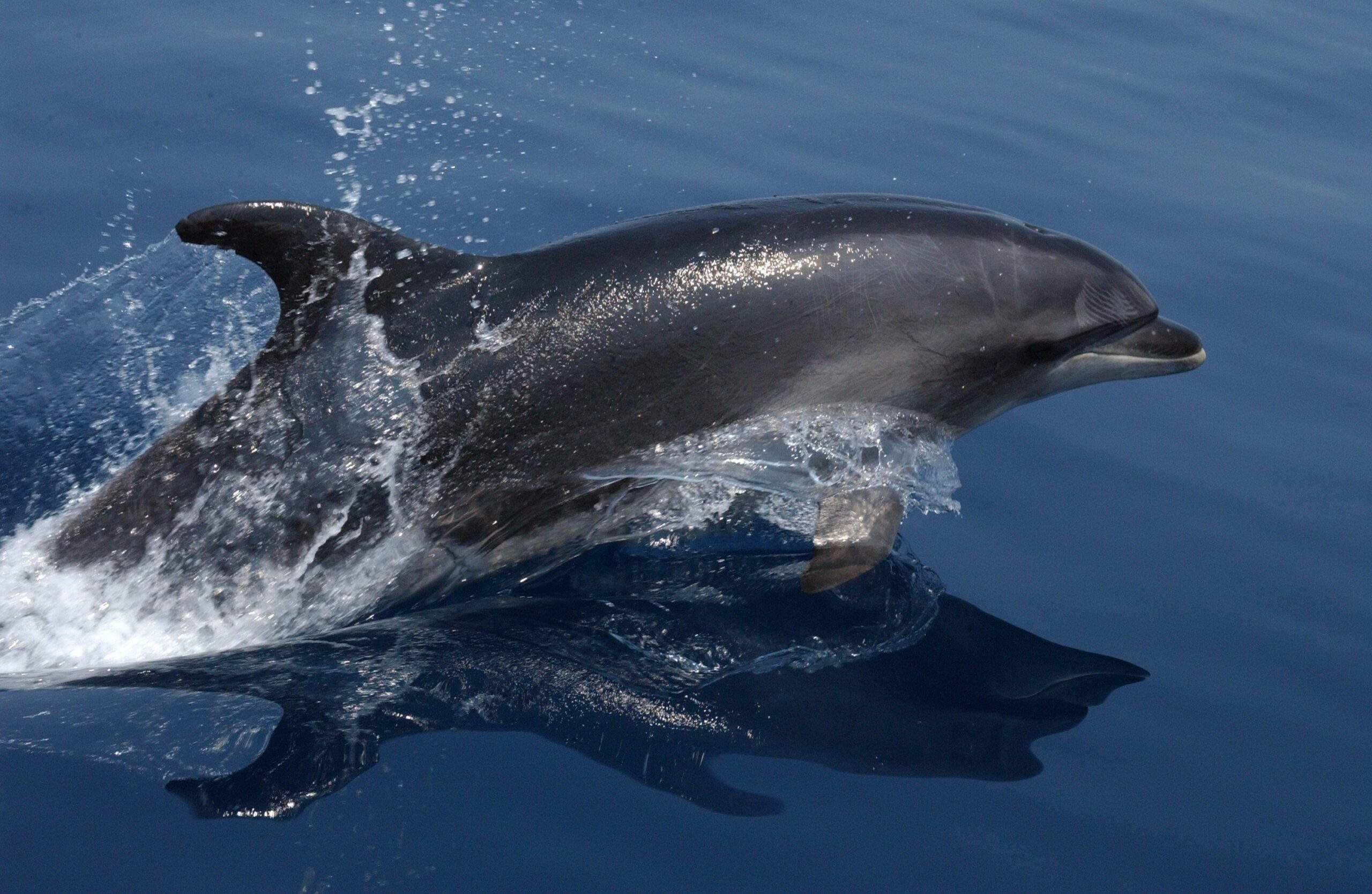
Bottlenose dolphins (Tursiops truncatus) belong to the phylum Chordata and class Mammalia. These mammals are adapted to life underwater with a streamlined fusiform body shape and flexible pectoral and fluke fins. This means they are very hydrodynamic and can swim faster than any Naval diver. Dolphins also have brains much larger than humans, so they have a great capacity to learn and be trained.
Dolphins are trained to detect potentially dangerous objects on the sea floor that cannot be located by electric sonar. This is because they have one of the most sophisticated sonars known to science. Vision and directional hearing are keen underwater senses that aid in detecting targets. This is especially crucial in dark or opaque waters. Dolphins are specifically trained to search and mark locations of underwater mines. They are also instructed to find and apprehend unauthorized swimmers.
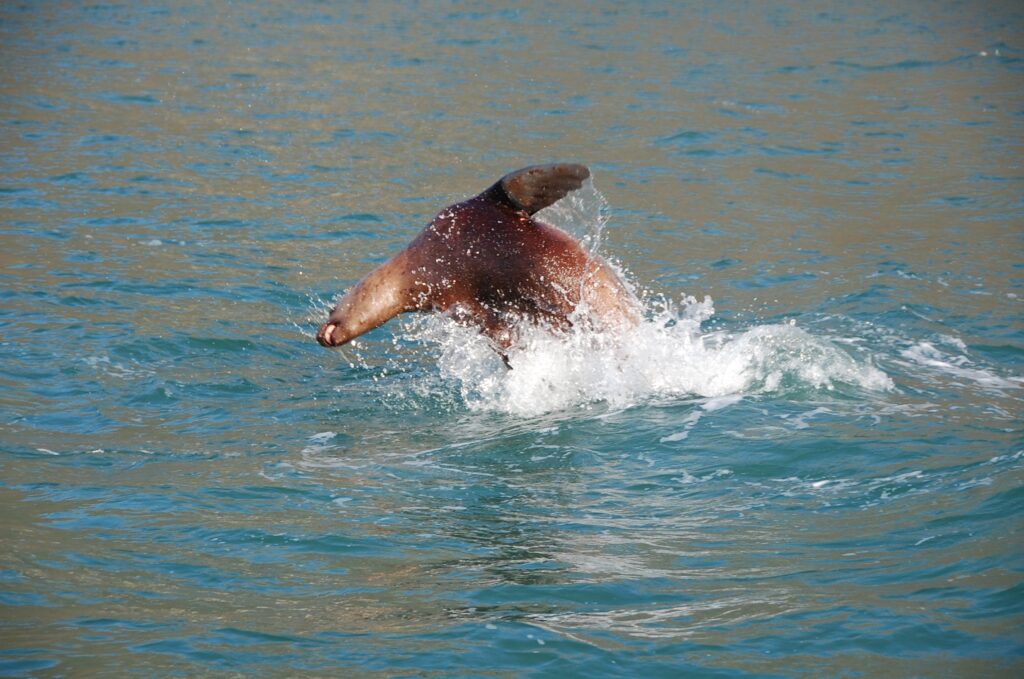
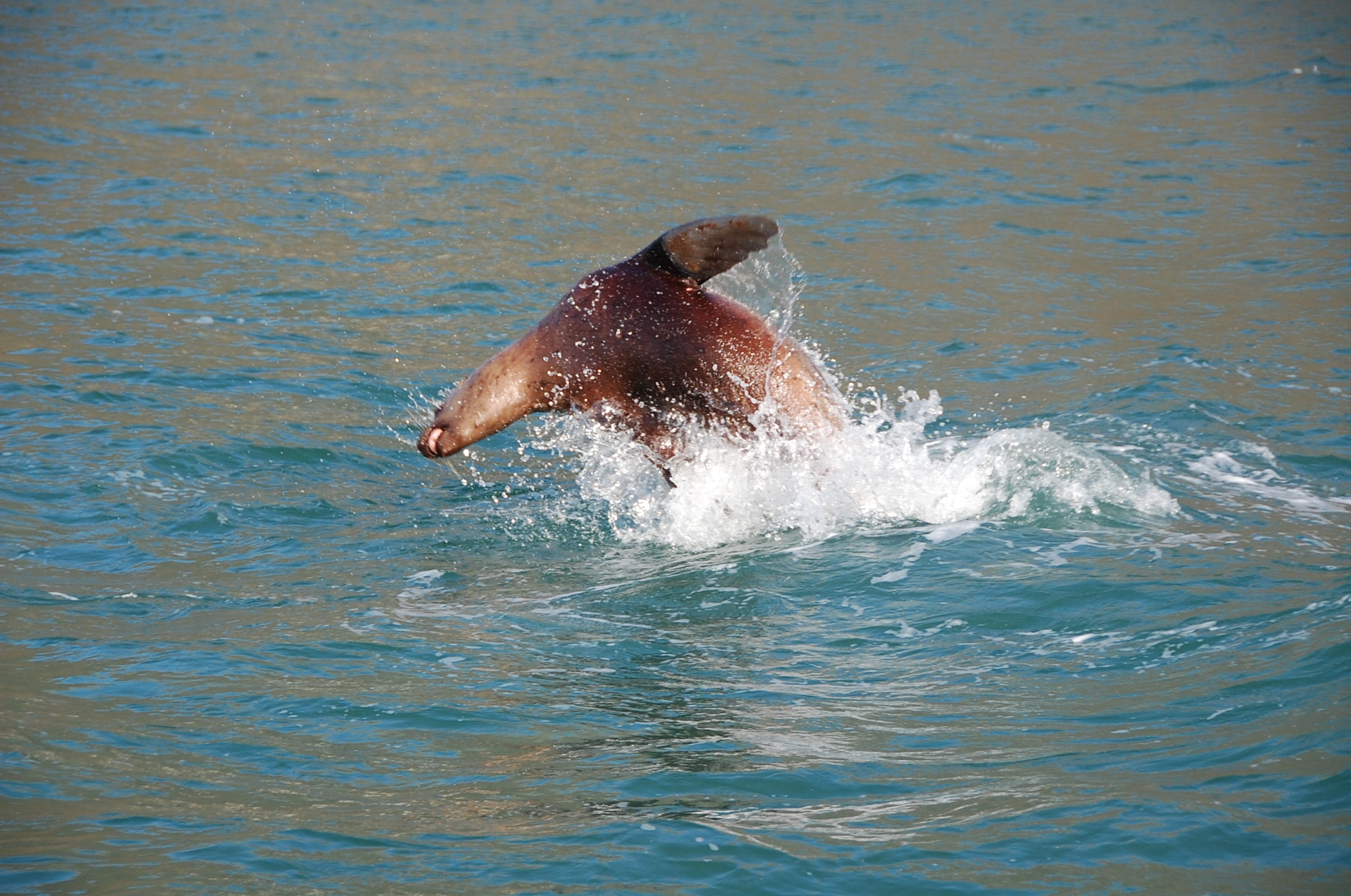
The other animal used in the U.S. Navy is the California sea lion (Zalophus californianus). These organisms are part of the phylum Chordata and class Mammalia. They also have a streamlined, torpedo-like body and strong foreflippers that help them glide through the water. Sea lions are extremely intelligent, and when taught right, they are able to understand their own sign language. Like dolphins, sea lions have high-quality vision and hearing underwater in suboptimal conditions. Repetitive deep diving and underwater speed are also qualities that sea lions have that are important to the US Navy.
Sea lions are trained to recover objects in harbors, coastal areas, and the open ocean. They can even recover test dummies from practice plane crashes. They also locate and attach recovery lines to Navy equipment on the ocean floor. One sea lion recovered an anti-submarine rocket from a depth of 180 feet in 1970. These mammals are also taught to locate and arrest intruders with specialized tracking “handcuffs” that attach to the legs of an invader to make them float to the surface.
Although the Marine Mammal Program has been a great success and has produced over 1200 scientific publications on their health, physiology, senses, and behavior, it has faced criticism. This program was only declassified in the early 1990s, which led to speculation on the welfare of the mammals and the humaneness of the program. Ethical concerns relate to the implications of using intelligent animals in warfare, the potential for injury, and confinement. Confining marine animals, specifically dolphins, exposes them to stress, boredom, suppressed immune systems, and often early deaths. However, the Marine Mammal Program has assured the public that the animals are taken care of, with veterinarians and marine mammal specialists on Naval teams to perform routine check-ups. Public records show that their dolphins live almost two times longer than wild dolphins, and their sea lions live three times longer than in the wild.
Whether or not the ethics are an issue in this program, it is still undeniable how effective dolphins and sea lions are at their underwater missions.
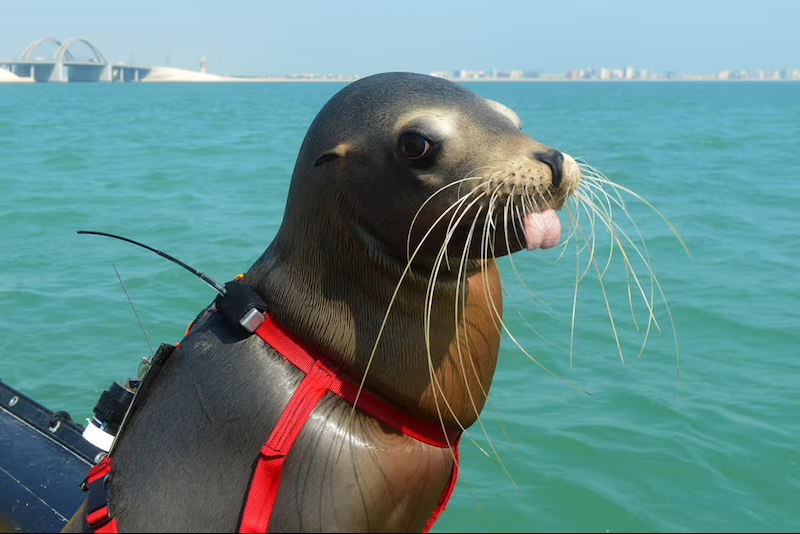
The featured image shows a California sea lion on a Naval boat (Image credit: U.S. Naval Forces Central Command/U.S. Fifth Fleet, CC BY 2.0 https://creativecommons.org/licenses/by/2.0, via Wikimedia Commons)
.jpg)
Written by Phoebe Faucher