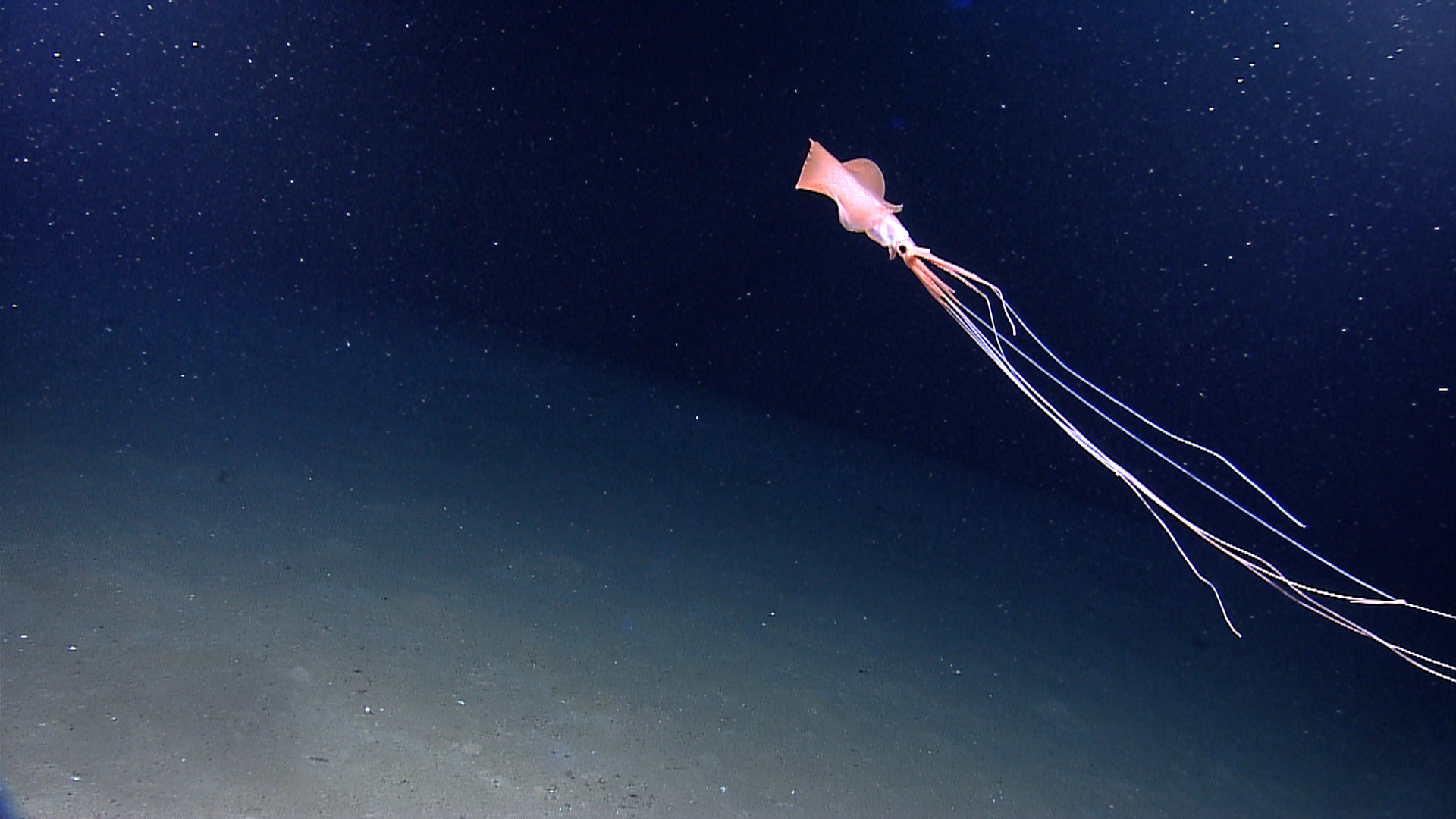
The bigfin squid often goes viral online for its intimidatingly haunting appearance. Many describe it as an alien-like creature. It is an extremely rare organism—there have only been about 20 confirmed sightings across many years. The bigfin squid is a part of the genus Magnapinna. Magna translates to “large” or “big”, while pinna translates to “fin.” Its name isn’t that creative, but its body morphology is a sight to behold. One of the most striking features of this organism are its long tentacles that can extend from 4 meters (13 ft) to up to 8 meters (26 ft) in length. These tentacles don’t just hang from the main body like a normal squid’s, they hang in a perpendicular orientation similar to an elbow’s morphology. To put the ratio of the organism’s tentacles to the body into a new perspective, the largest recorded bigfin squid was 6.4 meters (21 ft) long with its tentacles being 6.1 meters (20 ft) long. This means that this bigfin squid’s tentacles were 20 times the size of its body. A squid’s tentacles are usually connected to their feeding behavior, but the bigfin squid’s feeding behavior is still quite unknown. Biologists speculate that these organisms let their long tentacles drag across the seafloor and grab onto prey. Some others believe that their tentacles are used to trap prey that accidentally bump into them as they float by. Both feeding methods have potential to be studied, and biologists are still trying to figure out the organism’s diet as it remains unknown.
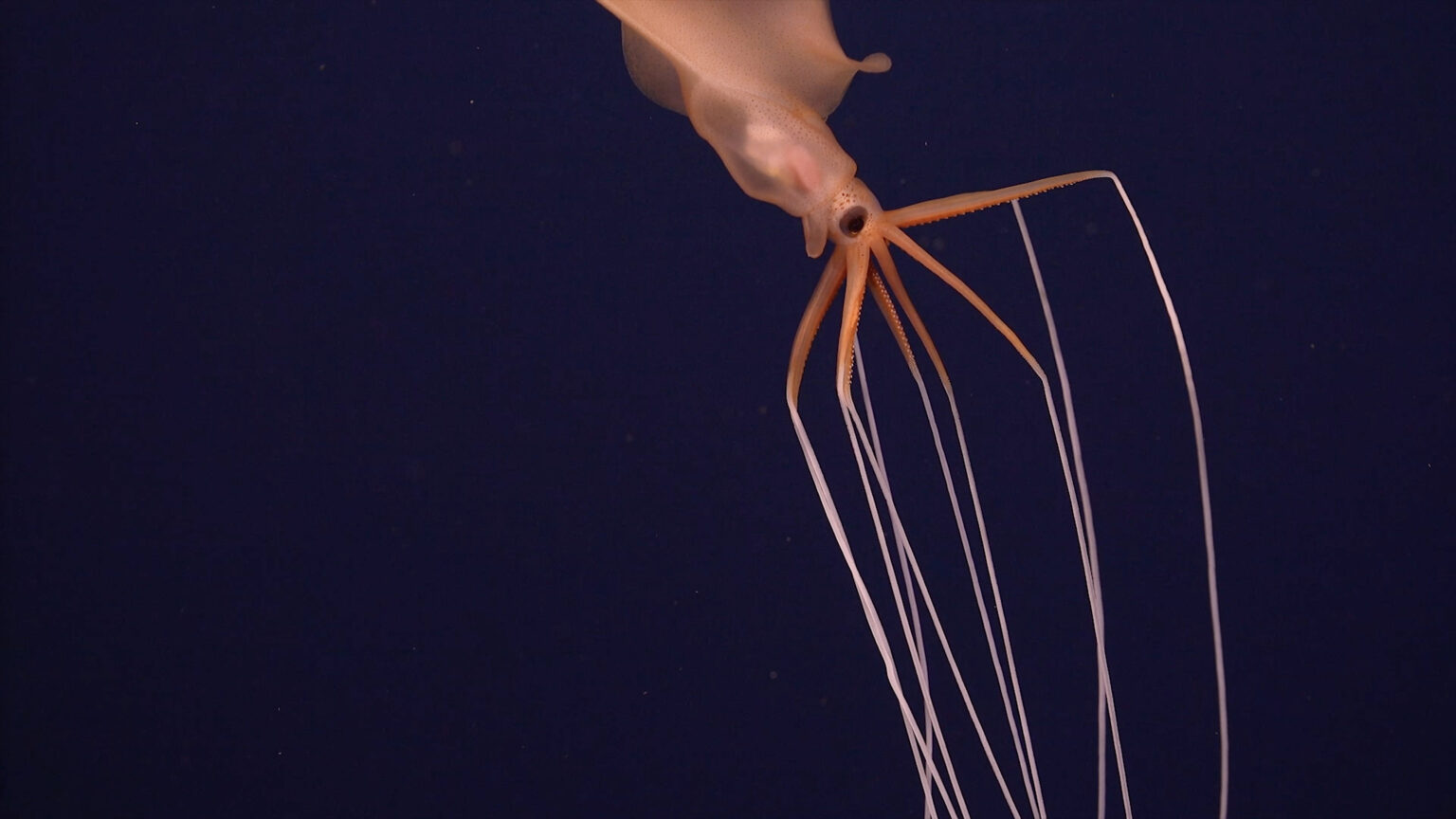
The first bigfin squid ever recorded was during the early 1900s, but the specimen was severely damaged and difficult to identify. Bigfin squid were officially described by scientists in the 1980s. Many of the specimens discovered were found deceased near the surface of the ocean, and were also juveniles. However, this marine creature is a deep-ocean dweller. Scientists using ROVs (remotely-operated vehicles) witnessed an adult bigfin squid in its natural habitat alive and well for the first time in 1988. There have been sightings as deep as 6,212 meters (20,381 ft). This data reveals that the bigfin squid is the only squid known to inhabit the hadal zone. The hadal zone is the deepest zone of the ocean and ranges from 6,000 meters (20,000 ft) to nearly 11,000 meters (36,000 ft). There aren’t a large variety of known species— some of the known ones include Magnapinna atlantica, M. pacifica and M. talismani. Many aspects of this marine creature’s life and behaviors have yet to be discovered. What’s even more fascinating is that these organisms’ tentacles look similar to extinct belemnites, an extinct order of squid-like cephalopods. The bigfin squid is a mind-boggling marine creature shrouded in mystery. Biologists are eager to discover more about the world’s deepest dwelling squid. With more advances in technology to aid in deep-sea exploration, there will be many more amazing discoveries regarding this fascinating organism.
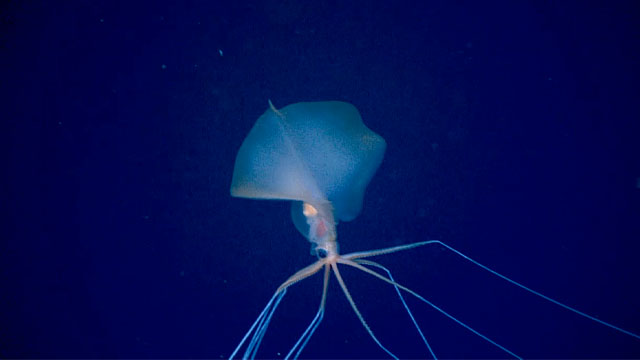
Adult bigfin squid on camera during Dive 10 of Windows to the Deep 2021 off the West Florida Escarpment in the Gulf of Mexico – NOAA