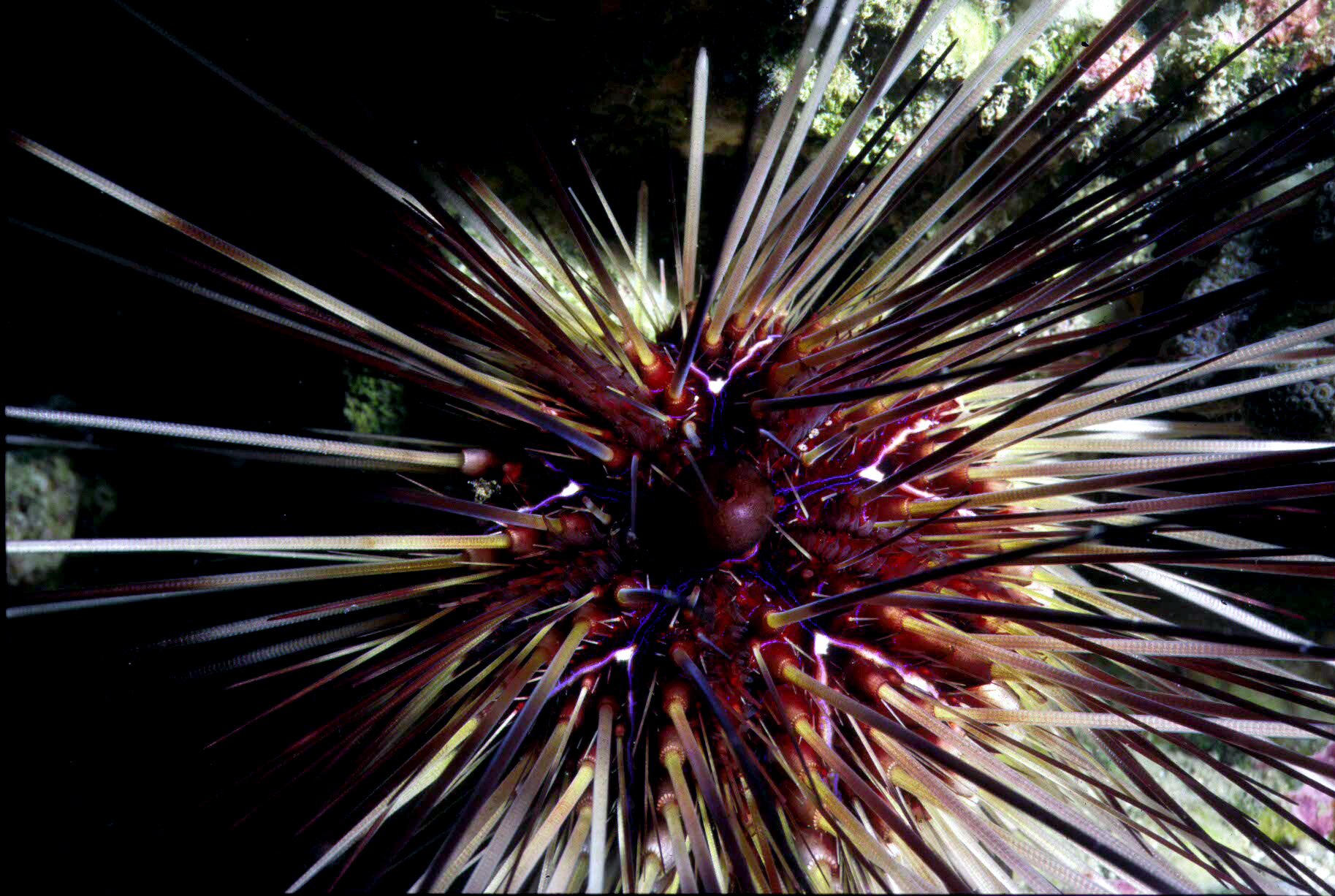
Kelp forests provide habitat, food, and protection for countless marine species and are some of the most important and productive ecosystems in our oceans. Unfortunately, many kelp forests, especially along the U.S. West Coast, have seen dramatic declines in recent years. One of the main reasons is the rapid expansion of sea urchin populations. When the populations of predators such as sea otters, larger fish, and sea stars (specifically sunflower sea stars) decline, sea urchins are left unchecked. Rather than feeding on just the blades of kelp, urchins graze on kelp holdfasts, which removes the kelp organism entirely and can remove entire forests. Without predators around to control their population, they overgraze these dense kelp forests and turn these areas into what are known as ‘urchin barrens’ – rocky seafloor habitats dominated by sea urchins where little to no kelp remains and biodiversity is greatly reduced. Not only does this impact important ecosystems and reduce biodiversity but it can also impact coastal protection, fisheries, and carbon storage.
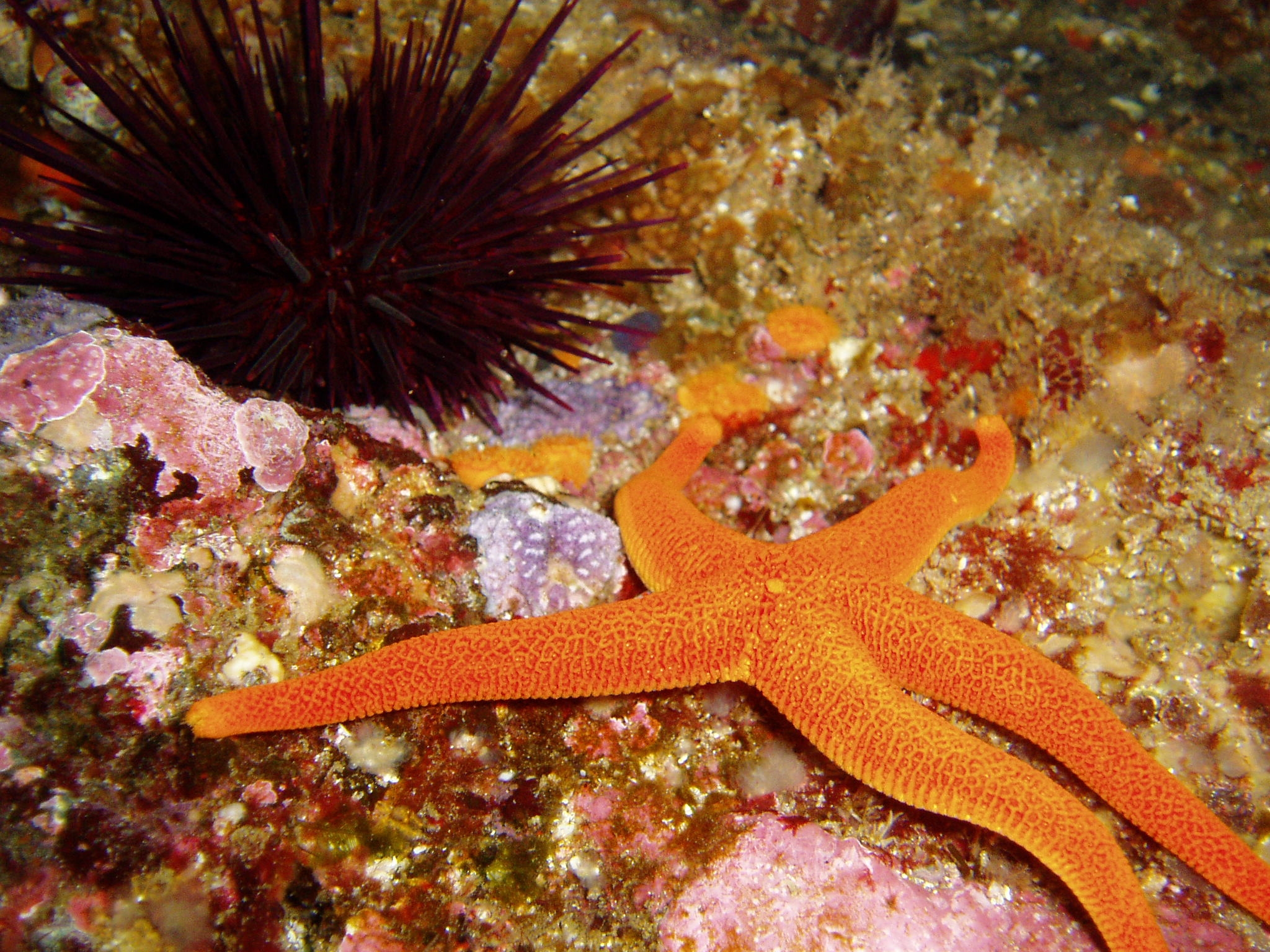
There are significant ecological consequences of declining kelp forests. When kelp is removed, there is no longer shelter for marine mammals, nursery habitat for fish, and food for invertebrates. This can lead to the collapse of entire food webs. In regions like Northern California, massive loss of kelp has been observed alongside increases in urchin populations and warming ocean conditions. These urchin barrens can be persistent for years because urchins are able to slow their metabolism down when needed, and continue grazing on kelp, preventing regrowth. This creates a cycle where urchin predators have less habitat available and are unable to control their populations. Active management strategies are needed to restore balance and allow for the recovery of kelp forests.
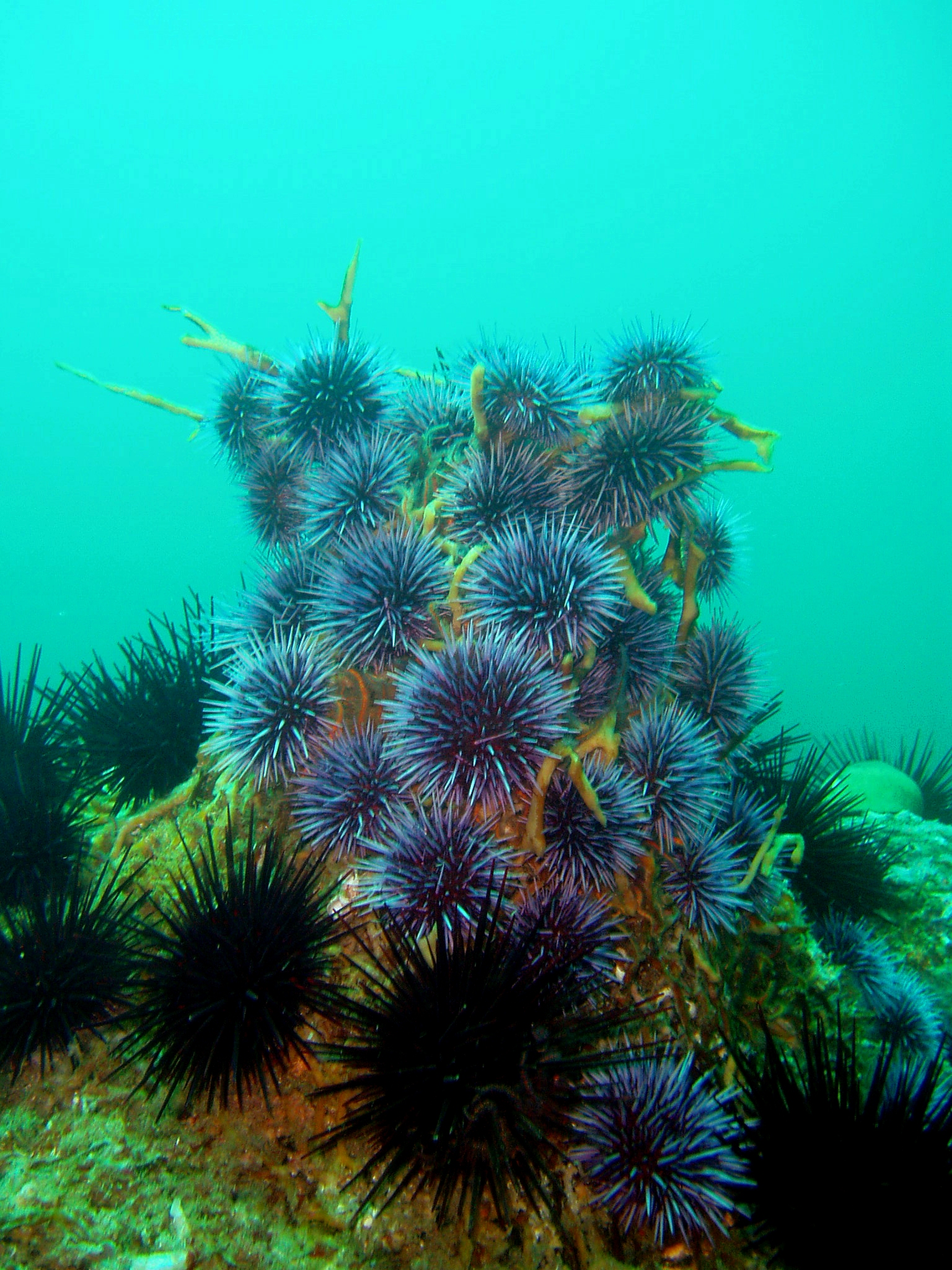
When looking into some viable solutions, one that sticks out is expanding sea urchin fisheries. I first became interested in this idea after seeing videos of divers harvesting sea urchins and learning about the high demand for uni (roe) in seafood markets. By harvesting urchins, it not only removes grazing pressure but creates economic incentives for restoration at the same time. The roe of sea urchin, known as uni, is highly valued in seafood markets especially in Japan and the U.S. Currently, fisheries are already targeting red sea urchins, but many of these barrens are primarily dominated by purple urchins, which are not as commercially valuable when harvested directly. That being said, if markets for these species develop, fisheries could aid in the removal of these populations in a cost-effective way. This approach encourages fishers to remove urchins from kelp habitats, linking economic opportunity with ecosystem restoration.
Another strategy that has a direct relationship with sea urchin fisheries is an approach called urchin ranching and aquaculture. This involves collecting undernourished urchins which are then brought to local facilities where they are fed nutrient-rich diets. Over time, the quality of their uni (roe) improves substantially, making them marketable to consumers. Not only does this strategy remove urchins from failing ecosystems, but increases their value, which helps reduce the cost of restoration efforts. Although there are several projects that demonstrate this approach, I found the OoNee Sea Urchin Ranch in Oregon to be quite interesting. Their work is a great example of how aquaculture can transform “low-value” urchins into a high sought-after seafood product while supporting the recovery of kelp forests.
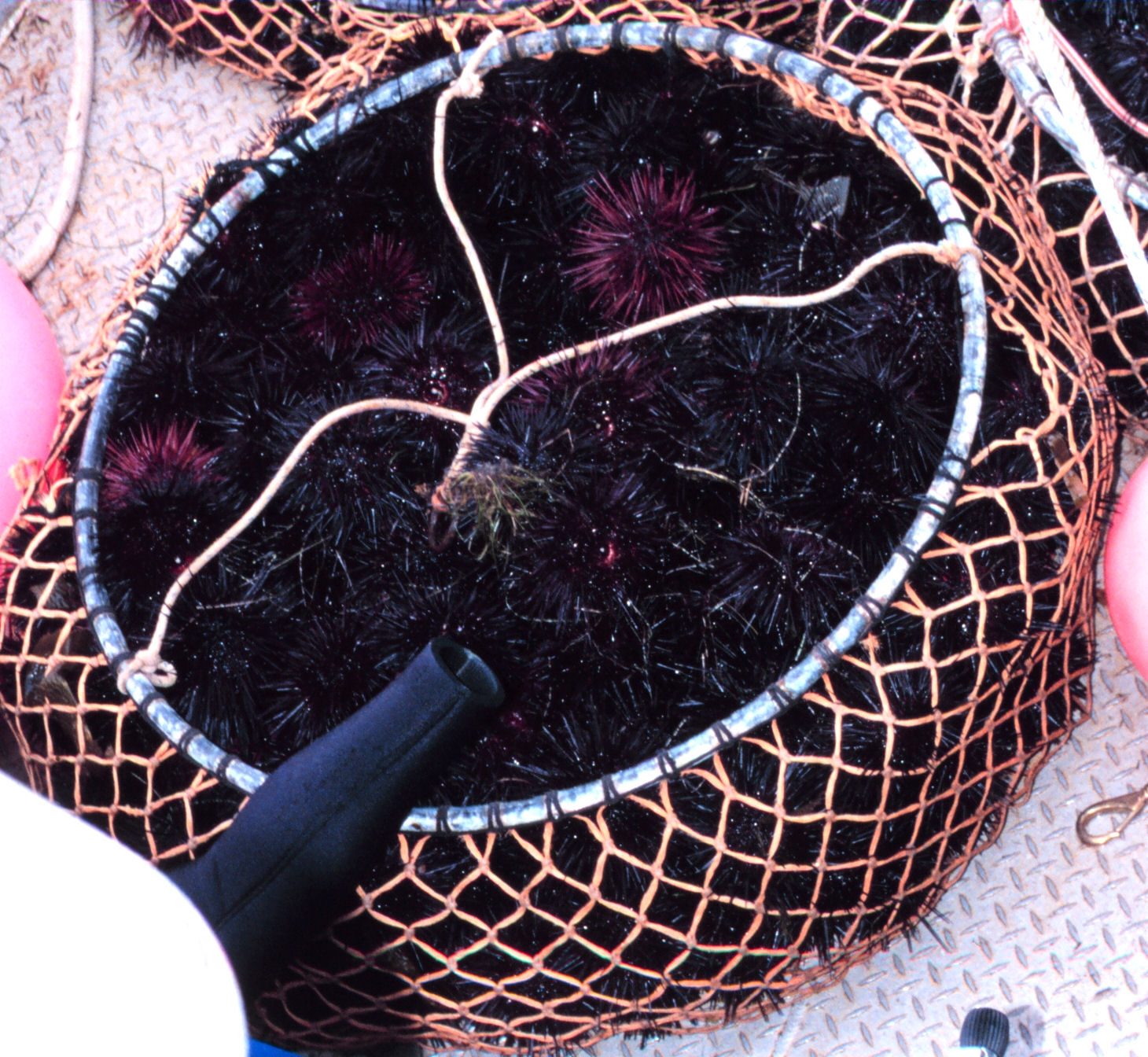
Many management strategies often try to combine direct removal with fishery-based solutions. Divers removing urchins helps reduce densities quickly and allow kelp time to regrow, while fisheries and ranching help maintain lower populations over time. Even though large-scale removal can be expensive, harvesting urchins for market demand helps keep populations in check. An example of a real-world restoration project is in California’s Greater Farallones National Marine Sanctuary. Scientists and divers here have removed urchins while reintroducing bull kelp, with early results showing rapid recovery once grazing pressure is reduced.
While harvesting sea urchins alone may not be the solution to the problem everywhere, it shows a lot of promise for the future of restoration. When combined with other factors such as aquaculture, predator recovery, and targeted removals, there is a lot of hope for kelp forest recovery. Turning an ecological problem into an economic opportunity may be part of the solution to rebuilding our ocean’s kelp forests.
Featured image: A Long-spined urchin, a key grazer linked to kelp forest decline. Gulf of Mexico. (Image from NOAA)