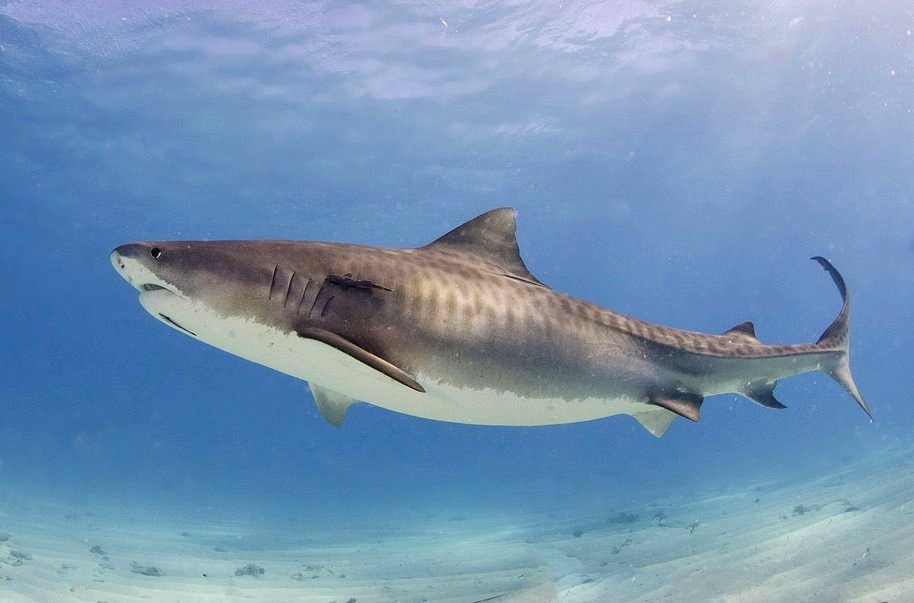
Striped Shadows: Rethinking the Tiger Shark
Most of us grow up with a mental image of sharks as cold‑blooded villains; dark fins slicing through the water, teeth flashing, danger lurking just below the surface. And when it comes to tiger sharks, with their massive bodies and bold stripes, that fear only intensifies. But here’s the twist: the creature we imagine is nothing like the animal that actually exists.
Tiger sharks are often portrayed as unpredictable and aggressive, yet the reality is far more nuanced. In truth, they are cautious, curious, and deeply important to the ecosystems they patrol. The disconnect between reputation and reality says more about human storytelling than it does about shark behavior.
So why do tiger sharks get such a bad rap? Part of it comes from the way rare events are amplified. Shark encounters with humans are extremely uncommon, but when they do happen, they dominate headlines and fuel the idea of sharks as deliberate predators of people. Movies and media exaggerate this even further, turning a complex animal into a one‑dimensional threat. But scientists studying tiger sharks see something completely different: a thoughtful, investigative animal that relies on exploration — not aggression — to understand its environment.

In places like Shark Bay, Australia, tiger sharks play a surprisingly gentle but powerful ecological role. Their presence alone shapes the behavior of other species. Studies on local sea turtles and dugongs(relatives of manatees), for example, show that they avoid certain areas when tiger sharks are around, which prevents them from overgrazing seagrass meadows. These meadows are essential carbon sinks and nurseries for countless marine species. In other words, tiger sharks help maintain the health of entire coastal ecosystems simply by being themselves.
Even their so‑called “scavenger” reputation is misunderstood. Yes, tiger sharks will investigate almost anything — that’s part of their survival strategy. But this curiosity also makes them the ocean’s cleanup crew. By consuming dead or dying animals, they help prevent disease spread and recycle nutrients back into the ecosystem. Their broad diet isn’t a sign of recklessness; it’s a sign of ecological versatility.
And when it comes to humans, tiger sharks are far less interested than we imagine. Most encounters involve a shark briefly investigating something unfamiliar — a surfboard, a camera, a floating object — before moving on. They do not hunt humans, and they do not patrol beaches looking for opportunities. We simply aren’t on their menu.

The real danger isn’t tiger sharks — it’s losing them. Overfishing, habitat loss, and climate change threaten shark populations worldwide. When apex predators disappear, ecosystems unravel. Without tiger sharks, seagrass meadows can collapse, prey populations can explode, and the delicate balance of coastal habitats begins to shift.
Tiger sharks aren’t monsters. They’re guardians of the sea, quietly maintaining the balance of the ecosystems we depend on. When we replace fear with understanding, we open the door to protecting one of the ocean’s most misunderstood and essential species.
Featured Image: https://theliquidearth.org/wp-content/uploads/2025/09/Tiger_shark2.jpg
Resources:
https://www.nationalgeographic.com/animals/fish/facts/tiger-sharkhttps://www.sharkbay.org/publications/fact-sheets-guides/tiger-shark/https://www.dbca.wa.gov.au/management/world-heritage-areas/shark-bay-world-heritage-area