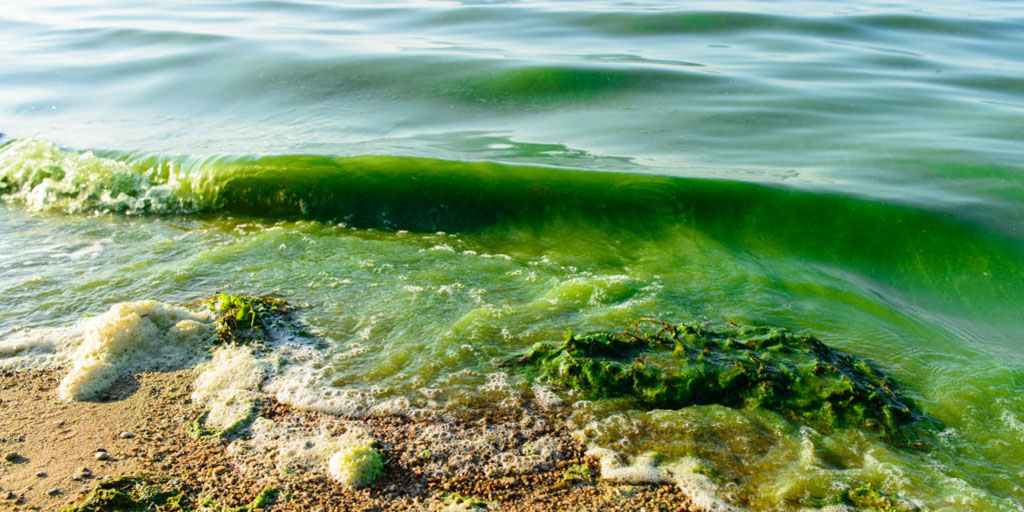
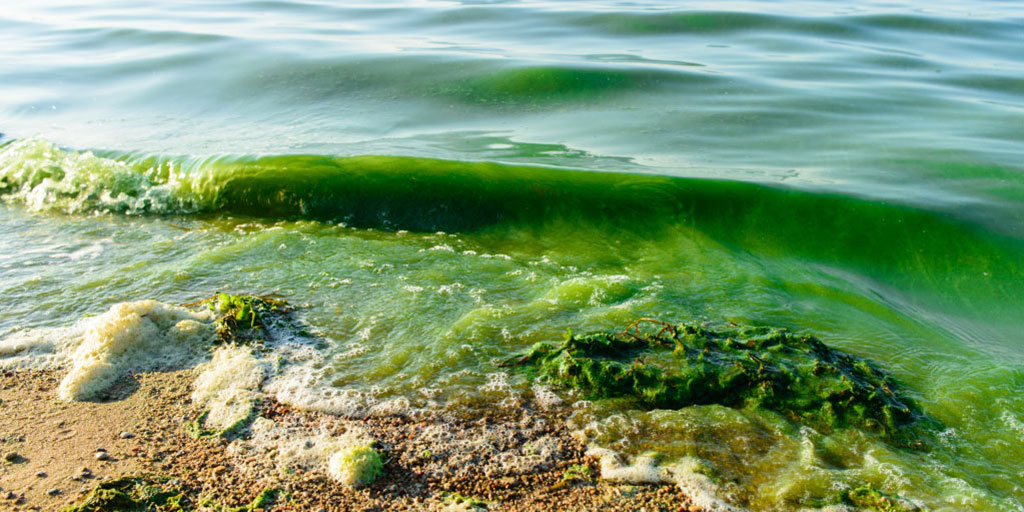
When you think of the ocean, you think of bright blue waters. But sometimes, it turns red, brown, or even neon green. When that happens, it may signal the arrival of a harmful algal bloom or also known as a HAB. These blooms are some of the most disruptive and fascinating phenomena in marine biology.
Algae are essential to ocean life and the ecosystem. Microscopic phytoplankton form the base of marine food webs and produce about half of the world’s oxygen. The problems begin when there is too much algae in the food webs. When excess nutrients from farms, waste management, or urban areas runoff into our waterways, it causes some algae to grow exponentially into large blooms. When these blooms involve toxin-producing species or grow dense enough to damage ecosystems, they become harmful.
One of the most well-known HAB organisms is Karenia brevis, the dinoflagellate responsible for Florida’s infamous “red tides.” This species releases brevetoxins that can kill fish, sicken marine mammals, and even cause respiratory issues in humans when waves break and release the toxins into the air. Red Tide has caused the lowering of many fish species populations and the closure of beaches throughout the affected areas.
Another example of algae that causes blooms to become harmful is Pseudo-nitzschia. It produces a neurotoxin called domoic acid. This neurotoxin accumulates in shellfish and small fish, working its way up the food chain to sea lions, birds, and humans. Domoic acid poisoning can cause seizures and memory loss.
Harmful algal blooms are not new by any means, but they are becoming more frequent and intense in many regions. Climate change plays a major role by warming surface waters and altering circulation patterns. The warming of the waters causes more growth and circulation patterns how the excess nutrients and the algae are transported. At the same time, nutrient runoff from agriculture, sewage, and urban development delivers excess nitrogen and phosphorus into coastal waters. This nutrient pollution fuels rapid algal growth, especially in semi-enclosed systems like estuaries.
When blooms die off, the problem doesn’t just end there. As bacteria decompose the massive algal biomass, they consume much of the dissolved oxygen in the water. This process can create hypoxic “dead zones” where fish and invertebrates cannot survive due to the lack of dissolved oxygen for them to breathe. Entire ecosystems can shift or die as a result.
Ecosystems are not the only ones affected by HABs. When toxic blooms occur, fisheries and shellfish harvesting are often shut down, leading to lost income for fishermen, aquaculture operations, seafood markets, and coastal tourism businesses. These closures can also threaten food security, especially in communities that rely heavily on local seafood as a primary source of protein and livelihood. In addition, HAB events strain public resources, as government agencies must fund water quality monitoring, toxin testing, health advisories, and cleanup efforts to protect communities.
I recommend checking out the links below if you want to learn about Rhode Island’s experience with HABs, the importance of monitoring, and economic issues caused by HABs.
Come spend a day with DEM’s shellfish water quality …www.instagram.com › reel
https://www.sciencedirect.com/science/article/abs/pii/S0165783620301958