Oceanic primary producers produce around 50% of the oxygen that is breathed. An example of such a primary producer is kelp which on top of providing oxygen is also important in providing many marine life, such as sharks, urchins, crustans, and other fish, with a home. However, despite that they have been declining in number at a freighting pace. While this might be known knowledge, the real question is what is causing such a drastic decline? The answer is not so simple. This story does not have one villain, but an amalgamation of numerous factors affecting this important macroalgae. It is a mixture of biological stressor but also physical and chemical. In this article we will be referencing most of the data from Californian Kelp forests.
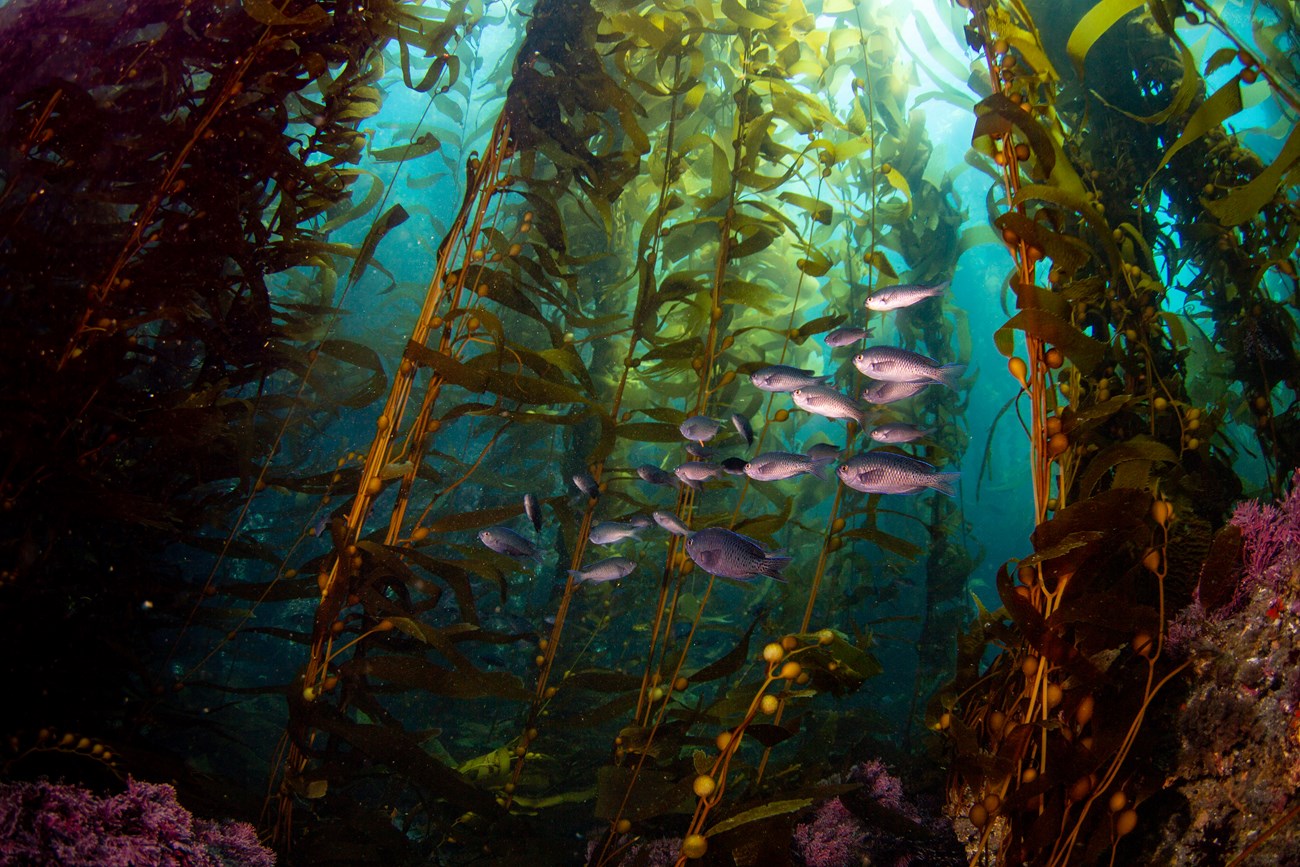
School of blacksmith in giant kelp forest (Image source: National Park Service)
Sea urchins are prominent grazers of kelp. They eat kelp’s holdfasts, which keep the kelp secured to the hard substance, and without that they would float away. Urchin populations have exploded in recent times because of the decline of its main predator, the sunflower seastar (Pycnopodia helianthoides). Usually the seastar would keep these populations maintain equilibrium of the environment. However, there was a disease that swept across the sea star populations called sea star wasting syndrome which nearly wiped out the sunflower sea star population. This caused the urchin population to explode. This is called trophic cascade, or top down control, since the sea star is limited to the urchins. However, the biological aspects are not the only factors that are impacting the kelp forests.
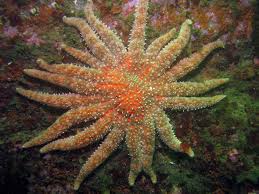
The sunflower sea star (Image Source: NOAA)
In 2013 when the sea star wasting syndrome was ravaging the sea star population there was also a marine heatwave during an El Niño Southern Oscillation Event. The warmed water from the El Niño reduces kelp ability to grow and reduces their recruitment, however it mainly affects central and southern Californian kelp. Non-point and point pollution is also a problem for kelp as it tends to bury the growing plant shoots. Also with an increase in toxic water and sewage can reduce growth rates and reproductive success. Some studies on microscopic stages of kelp indicate that kelp is sensitive to sewage, and other waste runoff.
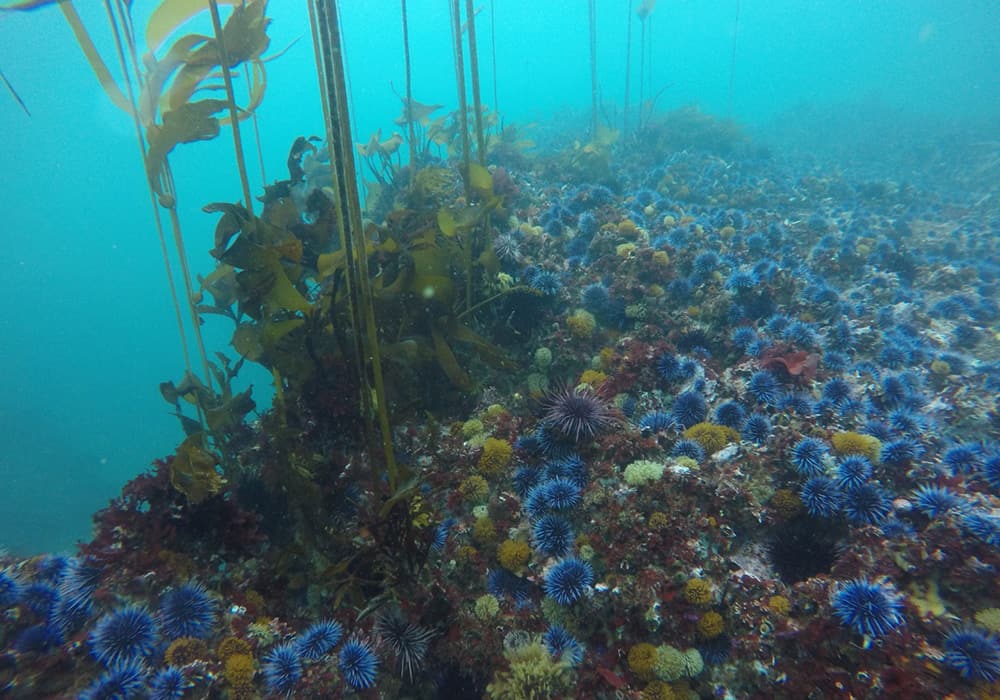
Urchins grazing on kelp’s holdfasts (Image Source: NOAA)
All is not lost for kelp though there are many organizations that are doing their best to regrow kelp forest. Organizations such as the Kelp Forest Foundation, Kelp Forest Alliance, and so much more are going out there to do their part to save kelp forests. For example, the Kelp Forest Foundation which focuses on research, reforestation, and getting young people to foster relationships with kelp forests to become stewards of them. Anyone can get involved to save these natural beauties, from donating to these kinds of organizations, volunteering, “adopting” a kelp forest, or reaching out to representatives to introduce policy to protect them. The story of this ecosystem is not set in stone and you still have the power to change it.
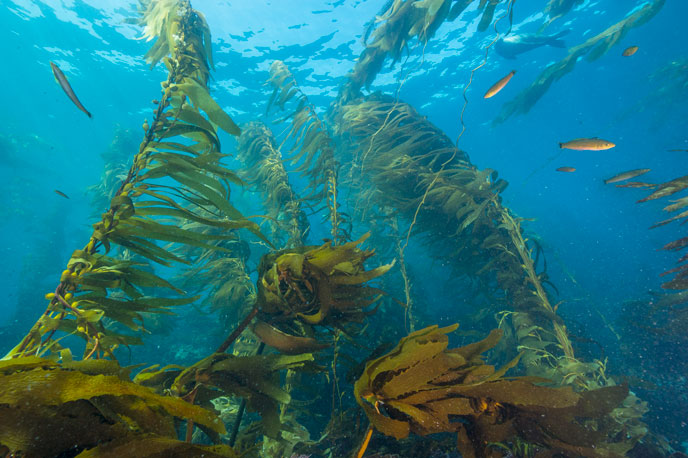
A kelp forest (Image Source: National Park Service)
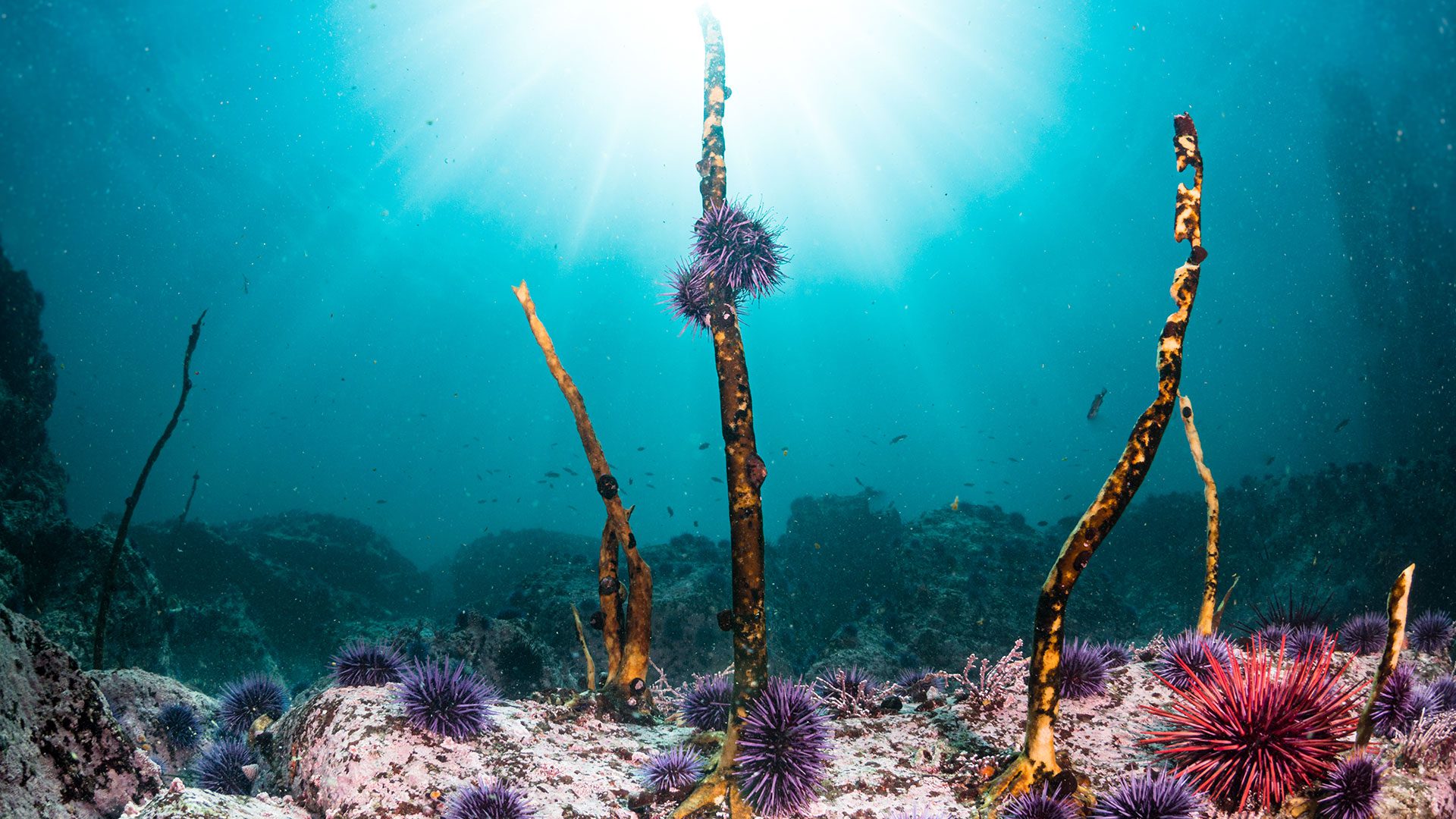
Featured Image: Purple urchins grazing the remaining kelp along the Monterey Peninsula, California (Photo by Patrick Webster) (Image Source: WHOI)