By John Kurkjian
Harmful algal blooms, or HABs, are a phenomenon that can occur in any body of water where algae rapidly overgrow, leading to harmful changes in the environment. The impact of these occurrences has led to learning their causes, what damage they can cause, and how to monitor and control them. HABs are an event that can drastically change the environment, leading to major problems for both the animals and plants inhabiting the area, but also for the humans who rely on that water for their livelihood.
There are two main ways that they can occur: “natural processes such as circulation, upwelling relaxation, and river flow; and, anthropogenic loadings leading to eutrophication”. In this article, they mention that it is commonly thought that human activity is the main cause of HABs, although natural causes are significantly more likely to cause them to occur. The frequency that these outbreaks are occurring at is increasing as well, and the cause is still unknown to researchers, but one theory for why is an increase in eutrophication. An example of this is in Hong Kong’s Tolo Harbor, where the water had 25 times more nitrogen, and 6 times more phosphorus.
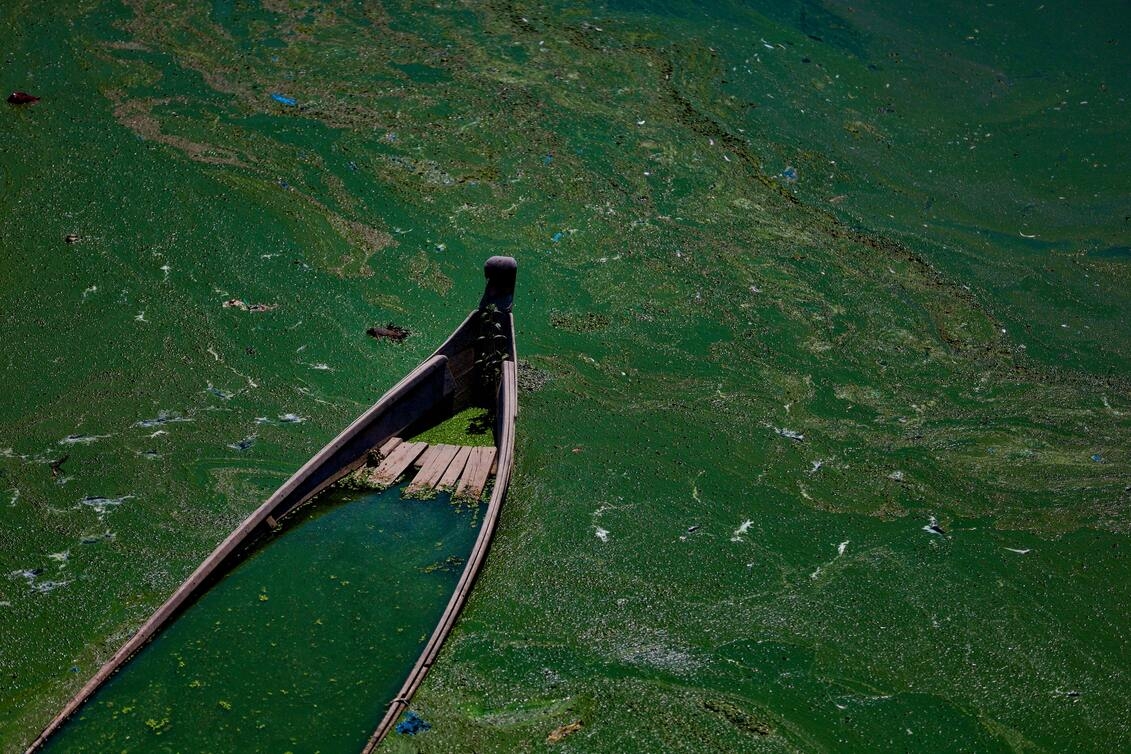
Next, there is the issue of what harm they actually can cause, which can range widely from a variety of reasons, such as where the bloom happens, what organisms inhabit that area, what type of algae it is, and many more. One way they cause harm is also to humans through certain organisms or the water, where “the five most commonly recognized Harmful Algal Bloom-related illnesses are ciguatera poisoning, paralytic shellfish poisoning, neurotoxic shellfish poisoning (NSP), amnesic shellfish poisoning, and diarrhetic shellfish poisoning”.
All of these illnesses are caused by either shellfish or fish, meaning that these HABs are impacting the livelihood of the organisms around them as well as their safety for human consumption, but they can also harm the environment as a whole by blocking out the sun, causing all primary producers to not be able to photosynthesize. As a result of this harm to humans, it is important that we are able to monitor and control these HABs for safety and environmental purposes.
There are many ways that people are able to monitor these events, where “there are five general categories or strategies that can be used to combat or suppress an invasive or harmful species. These include: mechanical, biological, chemical, genetic and environmental control”. Mechanical strategies are the most common currently, as they are the simplest and reactive rather than proactive. These strategies usually include physically removing the algae, which is beneficial for many places where fishing is a vital part of the economy, such as Korea. The other methods require more testing and solutions to find a certain way to solve specific algae in each region safely, which is why it is harder to implement those methods.
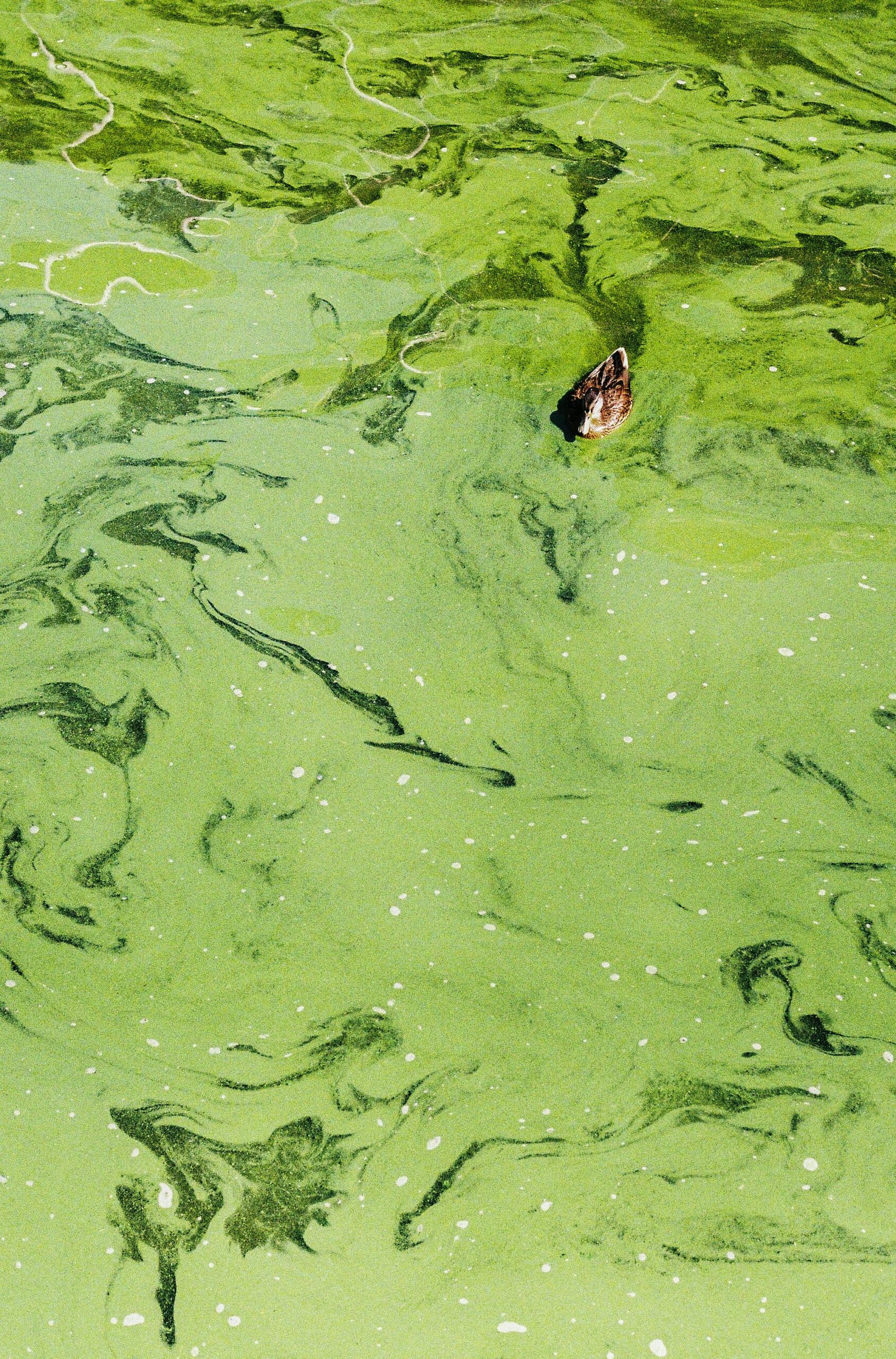
HABs are an event that can cause massive damage to the ecosystem, and to the humans who rely on it, harming many types of organisms that inhabit the area where they occur. For people, it is important to know the causes for HABs, the dangers of them, and how to prevent and monitor them when they occur.
Anderson, D. M. (2009). Approaches to monitoring, control and management of harmful algal blooms (HABs). Science Direct. https://www.sciencedirect.com/science/article/pii/S0964569109000234
Duck in Green Water. (2021). Pexels. Retrieved February 20, 2026, from https://www.pexels.com/photo/duck-in-green-water-9937659/.
Grattan, L. M., Holobaugh, S., & Morris, J. G. (2016). Harmful algal blooms and public health. Science Direct. https://www.sciencedirect.com/science/article/pii/S1568988316301664
Sellner, K. G., Doucette, G. J., & Kirkpatrick, G. J. (2003). Harmful algal blooms: Causes, impacts and detection – journal of Industrial Microbiology & Biotechnology. SpringerLink. https://link.springer.com/article/10.1007/s10295-003-0074-9#Sec2
Wu, T. (2023). Canoe Drowning in a Lake. Pexels. Retrieved March 11, 2026, from https://www.pexels.com/photo/canoe-drowning-in-a-lake-16733874/.