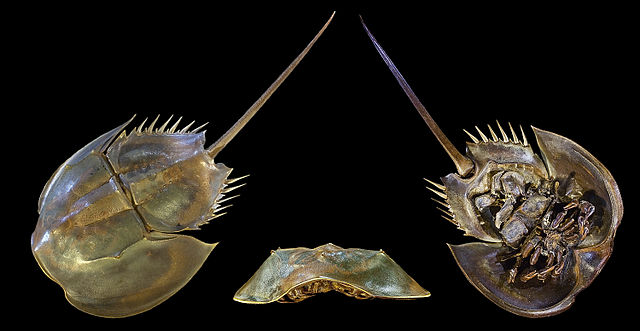
The Blood of the Atlantic Horseshoe crab (Limulus polyphemus) contains hemocyanin, which presents as blue when exposed to oxygen. You would think that would be the most interesting part of their blood, but you would be wrong. In a landmark 1950’s discovery, horseshoe crab blood was found to be incredibly sensitive to many types of deadly bacteria. In the presence of the bacteria, it clots immediately. This then lead to the refinement of the Limulus Amebocyte Lysate (LAL) test.
LAL is synthesized from the antibodies in the blood. It is then used to test for contamination in almost every aspect of the medical system. IV Fluids, Implantable medical devices and vaccines are all screened with LAL before they are allowed to be tested on humans. This tests for Gram-negative bacteria, a class of bacteria that includes E.coli and the Black Plauge (Yersinia pestis)
While this discovery was deeply important to the safety of modern medical practices , there were still concerns being raised about animal cruelty. Before LAL, the primary endotoxin test involved injecting rabbits and monitoring them for fever. The LAL test, approved in the 1970s, was faster, more sensitive, and reduced animal suffering, but it was not without flaws. The overall rate of horeshoe crab death from the blood extraction procedure is low, Modern reports state that the death rate is around15-10%, while other older estimates placed the death rate at 3%.
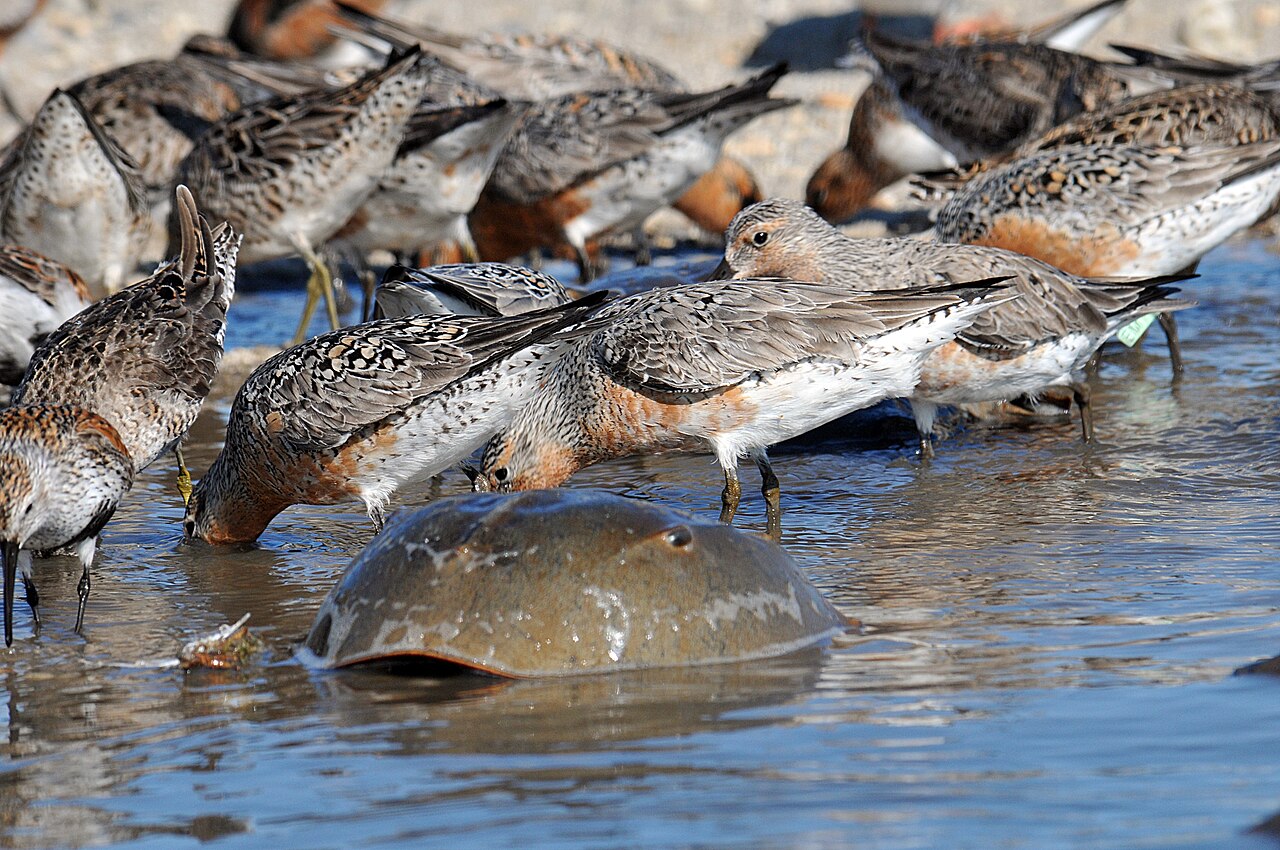
The safety of the vaccines we put in our bodies is important, but the reliance on horseshoe crab blood remains a concern in terms of modern science as the industry strives to move to safer more ethical practices. The harvesting of the horseshoe crab has had extreme effects on the ecosystems where they reside. On the New York Coast, Horseshoe crabs are harvested for bait, as well as for the medical industry. This lead to drastic depletion of their numbers over a 25 year period. Due to its decline, the Rufa Red Knot, a seabird that feeds on horseshoe crab eggs, also began to trend downwards. A bill was passed in 2025 to ban all harvesting of horseshoe crabs in New York by 2029.

The horeshoe crab has been an invaluable tool in humanity’s medical arsenal for almost 80 years, a discovery that saved countless lives. In 2018, a study was conducted on a new type of test, known as recombinant Factor C (rFC). It was proven that rFC was on par with LCL, potentially reducing the need for horsehoe crabs by 90%. In 2025, rFC was approved for use in America, though it has yet to be adopted in most labs. In the coming years, we can hopefully see the horseshoe crab numbers return to what they once were.
Featured image shows: A Trio of horseshoe crabs on a black background (Credit: Wikimedia Commons).