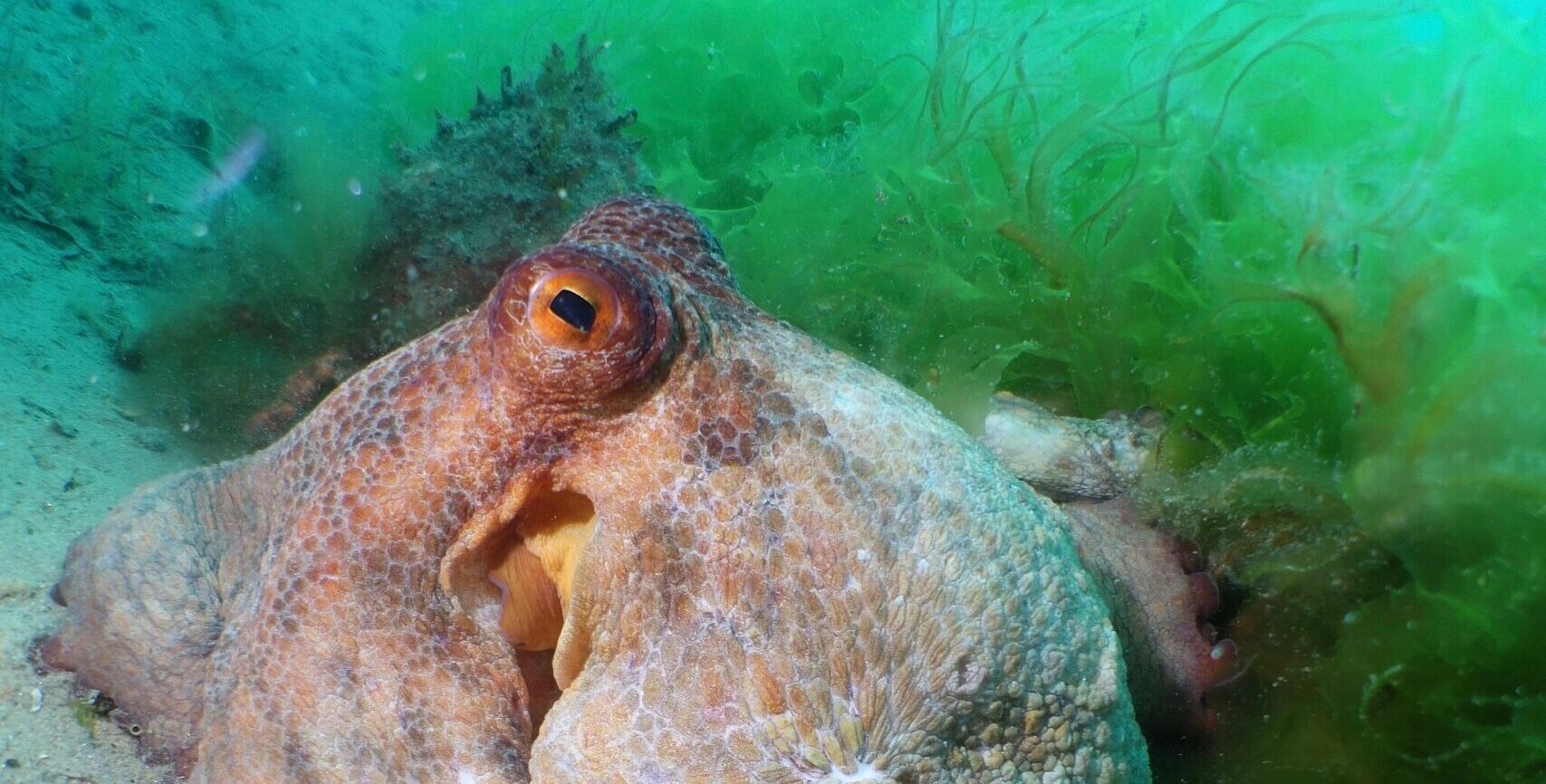
There are many weird and unique defense mechanisms found all across the animal kingdom. One of the weirdest is ink. When people think of animals that make ink, they probably think of octopuses first. Octopuses aren’t the only animals to use ink to defend themselves. In fact, almost all of their closest relatives also use ink, or were able to at some point in their evolutionary history. Octopuses are a member of the class Cephalopoda, which also includes nautiluses, vampire squids, squids, and cuttlefish. Almost every type of cephalopod can produce ink except for nautiluses, with the exception of some species that live in deeper and darker water, as well as some shallow water nocturnal species.
Cephalopod ink has two main parts: ink and mucus. The ink is produced in the aptly named ink sac, while the mucus is made in a gland called the funnel organ. The ink has many different parts, but most of its color comes from a pigment called melanin. Melanin is a common pigment in animals and is what gives human skin, hair, and eyes their color. Most animals only use melanin as a pigment for things like their skin, hair, and scales, but cephalopods use it to give their ink its dark brown color. Some of the other components of cephalopod ink include enzymes, proteins, and free amino acids, which are the building blocks of proteins. These are all parts of the mucus made in the funnel organ and their purpose isn’t fully understood. However, some people think they may be able to block sensors in some predators. Even though cephalopod ink might look dangerous, it doesn’t have any toxins in it (the only species known to have a toxin in its ink is the blue ringed octopus Hapalochlaena lunulata).
The main function of cephalopod ink is to confuse predators, instead of directly hurting them. There are a few different “shapes” the ink can make when released which can help protect the animal in different ways. The two most common classifications of ink shapes are pseudomorphs and clouds/smokescreens. Pseudomorphs, or “fake bodies” (pseudo=false, morph=form/body), are used more often. This form is a blob of ink about the same size as whatever cephalopod is releasing it, and it seems to be used as a decoy to confuse predators and allow the cephalopod to make its escape. Smokescreens are large clouds of ink that distract predators and can give the cephalopod a place to hide and time to escape. There is also some speculation that ink can help warn nearby members of the same species of a predator. Certain compounds, like dopa, dopamine, and even melanin, might act as an alarm signal and help others escape.