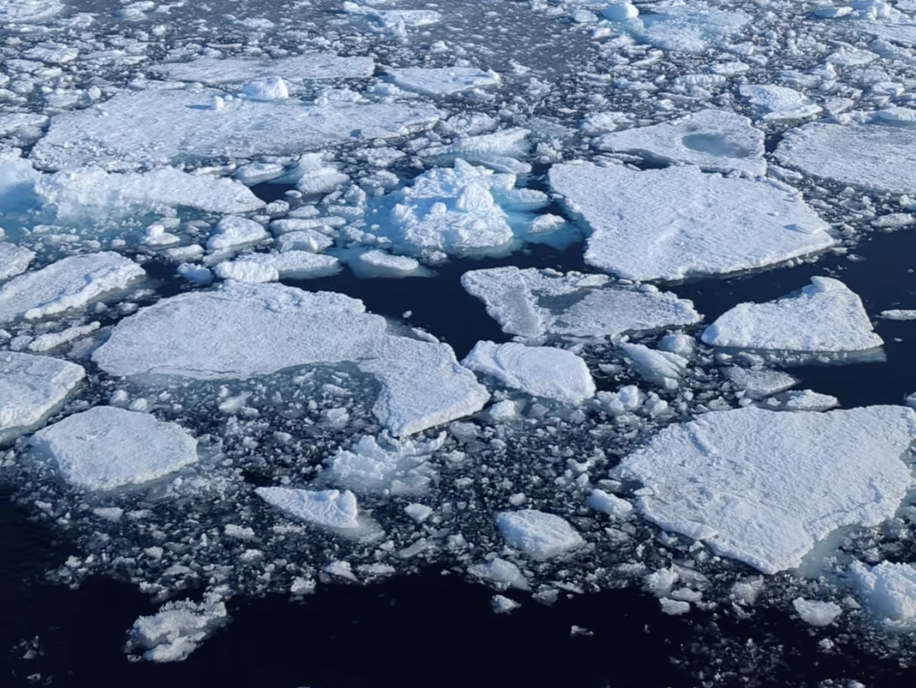
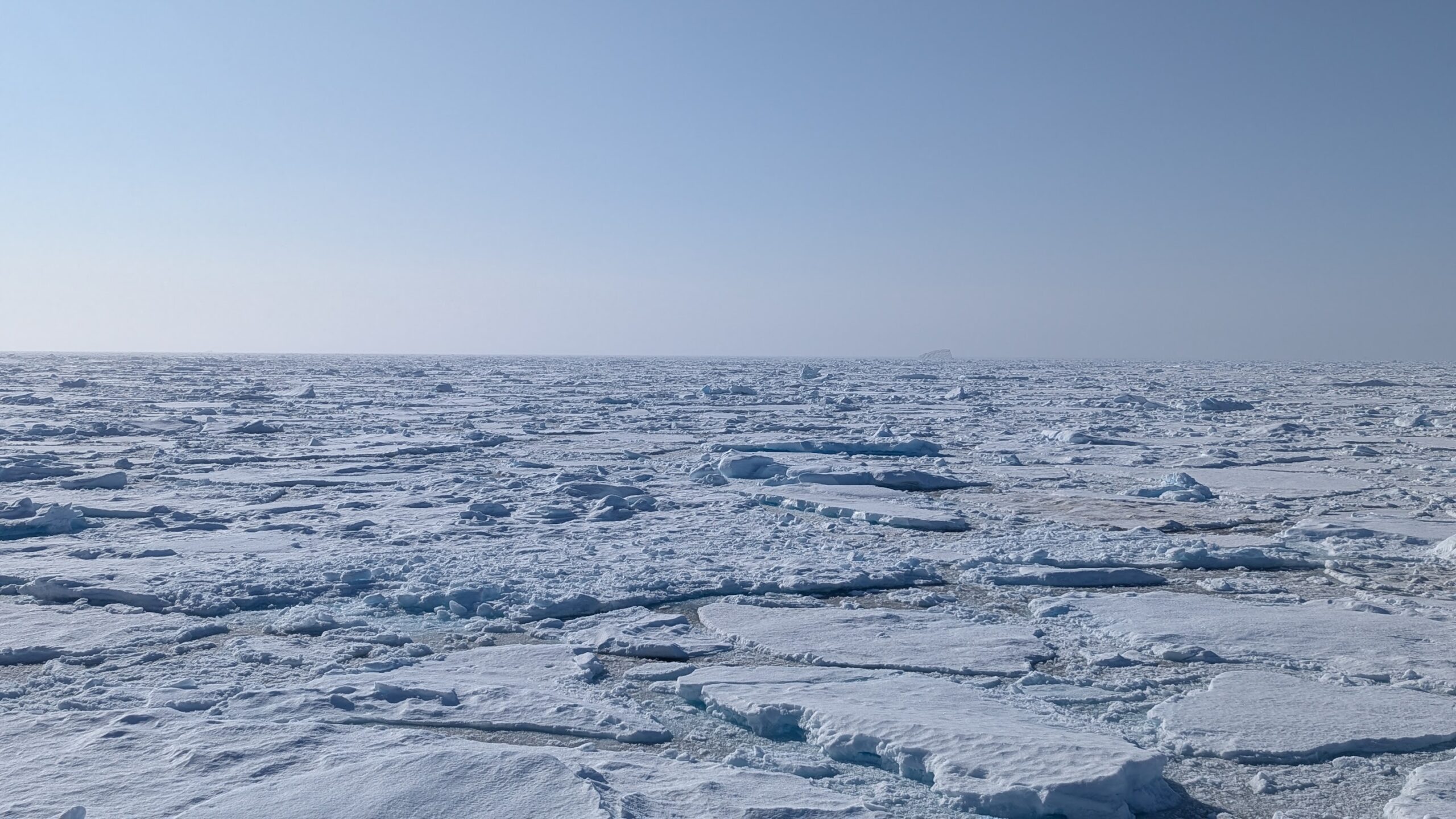
Cover image: Arctic sea ice. Photo credit: Author’s own image
The polar regions are known for being some of the most extreme marine environments on the planet. Not only is the water almost always below freezing, but the ocean’s surface is cloaked in sheet ice even in the summer. Polar organisms experience 24-hour daytime during the summer, and then are plunged into an unrelenting and constant night during winter. It’s easy to believe that life, especially photosynthetic life, would struggle to survive there.
But just underneath the sea ice, a whole ecosystem thrives. And it all hinges on the incredible algae species that have adapted themselves for this extreme part of the world.
Sea ice algae grow on the underside of the sea ice, rapidly forming large algal mats that cover the bottom of the ice. This algae forms the base of the polar food web through photosynthesis and primary production, bringing up to 50%(1) of energy and nutrients into the food chain. Algae mats act as feeding grounds for zooplankton and amphipods like copepods or krill, and these organisms are in turn eaten by fish, penguins, cetaceans, and seals, to name a few. If an algae mat detaches from the sea ice, it also helps feed the benthic environment(2). It’s a full buffet: there are more than 1000 species of algae that form communities in or on sea ice(3).
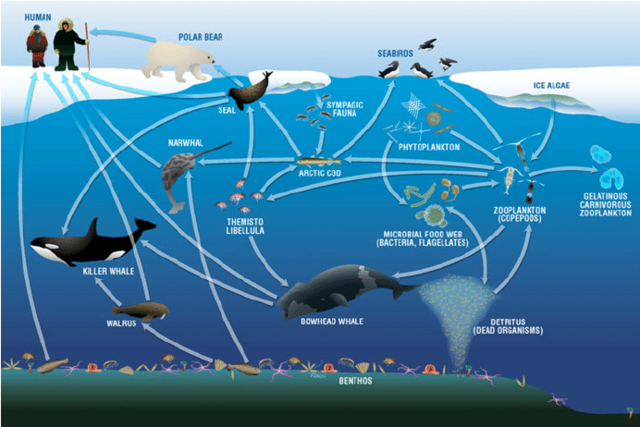
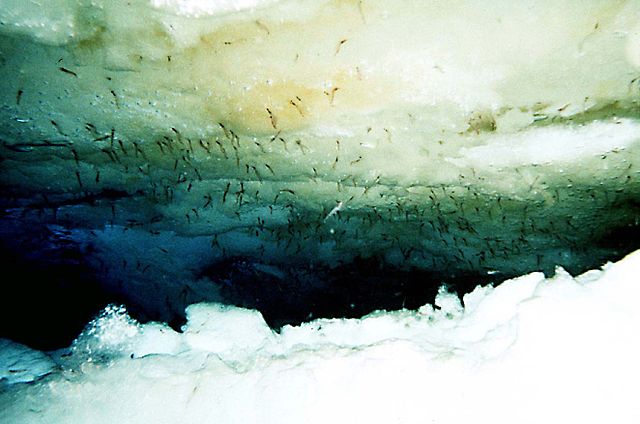
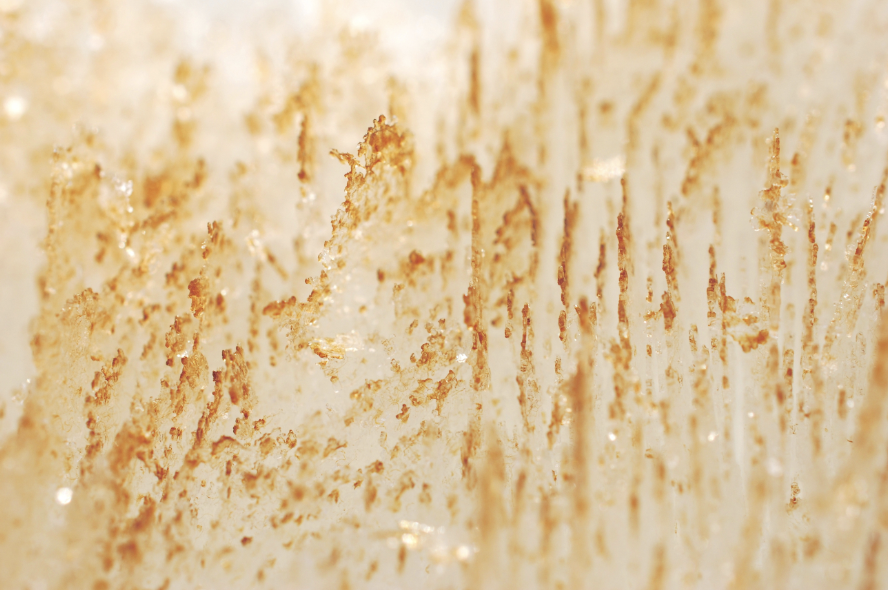
Sea ice algae supports the entire ecosystem, but to thrive to the extent it does, it must be specially adapted to survive in the extreme conditions of the polar regions. One of those extreme conditions is dramatic changes in salinity. As seawater freezes into sea ice in the winter, it expels its salt crystals, making the water around the sea ice more salty and creating pockets and channels of extremely salty water within the ice itself, called “brine pockets(4).” The resulting ice crystals themselves are freshwater, so when they melt in the spring and summer, the meltwater around the ice has a much lower salinity than even the regular seawater. Despite these variable salinity conditions, algal communities have found a way to make the sea ice their home. To survive within the brine pockets and channels, algaes secrete organic compounds(5) that make them able to withstand the high salinity of the brine in winter, as well as the fresher meltwater that floods the channels when the ice melts.
To survive beneath thick ice and through the dark polar winter, sea ice algae species have been shown to have some of the most extreme low-light adaptations: incredibly, they are able to photosynthesize with only 0.02%(6) of typical daytime light.
However, with the warming of the polar regions, less and less sea ice is reforming each year. The amount of sea ice algae is dependent on the availability and thickness of sea ice, both of which are decreasing as a result of climate change. Thinning and melting ice also impact the mixing of the ocean’s layers, as the fresh meltwater causes stratification within the water column that disrupts the currents of the ocean(7). Less mixing also means less upwelling, keeping vital nutrients from reaching the surface waters where algae grow. By protecting the algal communities by preventing mass sea ice melt, we can protect the biodiversity and strength of polar ecosystems.
Arctic sea ice. Photo credit: Author’s own image