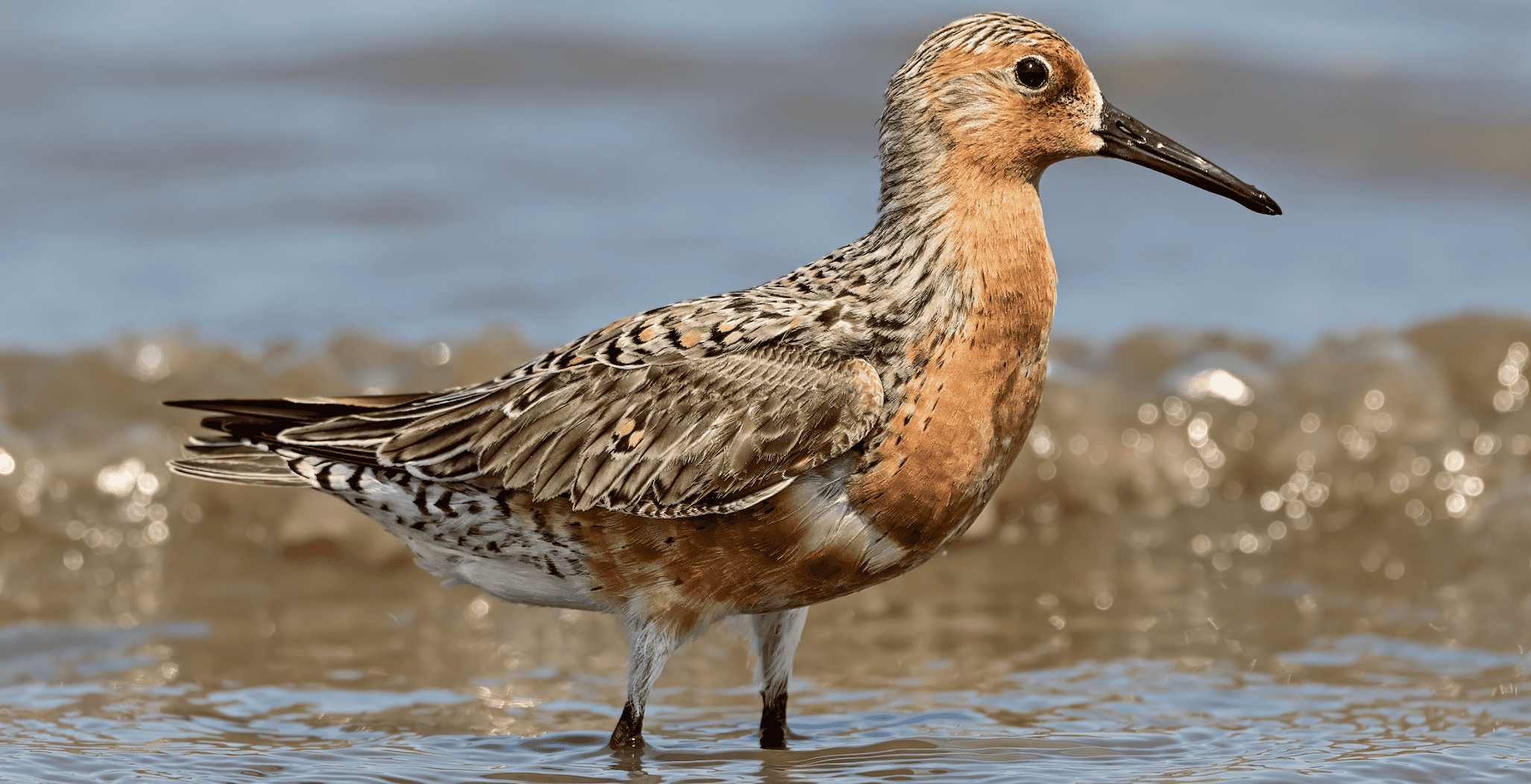
Every spring and fall, the Atlantic Flyway, which runs north to south along the eastern coast of North America, acts as a major highway for hundreds of bird species, particularly shorebirds. During the spring, the Delaware Bay serves as a critical rest stop for these during their northward migration. In late May, hundreds of thousands of shorebirds, along with their predators, descend on the Bay, their energy reserves depleted from flying almost nonstop for thousands of miles from southern wintering grounds.

Among them are federally threatened red knots, robin-sized shorebirds sporting their namesake rusty breeding plumage. They arrive having flown nonstop the past few days from their wintering grounds on mudflats lining the shores of Tierra del Fuego, some 6,500 miles away at the far-flung tip of South America. There, they underwent extreme physiological changes, with flight muscle mass and fat reserves having increased significantly (up to 50% for the latter), while leg muscles, the stomach, and the gizzard shrank to accommodate this transformation. Due to these changes, migrating red knots are only able to feed on soft prey, timing their journey to coincide with the spawning of horseshoe crabs . About 45,000 red knots, representing 50-80% of the Western Hemisphere population, stop in the Bay to refuel on horseshoe crab eggs, which are particularly high in fatty acids. A single knot will eat thousands of eggs daily, needing to double or even triple its weight during its short stay (usually no more than two weeks) in order to reach its breeding grounds in the high Arctic.
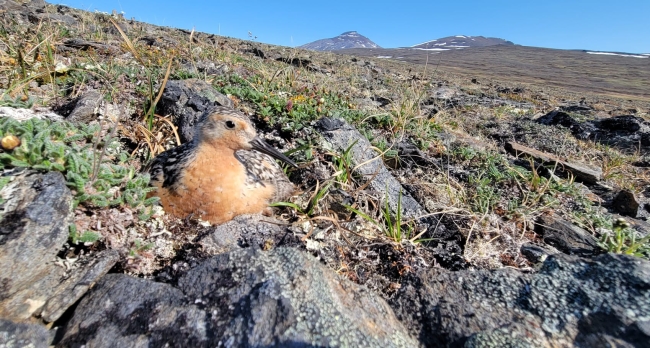
These habitats are becoming increasingly threatened, as high-latitude regions experience some of the most rapid effects of climate change. Red knots tend to build their nests on dry, stony tundra upland of wetlands. As sea level rise continues, these ideal breeding habitats shrink/degrade. With snow melting earlier, crane flies, a significant food source for red knot young, emerge earlier and may be less abundant by the time chicks are able to feed. This results in lower breeding success, smaller and thinner birds, and ultimately fewer individuals reaching their wintering grounds. In the Delaware Bay, the decline of red knots in recent decades is directly correlated with the decline of Atlantic horseshoe crabs due to overharvesting. As mentioned in other posts on this website, horseshoe crabs have been subject to unsustainable exploitation for their blood, specifically for Limulus amebocyte lysate (LAL). When exposed to bacterial endotoxins, horseshoe crab blood coagulates and forms a gel, making it invaluable to the pharmaceutical industry, particularly for detecting contamination in vaccines and other injectable drugs.

Regardless of the resilience of the red knot, the reality is that the unsustainable and unprecedented rate of change to the natural world will result in emptier skies. Across the Americas, people from all walks of life are trying to keep knots flying. Conservation efforts implemented in the Delaware Bay over the last several decades have helped steady the steepest declines in knots, and the development of synthetic alternatives to LAL is yielding promising results. Despite this, climate change ultimately threatens knots as their High Arctic breeding grounds disappear. However, if an animal barely larger than our hands can travel from nearly pole to pole, how insurmountable can our challenges really be?
Photo Credits:
Cover Image – “A Rufa Red Knot in the surf of the Delaware Bay in Cumberland County, NJ.” By Chuck Homler d/b/a Focus On Wildlife – Own work, CC BY-SA 4.0, Link
Red knot in flight & A banded red knot – https://dep.nj.gov/dsr/environmental-trends/wildlife-populations-red-knot/
Nesting red knot – A roselaari Red Knot sits on its nest outside Nome, Alaska, Zak Pohlen/USFWS, Public Domain, https://www.fws.gov/media/roselaari-red-knot-sits-its-nest-outside-nome-alaska-0
Suggested Reading:
The Narrow Edge by Deborah Cramer