Every winter, a few days after the full moon, thousands of Nassau groupers travel across Belize’s coral reefs to gather at the same spawning sites they have used for generations. For fishermen, these gatherings make it easy to catch a lot of fish in a short amount of time. For the Nassau grouper, though, this predictable behavior has become a serious weakness.
The Nassau grouper (Epinephelus striatus) is one of Belize’s most prized reef fish for its taste and yield. The species lives on coral reefs and atolls throughout the Caribbean. They are dispersed throughout the reef year-round, but come together to spawn in specific locations during the winter. During these events, hundreds or even thousands of fish gather in dense schools at the same sites year after year. Belize’s Nassau grouper fishery is centered on winter spawning aggregations offshore at Glover’s Reef.
Stakeholders of the fishery include small-scale commercial fishers, local communities, and the Belizean government. Many local fishermen and their communities rely on this fishery as their main source of income. Nassau grouper is valued for its taste and economic importance, providing income and food security for coastal communities. However, this once-abundant fish has experienced severe population declines due to overfishing and weak management.
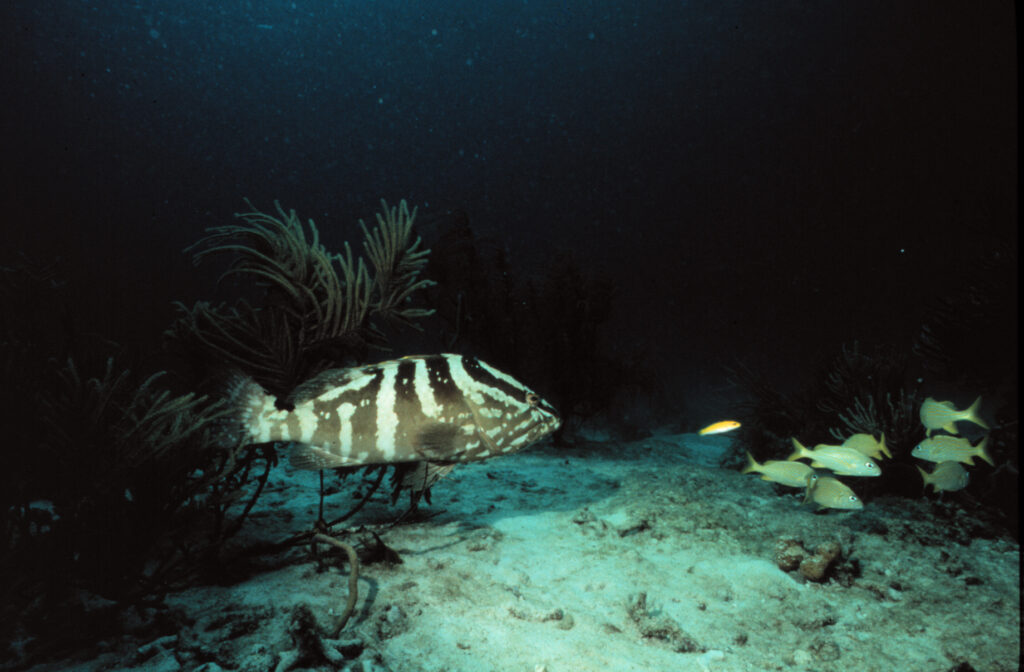
The main reason Nassau grouper are so easily overfished is their spawning behavior. Annually, a few days after a full moon in the winter, Nassau grouper travel long distances to gather at the exact same spawning sites. They form dense ball-like schools and can be found in the hundreds or even thousands at a specific spawning site. This makes it extremely easy to catch large numbers of breeding adults in a short period of time. Fishermen spearfish these spawning sites at night, killing as many as they can and sometimes leaving the sites empty. A 2009 study found that only 4 of 11 historical spawning sites were considered active, and in 2011, only 2 sites recorded more than 1000 spawning individuals.
Removing fish during spawning is especially harmful because these individuals are responsible for producing the next generation. Removing large predatory fish from an ecosystem can cause a cascading effect throughout the food web. Nassau grouper also grows very slowly, taking seven years to reach maturity, making it harder for Grouper populations to recover from heavy fishing pressure. Another study shows a specific site historically provided a catch of up to 1,200–1,800 Nassau groupers per boat per spawning season during the 1960s. In 2001, at the same site, fishers caught just 9 individuals out of an aggregation of 21 groupers. This predictable spawning behavior made the species highly vulnerable to overfishing and is a major cause of their decline in Belize and throughout the Caribbean. In 2018, Nassau grouper were listed as critically endangered under IUCN’s Red List.
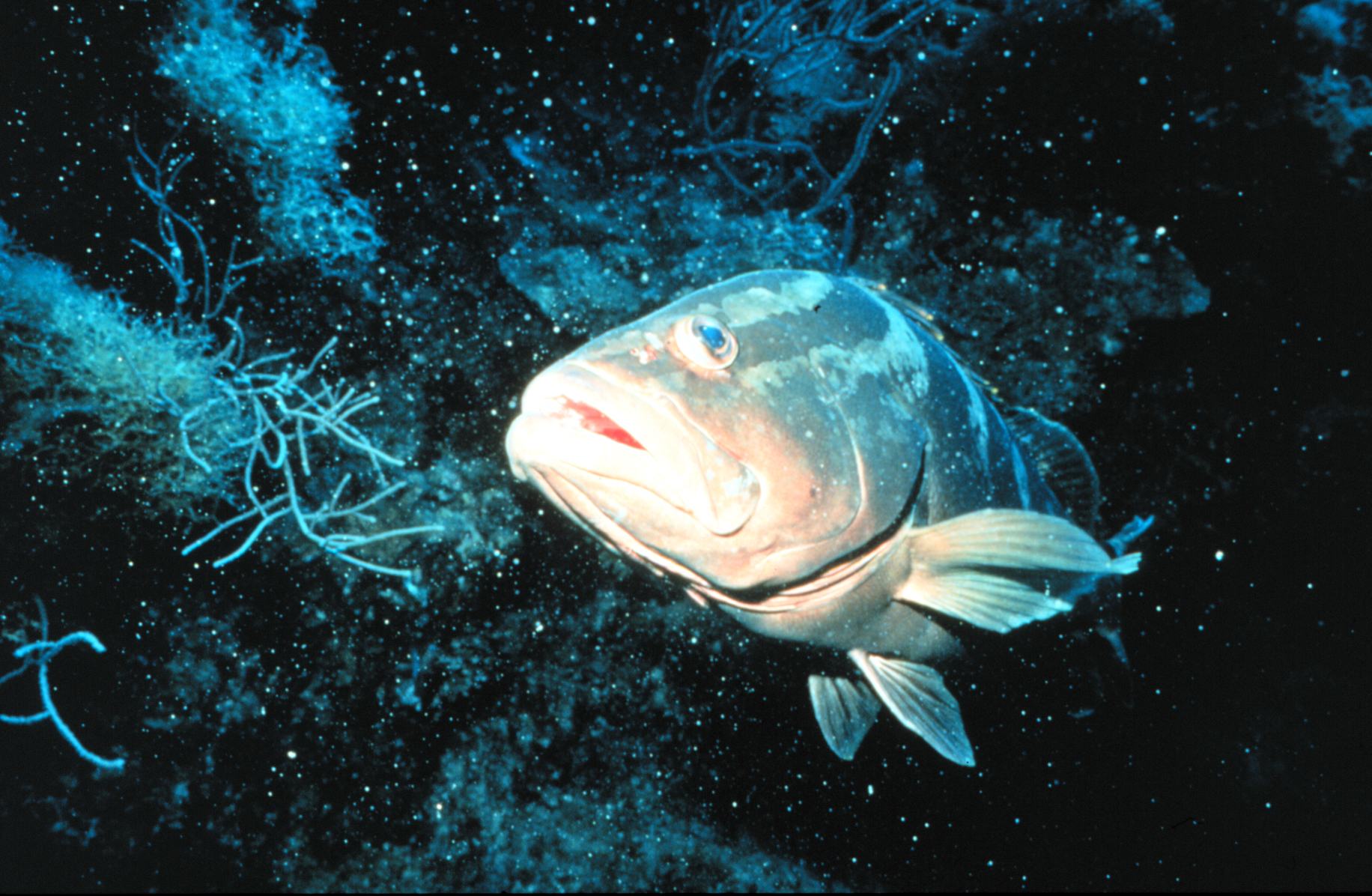
In the early 2000s, the Belizean government enacted regulations on the grouper fishery, aiming to halt its rapid decline. Regulations included seasonal fishing closures during spawning months, protection of known spawning aggregation sites, and the creation of marine protected areas (MPAs). To this day, enforcement of these regulations remains poor and directly contributes to the near-extinction of the Nassau grouper stock. This continued fishing pressure deeply threatens the long-term survival of the species. Without stronger enforcement and cooperation between fishers and management, Nassau grouper populations may continue to decline to extinction despite existing protections.