When most people hear the word “bioluminescence” the first example they think of is a firefly. Anybody who has been in rural areas of the United States has seen the small blinks of light lining the forest and caught the little bugs in jars to briefly gawk at before releasing them back. The real question is, how are these little bugs making such a light?
The answer is their ability to produce an exergonic reaction. They use a molecule called luciferin which reacts with oxygen with the help of enzyme luciferase and creates a photon of visible- typically green- light. This process creates their bioluminescence, their glow.
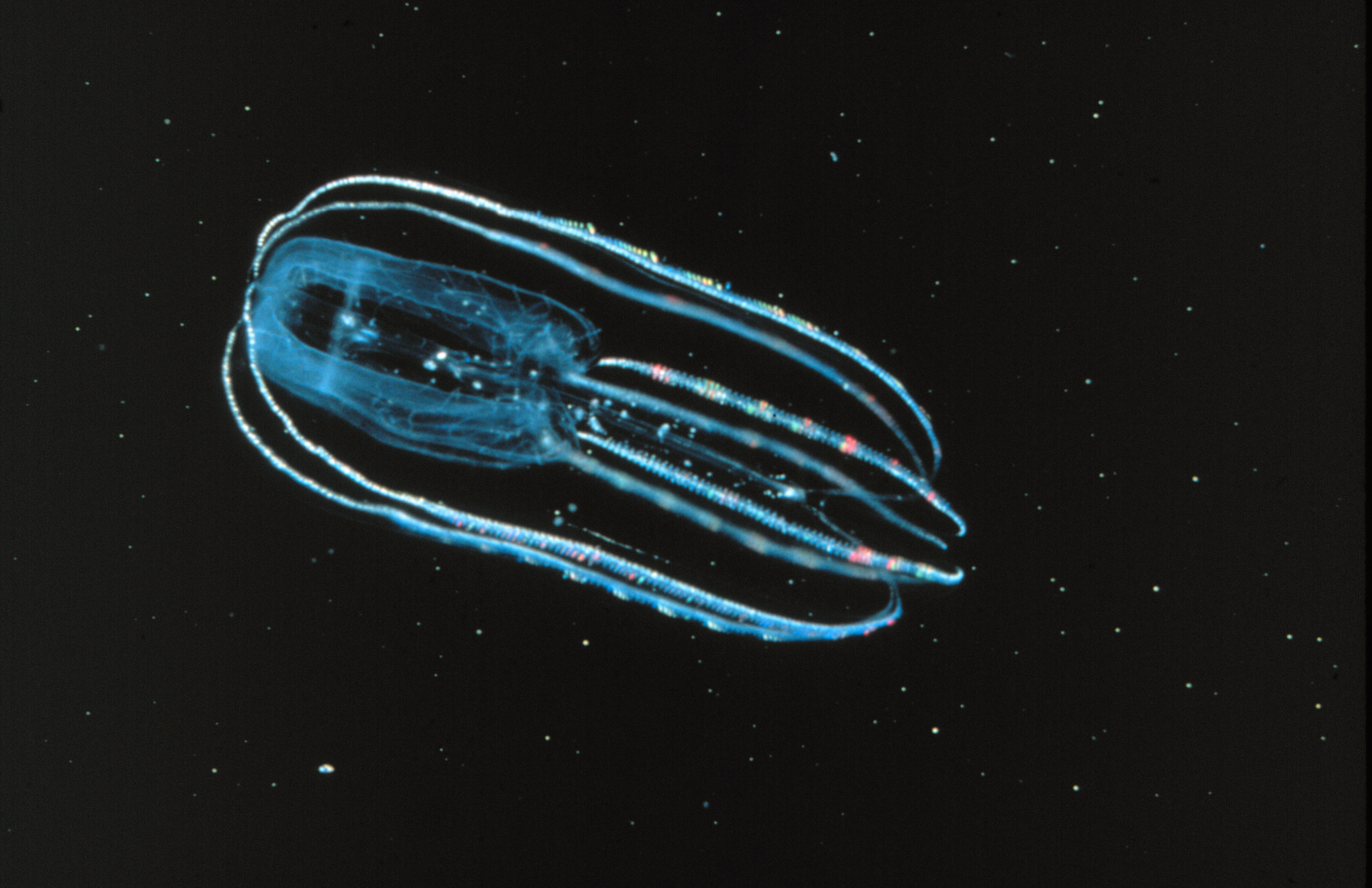
Bioluminescence is a powerful evolutionary adaptation used by organisms for survival, communication, and predation. While most people’s vague idea of bioluminescence comes from a species from the land, that is actually a rare case. It is far more common to see examples of bioluminescence in the ocean than in terrestrial areas with an estimate of 75-90% of deep sea organisms utilizing this technique.
Biology and Overview of the Cookie-cutter Shark
An example of bioluminescence being used for predation is found in the Isistius brasiliensis, or more commonly known as the Cookie-cutter shark. This species gets its name from the uniform circular bite wounds it takes out of its prey, similar to how a cookie cutter cuts out perfectly circular cookies from dough. These sharks are found in the open ocean or closer to shore in tropical waters. They are very small compared to other sharks, sitting at only around 20 inches and swimming at a very slow pace, in groups. These sharks reside in the deep ocean in the day to hide from predators. They return to the surface at night when the ocean is lighter where the moon hits and darker below. This movement throughout the day is called vertical migration.
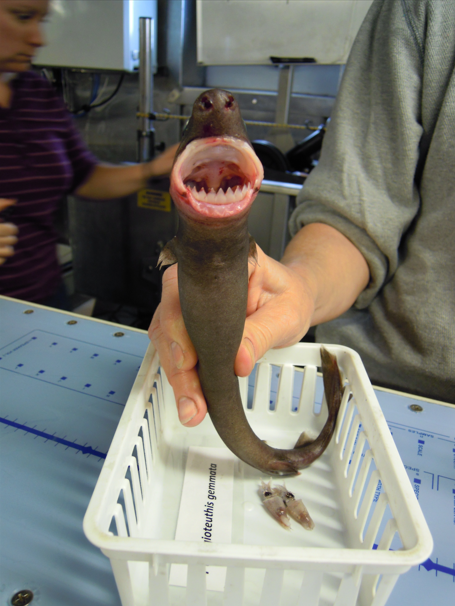
Because of the shark’s small size and slow movement, they must rely on morphological advantages to survive, bioluminescence being the top one. The shark’s light producing organs- the photophores– form a constant light around the underside of the body shaping around one dark band around the mouth and throat that does not produce any light. The lighter parts allow the rest of the body to camouflage into the lighter ocean above where the moon illuminates the waters, the rest of the body without the photophores creates a darker shadow. This is called differential blending.
The dark band around the mouth and neck is used as a lure, it appears to be a small fish swimming along, and since the sharks travel in schools, the combination of all the dark bands looks like a school of fish. This appearance attracts larger prey than the cookie cutter would be able to catch otherwise. With the Cookie-cutter sharks outnumbering the newfound prey, the fish is quickly latched onto and after the shark forms a vacuum seal around its prey, it delivers a bite and rotates to remove perfectly circular chunks of flesh ripped off.
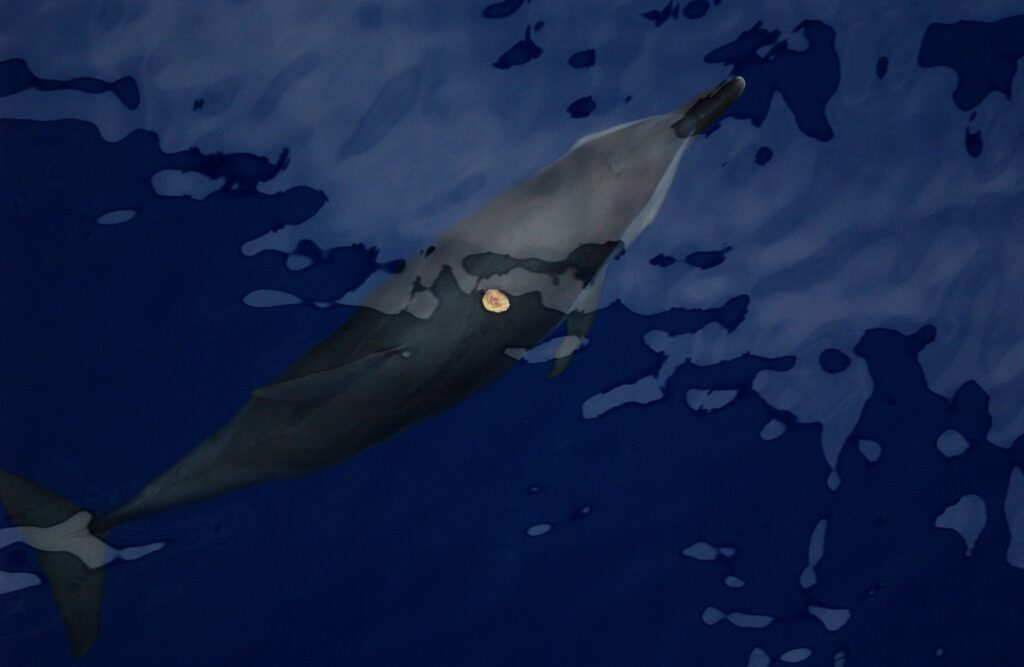
Without the bioluminescence adaptation and their use of vertical migration, it would be very difficult for Cookie-cutter sharks to survive. Their differential blending opens the opportunity for easier predation and survival.