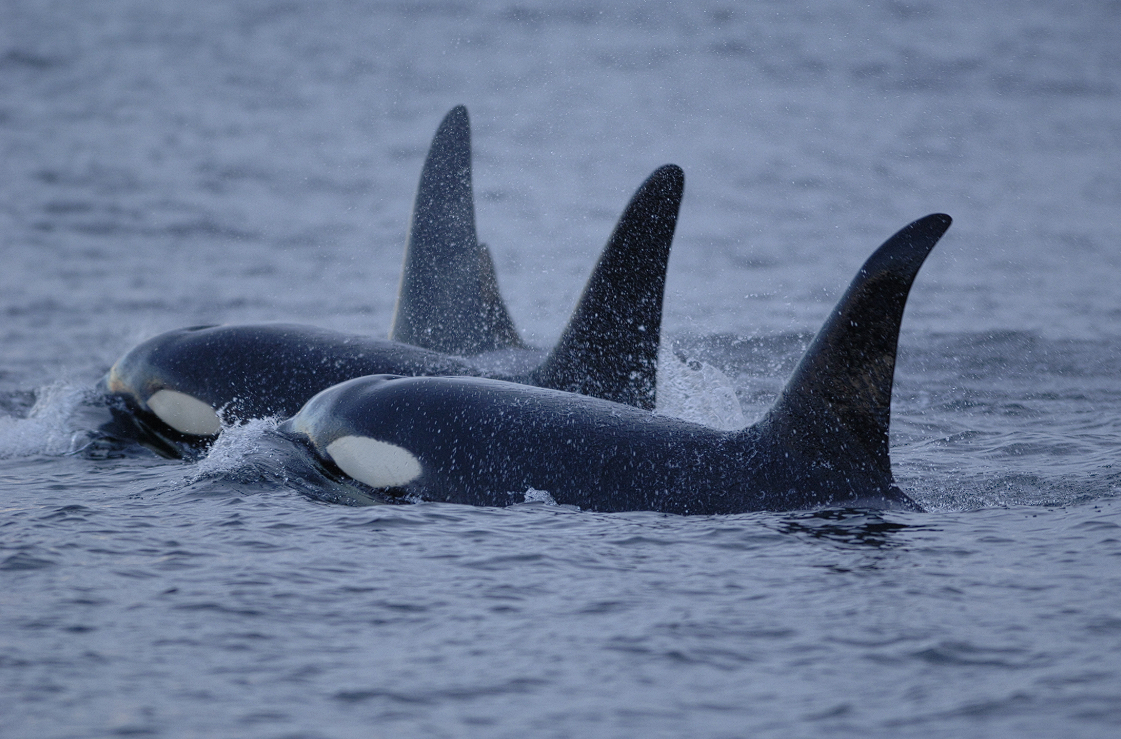
Cover image: Killer Whales (Orcinus Orca) swimming in a pod. (Photo by Dr. Brandon Southall – NOAA)
Kelp forests are known worldwide not just for their beauty, but also for their ecological impact. These massive forests create habitats for hundreds of marine organisms while also providing numerous environmental benefits, including carbon sequestration, coastal protection, and improved water quality. Despite their importance to our planet, they are disappearing at an alarming rate. One of the primary drivers of this decline in many regions is urchin overgrazing. With a loss of predators, sea urchin populations have been able to grow exponentially, leading to a large loss of kelp forests. But what has happened to the predators responsible for keeping the urchins from overpopulating?
Sea otters are the primary predators of sea urchins and are considered keystone species in kelp forests. However, sea otters have seen a sudden decline in population despite having few natural predators in their marine environments. One leading hypothesis suggests that sea otters began experiencing increased predation from killer whales (orcas), even though orcas do not typically feed on otters. So what caused the dietary shift in orcas?
Orca diets vary by population but commonly include salmon (such as Chinook) and marine mammals like seals and sea lions, all of which have seen declines due to a variety of anthropogenic pressures. Whether through overfishing and habitat degradation affecting salmon populations, or historical and ongoing pressures on marine mammals, the food sources of orcas are being depleted faster than they can recover, leading to a significant decline in available prey. Once these food sources are gone, orcas are forced to find alternative prey, and sea otters become an easier target, as orcas can swim nearly seven times faster than otters and are effective and persistent hunters. This raises a broader conservation question: how can we reduce the pressures that push orcas toward alternative prey?
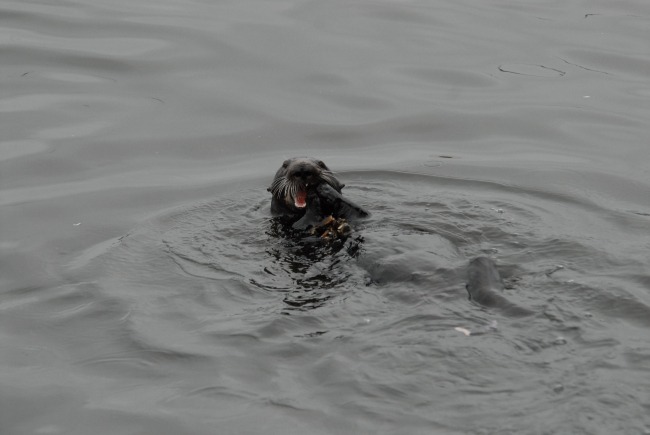
A Sea Otter (Enhydra lutris) eating mussels. (Photo by Dr. Mridula Srinavasan – NOAA)
Addressing this issue requires conservation policies that protect both orcas and the ecosystems that support their primary prey. With better laws regulating open-water fishing and large marine mammal hunting, we can reduce the loss of these species from bycatch and overharvesting. Additionally, laws that better regulate agricultural practices and waste disposal can reduce the amount of pollutants flowing into the ocean, thereby reducing the loss of salmon and other vital food sources for both orcas and humans. Furthermore, regulations on sonar use can improve orcas’ ability to hunt, navigate, and communicate with one another, making them more effective hunters.
With these changes, orcas would not face such difficulty in finding their natural food sources, meaning they would be less likely to resort to preying on sea otters. Without orcas hunting sea otters, otter populations can stabilize, and with the return of sea otters, sea urchin populations can be controlled. In theory, these changes could help restore trophic interactions that support kelp forest recovery, ultimately leading to the protection of kelp forests. This illustrates how all life and ecosystems are interconnected in more ways than we often realize, highlighting the importance of protecting each component of the system.
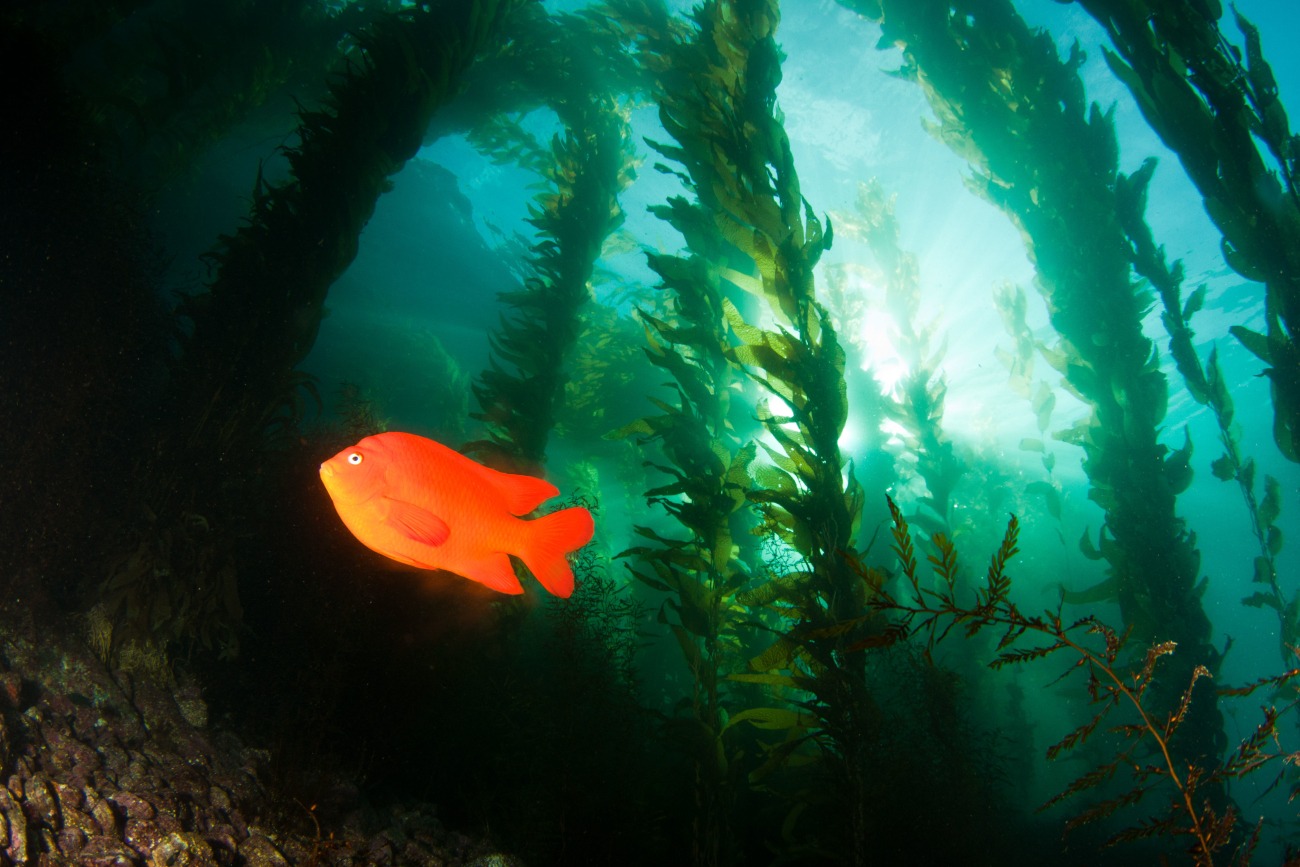
A kelp forest in Goat Harbor, California. (Photo by Adam Obaza – NOAA)