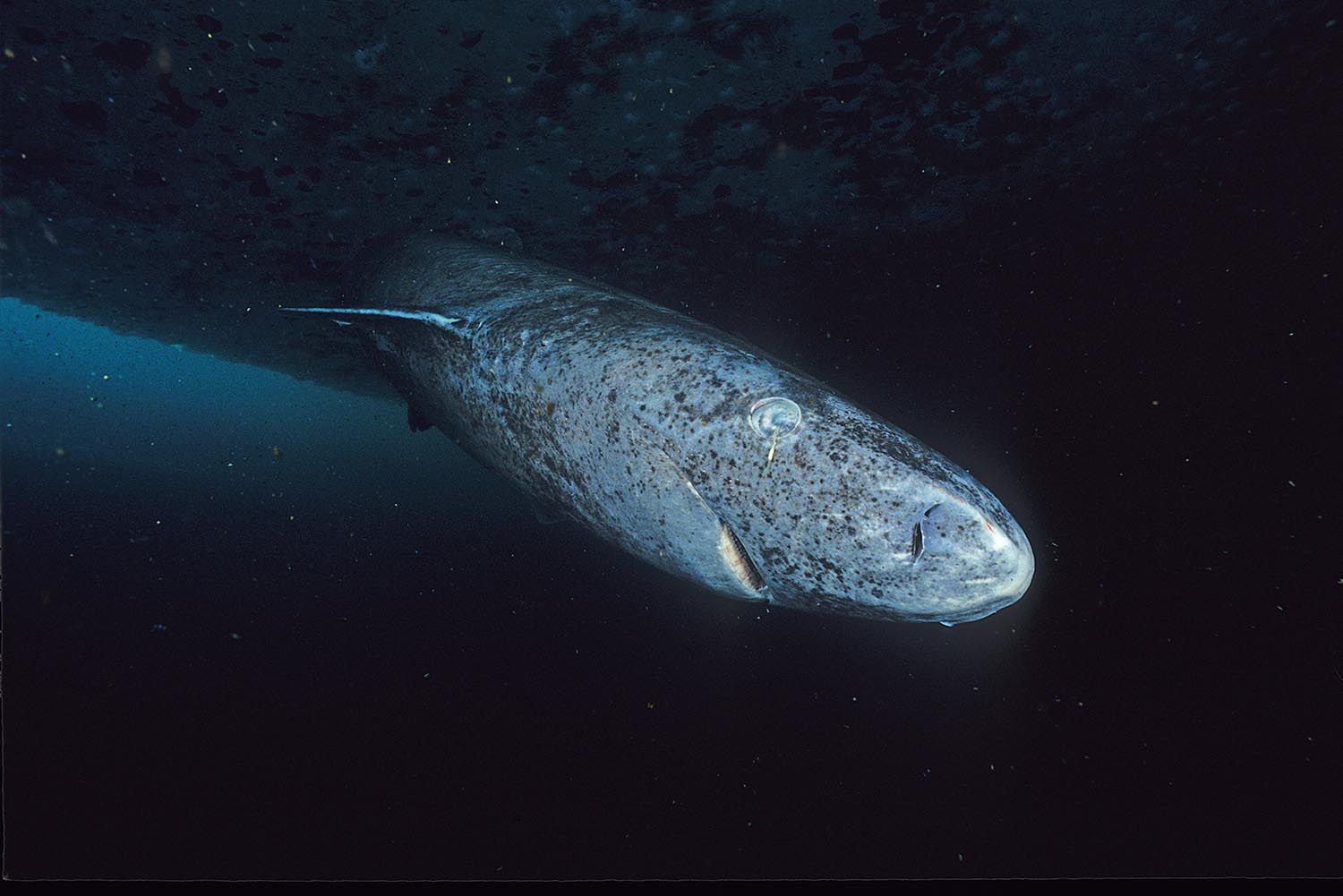
“Greenland shark profile” by Hemming1952 is licensed under CC BY-SA 4.0.
As of 2026, the Eastern Roman Empire fell 573 years ago. It’s almost impossible to imagine any type of creature that has existed all those decades ago to still be existing today. However, that idea is not too farfetched. Somniosus microcephalus, or better known as the Greenland shark, is the oldest living vertebrate on the planet. Their age ranges from 250 years to 500 years old. Since these sharks lack ring-forming tissue, scientists cannot use sclerochronology to determine their age. Instead, they use a method called radiocarbon dating. Samples of proteins within the shark’s eye lenses are identified for any remnants of carbon-14 signatures, which can be traced back to the nuclear tests of the 1950s. The radiocarbon levels help determine if the shark was born before or after that time period.
Though the method of radiocarbon dating is helpful when it comes to Greenland sharks, it isn’t always accurate. The oldest recorded specimen was estimated to be 392 years old, but had a 120 year margin of error due to the inaccuracy of the radiocarbon dating. This means that this shark could have been anywhere between 272 to 512 years old. Since the majority of the ocean is unexplored, it’s highly probable that there is a Greenland shark who is as old as the fall of the Eastern Roman Empire swimming out in the Atlantic Ocean.
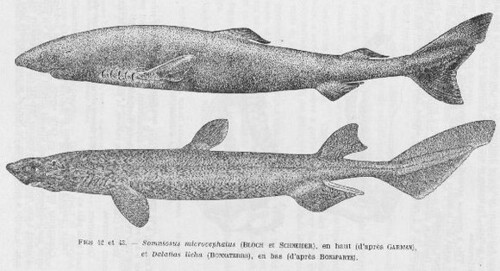
“Greenland Shark. Supplier: World Register of Marine Species Author: H. Dupond in Poll (1947) (naar Bonaparte)” by EOL Learning and Education Group is licensed under CC BY 2.0.
Many scientists have wondered what the secret is to these organisms’ lengthy lifespan. Research has shown that there are a multitude of factors that contribute which include slow growth and metabolism, delayed reproductive maturity, dilatory movements, and an extreme environment. Greenland sharks grow at a pace of 1 centimeter per year, which is the same speed as the Antarctic Plate’s movement toward the Atlantic Ocean. Females reach reproductive maturity once they turn 150 years old. To put this into perspective, Great white sharks usually reach reproductive maturity between 15 to 20 years old. The arctic waters they thrive in have low concentrations of oxygen and near-freezing temperatures which influence their slowed movement patterns. Because they move so slowly, these sharks do not chase down live prey compared to other shark species. They are scavengers— and feed on the carcasses of animals such as seals, fish, and even polar bears that fall into the ocean. Their slow metabolism also allows for them to not need sustenance as often. They can go long stretches of time without food. The combination of all of these factors explains why the Arctic environment is a perfect fit for this organism. Sharks in general are considered living fossils since they have existed for over 450 million years with very little evolutionary change, though Greenland sharks truly live up to that description.