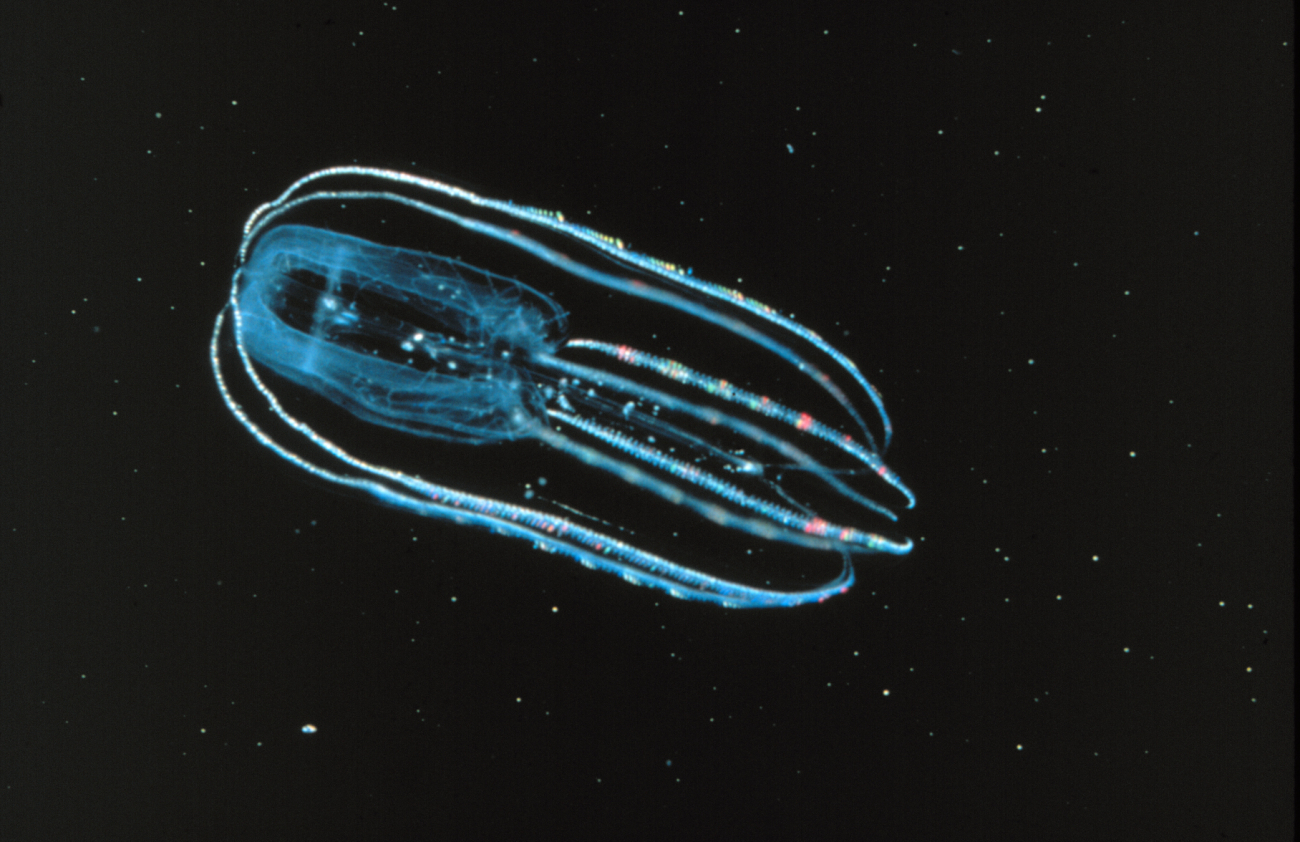
Bioluminescent organisms are present everywhere in our oceans, surprisingly the proportion of glowing to non-glowing organisms is fairly constant at most depths, with up to 75% of organisms likely being bioluminescent . But if bioluminescence is equally as prevalent in depths as it is at the surface why is it so vital to the survival of deep-sea species. In the extreme environment of the deep sea, bioluminescence is the difference between life or death. Resting below the photic zone, light cannot penetrate deep enough to allow for good visualization of the environment and creatures around. So, creatures of the deep use bioluminescence for many purposes like hunting, mating and defense.
First off, how does bioluminescence work? The glow itself is created via a chemical reaction between a light-emitting molecule known as luciferin and oxygen, aided by an enzyme, luciferase. The result is a light-producing photon, the unique product is referred to as “cold light”. Some organisms are capable of directly producing this reaction in their body. While others rely on symbiosis between themselves and bacteria that are capable of this process. This process differs from other light producing methods organisms can have like fluorescence or phosphorescence because it requires no external light source. The colors produced range between a small variety of colors, like red, blue, green, or yellow.
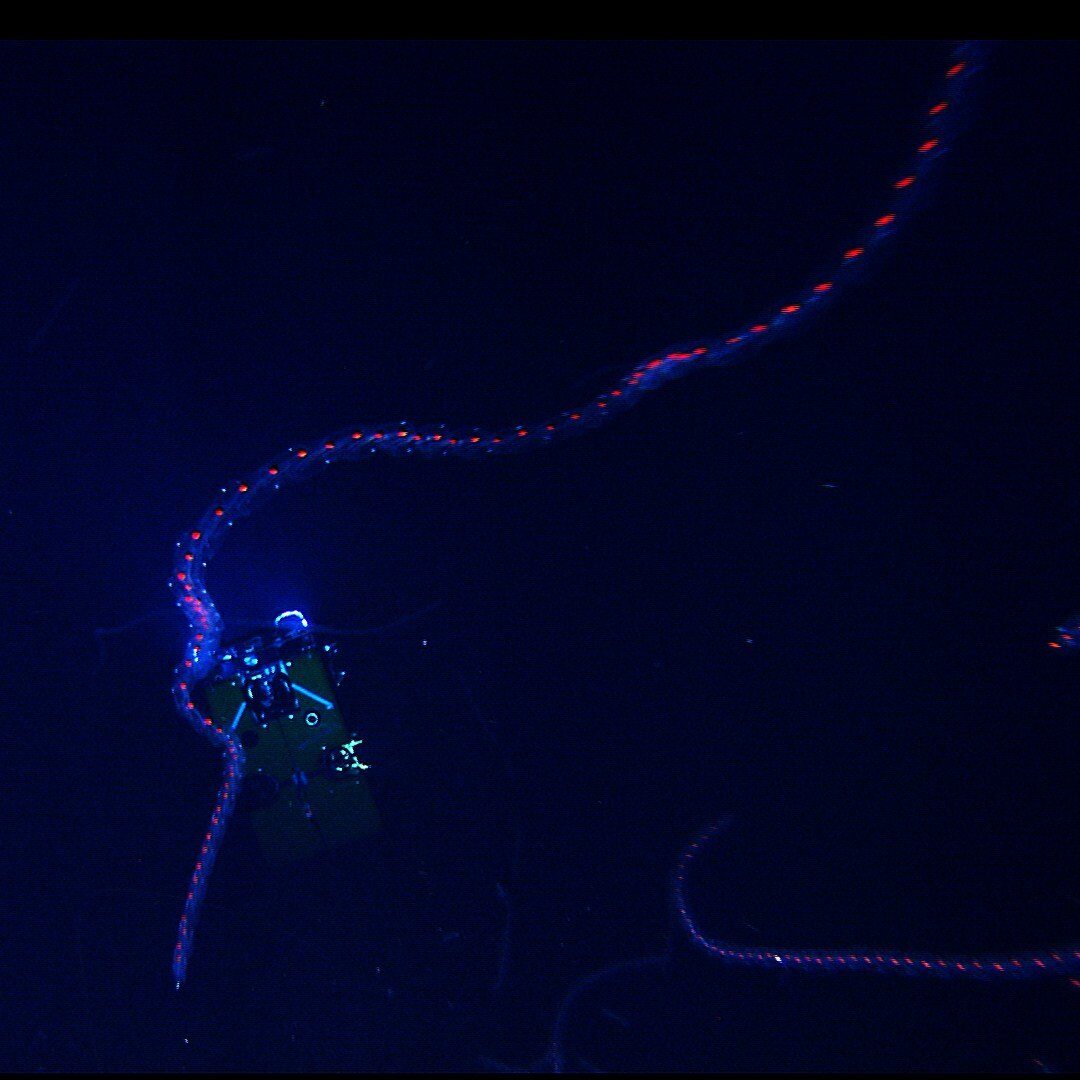
One of the primary uses for bioluminescence in the deep is hunting. Deep-sea creatures can utilize a bioluminescence lure to entice prey. Anglerfish are a well known example of this. Prey see the glow, but the rest of the anglerfish remains hidden due to the contrast of its dark coloration, they approach assuming they have found a smaller glowing organism for them to eat, but instead are caught by the anglerfish. Another bioluminescent hunting strategy relies on the short wavelength of red light. Because of how little penetrating power it has, some fish have adapted to have a red coloration remain “invisible” in the deep. But dragon fish are one step ahead, along with having the ability to see the color red ,they also emit rare red colored bioluminescence which allows them to easily spot the red colored prey. Siphonophores also utilize red bioluminescence like dragonfish but they do so through the use of lures like the anglerfish do. Their bodies are lined with red lures mimicking copepods.
Beyond hunting, another large use for bioluminescence is defense and evasion. But, if light is used to bring attention to a creature, how can it be used to hide from other organisms or as defense? One tactic is called counter illumination, photophores on the bottom of deep-sea organisms mimic the look of the lighter water above and makes an organism simply look like a shadow of something much larger swimming higher up in the water. The glow can also be used to startle predators, many kinds of squid emit quick flashes of light that distract the predator and allow them to escape. Sometimes, like in the case of the vampire squid, prey emit their bioluminescence in a cloud which coats their attacker in the glow, making them a target for other fish looking for an easy meal.
Another minor use of bioluminescence is in mating. Certain organisms, like lanternfish, utilize their bioluminescence to find mates. Lanternfish and dragonfish are some of the most common species in the deep, and both utilize bioluminescence, through research we have discovered that lanternfish exhibit uniquely patterned light displays so that their mates can pick out their species for mating. Bioluminescent displays also aid anglerfish in finding their mates. Bioluminescence is a sexually dimorphic trait in anglerfish, only females have the glowing lure, this allows males to easily distinguish females in the dark vast environment.
Featured image:https://www.noaa.gov/media/digital-collections-photo/nur01004jpg