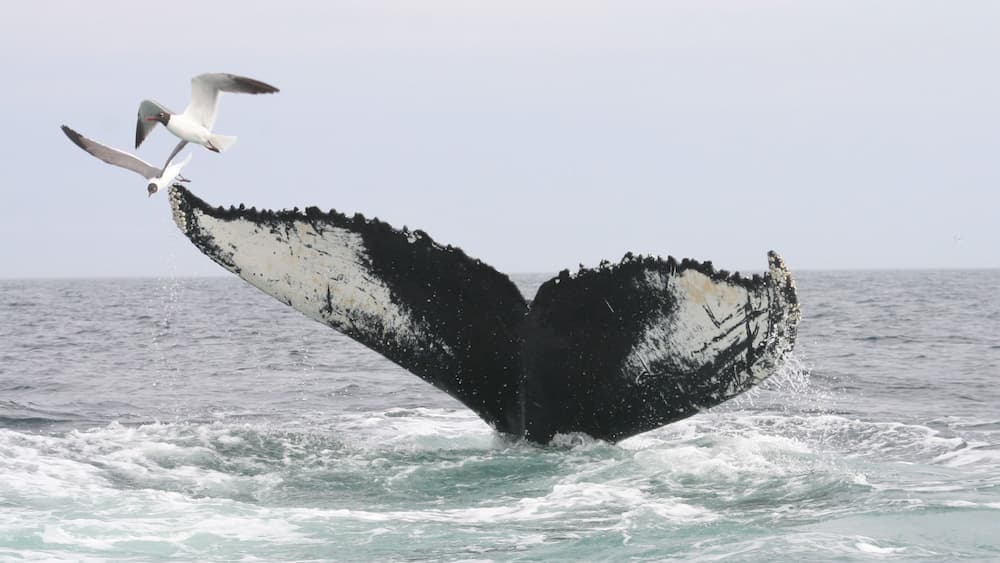
Fingerprints are a way in which different people can be identified, though just using the image of the tip of a person’s finger. But, humans are not the only organisms that have a body part that can help identify individuals of the same species, this can also be found in marine organisms as well. One well know example of this is with humpback whales (Megaptera novaeangliae), for example, since the underside of a whale’s tail fluke is unique to each individual. This is used in tracking and studying humpbacks and their behaviors, since by comparing patterns, colorations, and scars of a whale’s tail fluke, they can then identify the individual and any changes they have gone through as well, just like a fingerprint.
There are more common examples of ways in which organisms can be identified as a certain individuals, like specific patterns or scars, since these variations can be seen in many species. Scientists may even need to examine and compare DNA of an organism to confirm if an organism the same individual, or a different one. Even still, there are other species that have specific tactics used in their identification, such as with whale sharks (Rhincodon typus), whom have a white spotted pattern on their backs. And, although each organism of this species share this trait, they each have a unique pattern on the spots behind their gills, making them each distinctly recognizable as a specific individual.

These are just a few examples of identifying marks that marine organisms hold, many more still existing with the ocean’s creatures. Such as with killer whales (Orcinus orca), whom can be identified through nicks in their dorsal fins, markings on their backs, and the white patches near their eyes. Sea turtles are another such example, not only being identified through scars and shell damage, but also the pattern of their facial scales, which can also act as a fingerprint.
Despite being interesting, these patterns may not seem to be very useful, but they are actually vital in the conservation of these organisms. They allow, not only the identification of specific individuals, but also in conservation, the monitoring of biodiversity, population growth, and research. So, even if they don’t seem to be so great, these ways of identifying specific organisms is actually a vital tool that scientists can use in research and conservation.
To learn more about this topic, check out the website “Pacific Whale Watch Association” to learn more about ways to identify different whale species, or “Atlas Obscura” to learn about an interesting strategy used to quickly differentiate whale sharks using their spots.