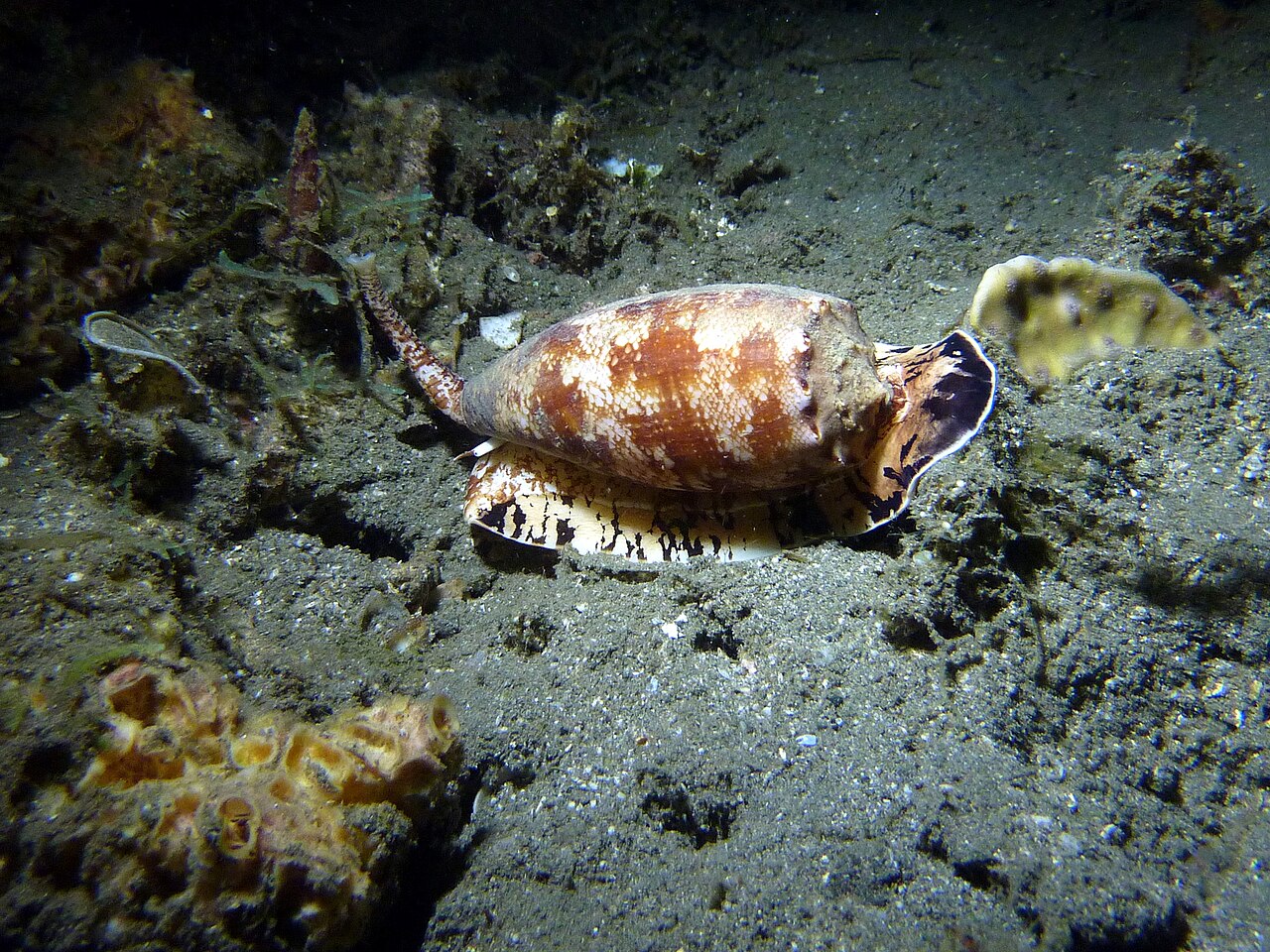
Cone snail is a general name for the many species in the family conidae. They are all classified by being marine gastropods that grow a large whorled shell that slowly grows into a cone shape, and by having a large modified tooth with a venom gland to deliver potent toxins to prey. You wouldn’t think that a simple unassuming marine snail could kill you, but that is where you would be wrong. If a human gets a sting from one of them, it could be deadly. Cone snails have killed at least 30 people as of 2016.
Cone snail venom consists of peptides called conopeptides. These peptides target certain proteins in the nervous system of the cone snails prey, paralyzing it. In 2004, the groundbreaking medicine Ziconotide was synthesized from the conotoxins of a Madagascar species of cone snail, the “Magicians Cone” or Conus magus.
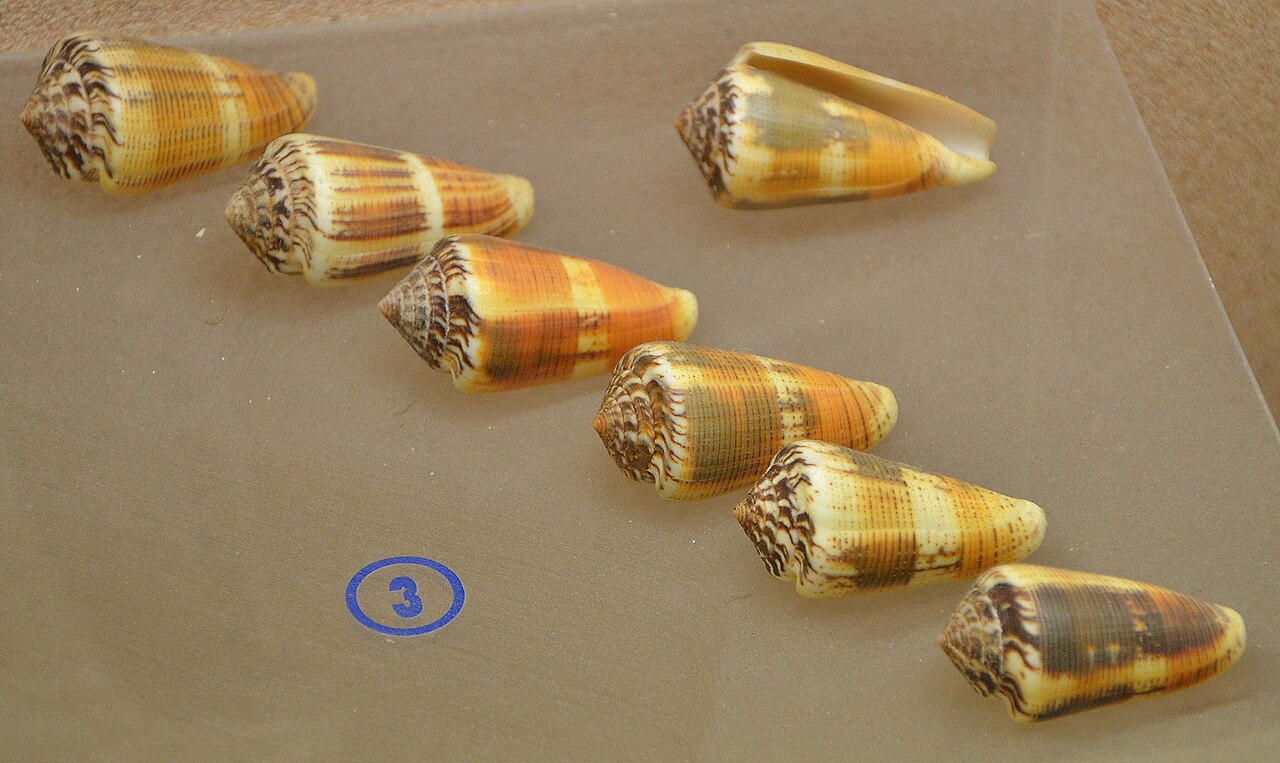

Ziconotide is especially important to modern medicine because of its widespread usage for pain relief by blocking pain signals in the spinal cord. What makes it remarkable is its potency. It can be effective even when traditional opioids fail. This can be useful for any type of long term pain, like cancer patients. Better yet, it does not carry the same risk of addiction, making it a promising alternative in the ongoing search for safer pain management solutions.
Researchers believe we’ve only scratched the surface of what cone snail venom can offer. With hundreds of species and thousands of unique compounds, the possibilities are vast. But conservation always has to be taken into account when using a living species for human medicine. Luckily, according to a study done in 2013, there are thousands of species of cone snail on earth today, with 75% of species being of Least Concern.
Featured image shows: A Cone snail (Conus geographus) on the ocean floor. Credit Kai Squires
