Photoidentification is a technique that is used to identify individual animals based on a hypothesis that each animal has unique features that are able to be used for recognition. This non-invasive technique is valuable as it is relatively easy, and inexpensive, and can also be used for many different types of marine mammals.
The process involves taking a photograph of an animal’s defining feature. For example, dolphins are identified by their dorsal fins, while whales are often recognized by their fluke fins. These features act like a “fingerprint,” allowing researchers to distinguish one individual from another. The image is then analyzed based on these defining features, and can manually be identified by a scientist who will then compare these images to a catalog, which can be long and tedious. As photoidentification has been recognized more, funding has increased and programs have been developed to speed this process and make it more efficient.
Why Dorsal Fins Matter
Dolphins have very prominent dorsal fins, and can be identified by the stable natural notches that are left over time, and the overall shape of the dorsal fin. These notches can be caused from a variety of events, such as a boat strike, fishing lines, or just play marks from other dolphins. Marks and shapes are a good measurement as they do not change. These defining features are what coin the term “fingerprint” as each individual dorsal fin is generally different.
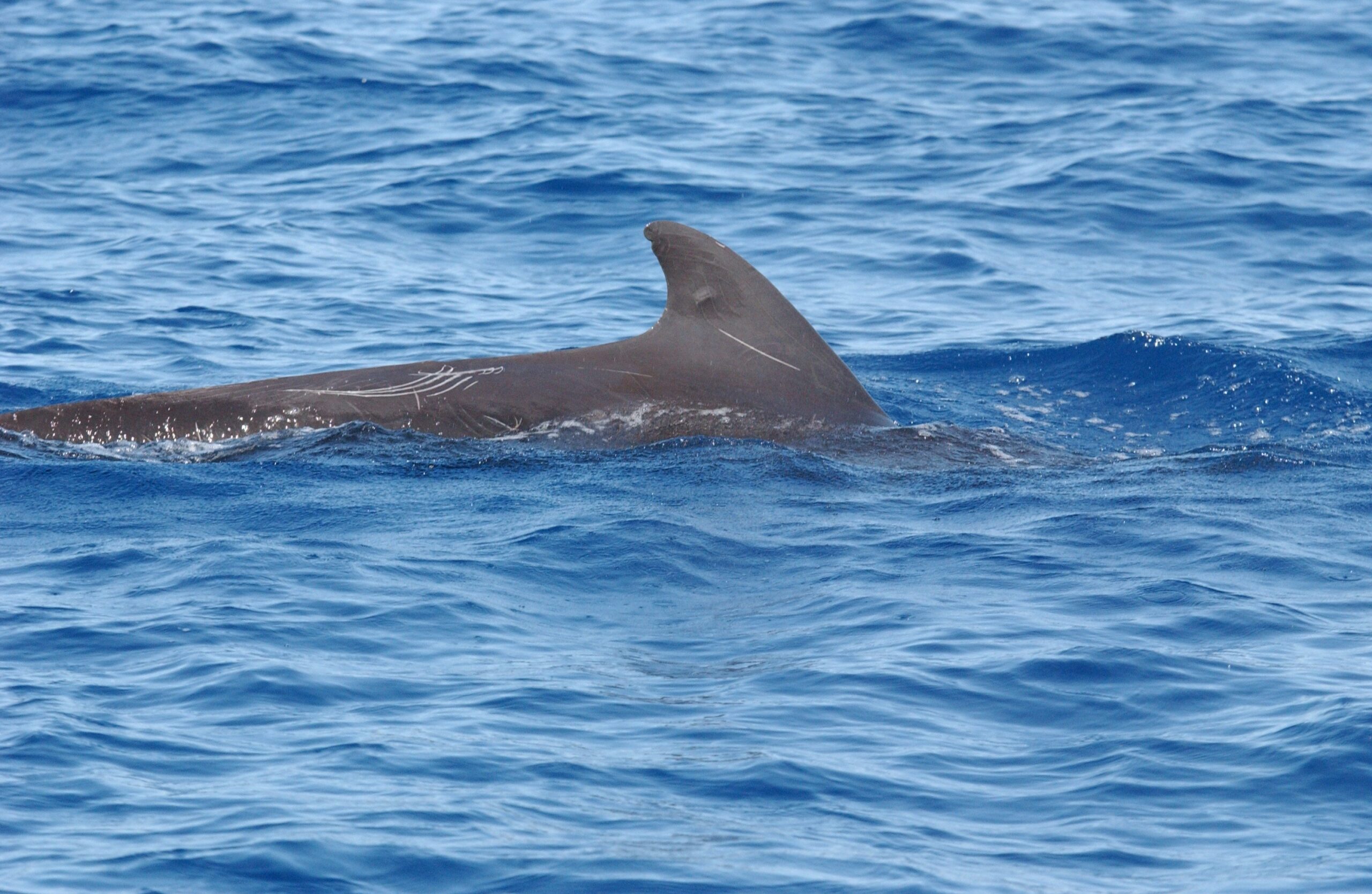
Rake marks from fighting or playing with other dolphin (Image credit: Wayne Hoggard NOAA Image Collections)
The notches are evident on this individual’s dorsal fin.
The Rise of Automated Identification: finFindR
As photo identification has grown in importance, new technologies have been developed to make the process more efficient. One example is finFindR, a program designed to streamline and automate dolphin identification. finFindR uses four major steps when identifying dolphins:
- Fin Isolation
- Trailing edge isolation and characteristic measurement
- Characteristic extraction and mapping
- Identifying individual dolphins
Breaking this down, finFindR first cleans up the photos. This consists of isolating dorsal fins and putting them into a view that is digestible. It is also able to separate multiple dolphins that could be in one photo. Then, it distinguishes the trailing edge from the leading edge of the fin, and defines those notches and characteristics. Next, the program “scores” these nicks based on their proximity to each other. Lastly, the program compares these analyzed images to a reference catalog of previous analyzed individuals. It then presents the closest matches to the user, with the highest similarity individuals first. The user is then able to compare the best matches and make the final determination in the process.
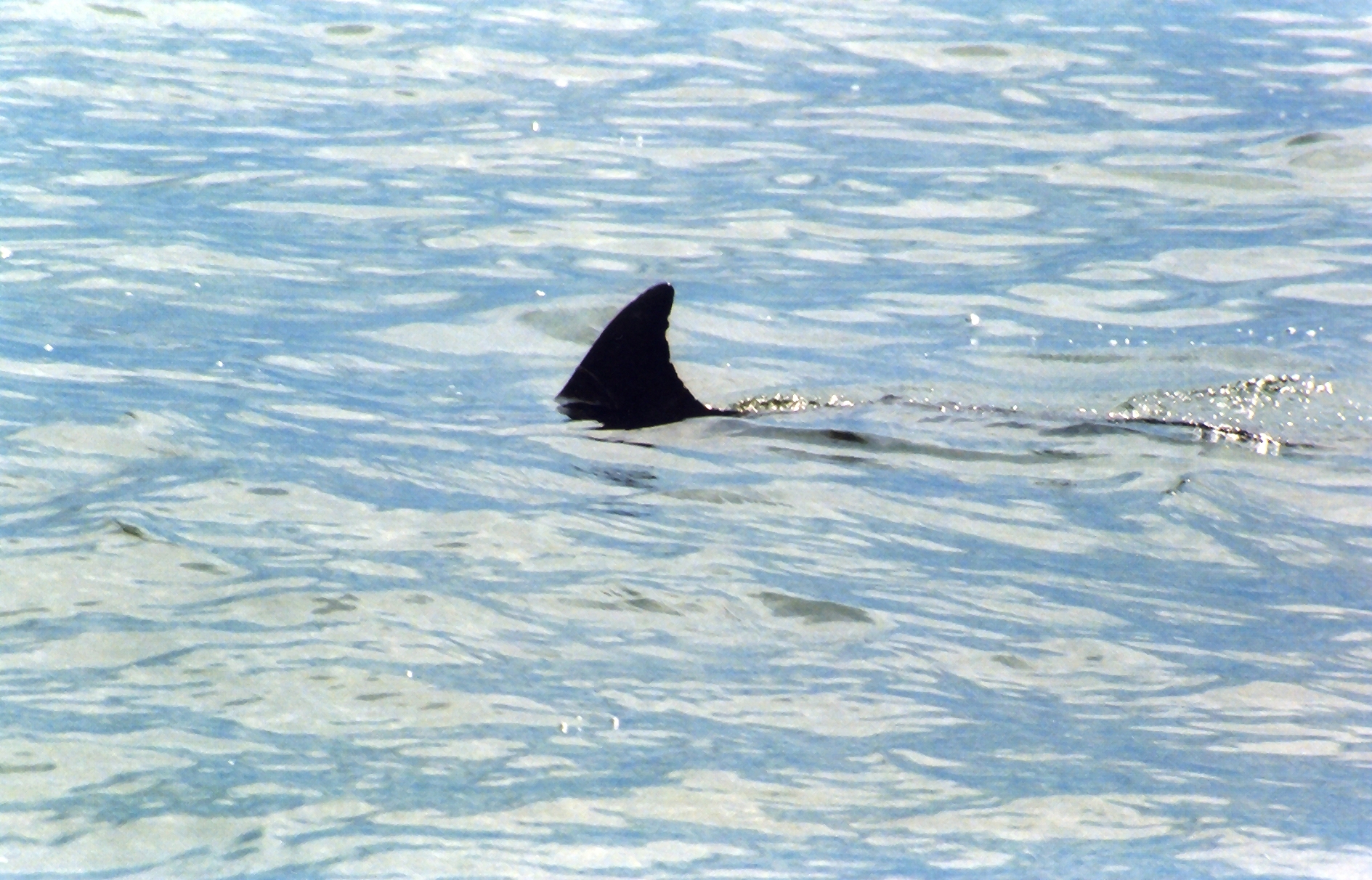
JAWS???? Nope, a dolphin caudal fin. Tursiops truncatus, the bottle-noseddolphin. (Image credit: Mary Hollinger NOAA Image Collections)
This is a great example of an image that would be input into finFindR. The program would still have to cut and analyze the photo, but these notches will be very defining in the process.
Why Photo Identification Matters
Photo identification has been particularly successful with dolphins, where it has produced a high number of accurate matches. By being able to individually identify animals, a variety of different information can be derived. This includes, life history, distribution, movement patterns, habitat use and population structure. Monitoring this species is extremely important as dolphins play key roles in marine biodiversity conservation. As top predators they maintain stability and health of ecosystems.
Closing Thoughts
While tools like finFindR have significantly improved the speed and efficiency of photo identification, they are not perfect. finFindR assigns the correct match to the top-ranked position in 88% of the time, meaning human expertise is still a critical part of the process. Even so, the combination of technology and traditional research methods represents a major step forward in marine science.
As these tools continue to develop, photo identification will only become more powerful, helping researchers better understand marine mammals and ultimately contribute to their conservation.
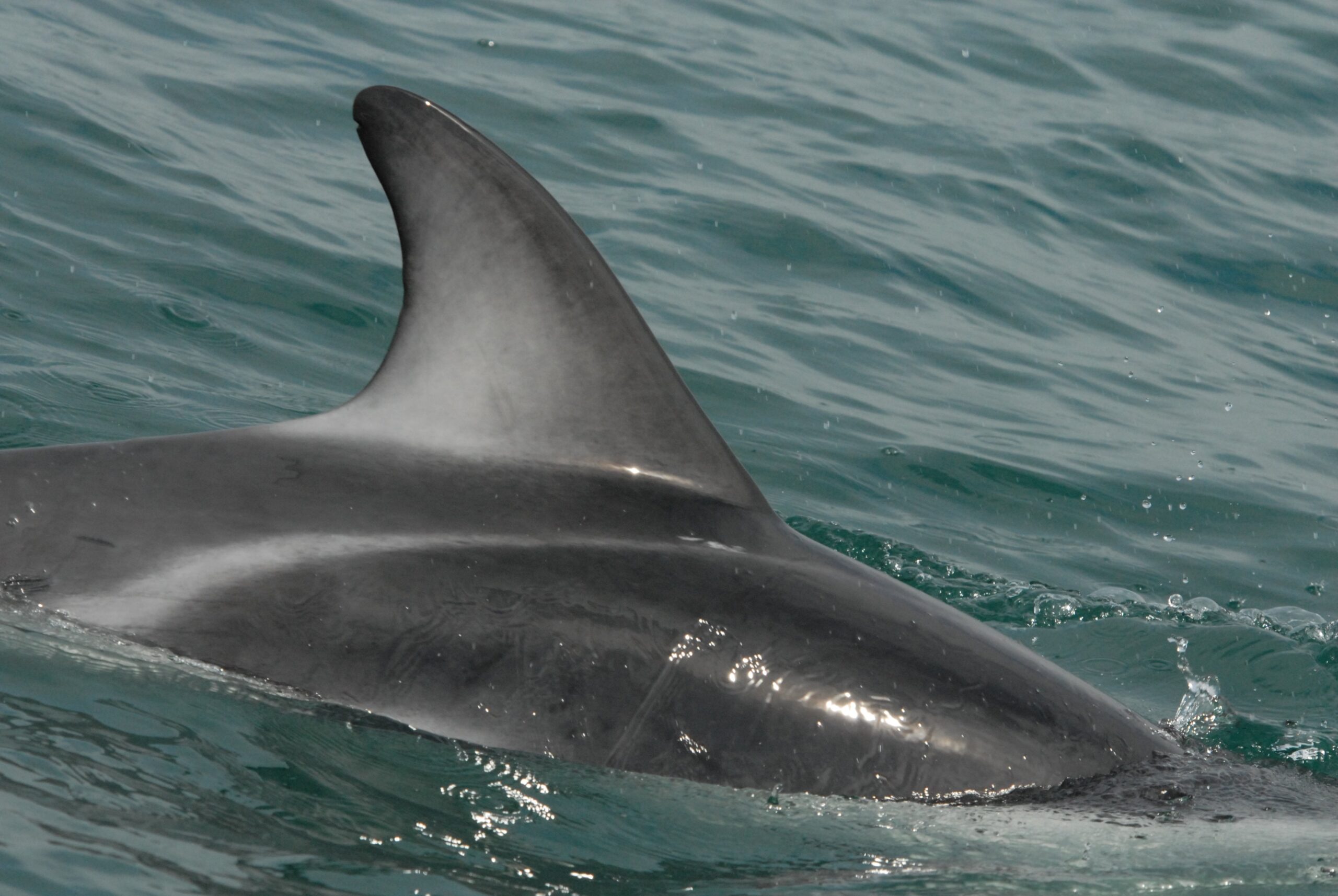
Featured Image Credit: Dusky dolphin (Lagenorhynchus obscurus) (Image credit: Dr. Mridula Srinivasan NOAA Image Collections)