Cover Image: A Blue-Ringed Octopus. Credit: Wikimedia Commons. Attribution: Shaymary

The Hapalochlaena, more commonly known as the blue-ringed octopus, is famous for its incredibly dangerous venom, a neurotoxin powerful enough to shut down the human respiratory system. Before learning about the power of this venom, let’s gain some background information on the species first.
There are four known species of blue-ringed octopus, each having slightly different characteristics and locations they call home. The range of oceans they inhabit spreads from coral reefs in the Pacific to the rocky areas of the seafloor in the Indian oceans. Along with many other octopus species they have a short life span of two years, developing early and becoming sexually mature at four months old. All female blue-ringed octopi die after laying their eggs and incubating them for around 2 months, as they stop eating to take care of their offspring. Throughout their life they grow to about 22 centimeters in length and weigh no more than 100 grams, making them one of the smallest octopus species. Crabs, shrimp, and small fish are some of this species’ preferred prey; it hunts mainly at night or dusk, ambushing and paralyzing the prey before consuming it. Now, let’s explore this creature’s powerful venom and beautiful ability to create iridescent rings.
_(16219454856).jpg)
Although it ranks among the ten most dangerous ocean animals, they have very few fatal interactions with humans. The blue-ringed octopus is not aggressive but can be defensive if it feels threatened, which can lead to a nearly painless bite. This painless bite injects a neurotoxin, Tetrodotoxin (TTX) that blocks nerve signals in the body and causes muscle paralysis leading to respiratory failure, rendering the person unconscious. At this point there is no known antivenom for TTX and the only action that could save the person’s life is receiving quick respiratory support. Not only is this octopus famous for its potent venom, they are known for their ability to create an iridescent blue ring pattern on their skin in an instant.
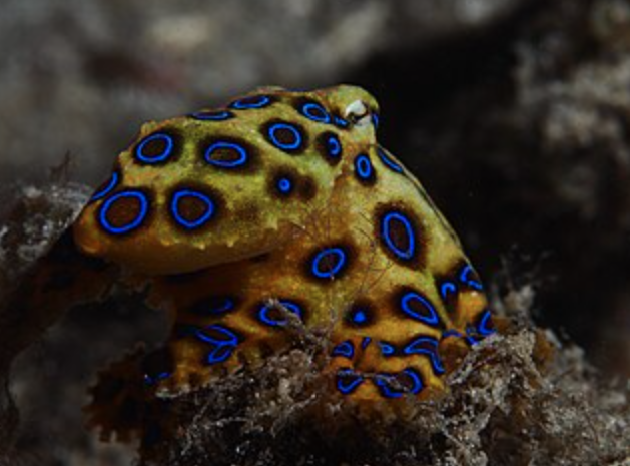
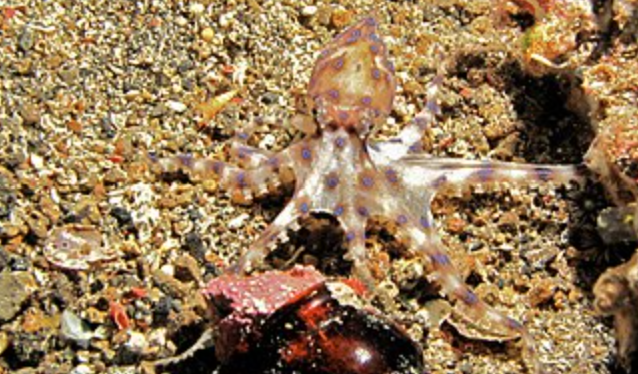
Chromatophores are specialized cells that allow the octopus to change colors quickly, revealing a beautiful pattern of blue rings. This species of octopus has a transparent skin surface that provides a background for the iridescent blue rings. Along with chromatophores they have iridophores in their skin, which are structures that reflect blue-green light, creating the beautiful rings. These octopi aren’t always displaying their rings as they use this vibrant color and design as a defense mechanism known as aposematism. They will display their color when feeling threatened as bright colors warn predators of their danger, with the goal of stopping the threat from attacking.

The Hapalochlaena is a fascinating species of octopus, a small organism that packs a punch if you’re an unlucky victim. While they’re not endangered at the moment, the dangers they face are still prevalent. Coral bleaching, pollution, and climate change are all risks to their population. While they are currently thriving, it is important to continue protecting both the species and its habitat to ensure its survival in the future.