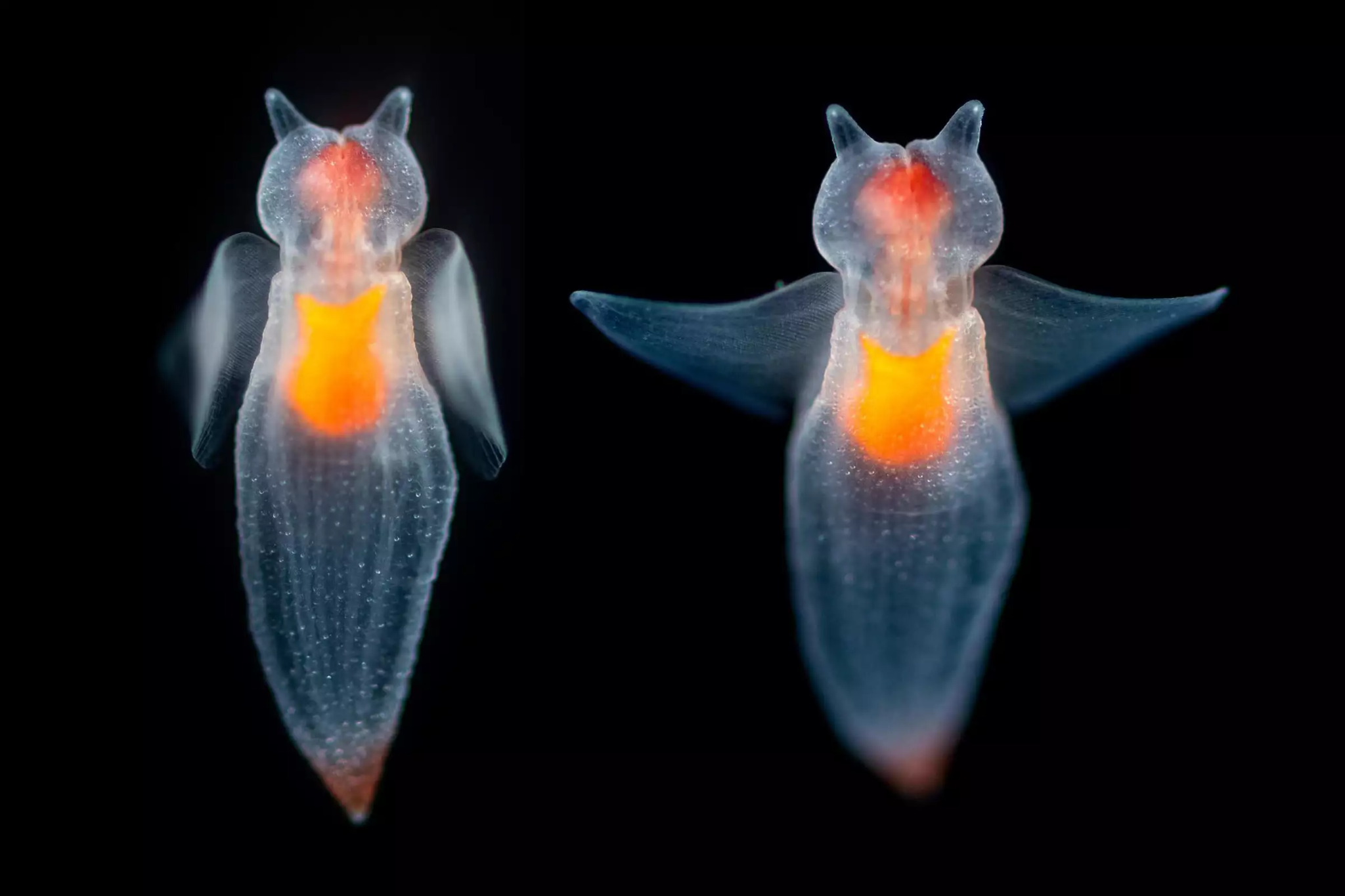
Sea angels are some of the ocean’s most intriguing and distinctive organisms, blending fragile beauty with important ecological roles. Although they appear delicate and almost otherworldly, these tiny creatures contribute meaningfully to marine ecosystems and offer valuable clues about larger environmental changes. By studying their biology, behavior, and ecological impact, scientists have gained a deeper understanding of how these organisms mirror the overall health of the oceans.
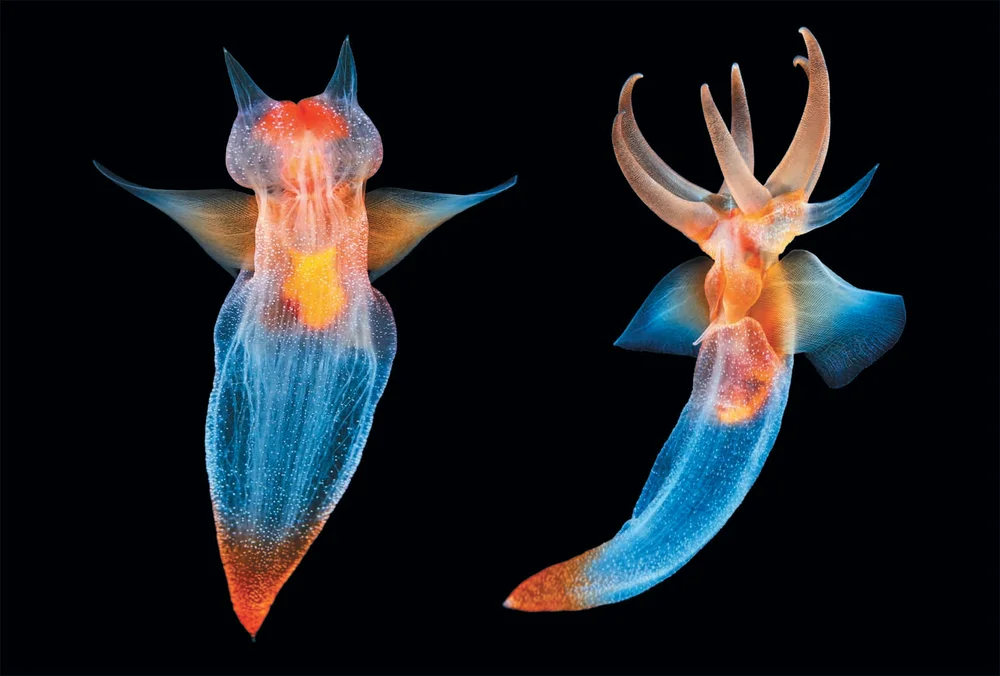
Sea angels are small, free-swimming marine snails belonging to a group of mollusks known as gymnosomes. They earn their name from their delicate, wing-like appearance and smooth, flowing movement through the water. Unlike most snails, they do not have shells as adults and instead possess translucent, gelatinous bodies. Common species, including Clione limacina and Clione antarctica, typically reach lengths of about 4–7 centimeters, yet their small size does not diminish their appeal to scientists and ocean explorers, who are drawn to their beauty and unusual anatomy. Their translucent bodies create an almost ghostlike effect, revealing internal organs that often display soft pink and orange tones. They swim using wing-like fins called parapodia, which move in a way that resembles flying, further emphasizing their angel-like quality. Altogether, their size, elegance, and specialized features make sea angels some of the most remarkable marine snails in the ocean.
Despite their graceful appearance, sea angels are active predators with a surprisingly intense feeding style. Their primary prey consists of closely related shelled snails known as sea butterflies (seen below in video).
Some species rely on ambush tactics, remaining still until prey drifts within reach, while others actively pursue their targets. Sea angels use specialized feeding structures called buccal cones, equipped with hooks and a toothed radula, to grasp and extract their prey from their shells. The entire process—from capture to consumption—can take as little as two minutes or as long as 45 minutes. This predator-prey relationship is highly specialized and plays an important role in maintaining balance within the planktonic food web.
In addition to their role as predators, sea angels are also part of a larger ecological network. They serve as prey for larger marine animals such as fish and contribute to the transfer of energy through ocean ecosystems. As members of the zooplankton community, they participate in daily vertical migrations, moving toward the ocean surface at night to feed and descending during the day. This movement helps transport nutrients and carbon throughout the ocean, supporting broader marine productivity.
On another note and perhaps most importantly, sea angels and their relatives are considered key indicators of environmental change. Along with sea butterflies, they belong to a group called pteropods, which scientists often describe as “canaries in the coal mine” for ocean health. These organisms are particularly sensitive to ocean acidification—a process caused by increased carbon dioxide in the atmosphere dissolving into seawater. Acidified waters can make it more difficult for related species to build and maintain their calcium carbonate shells, disrupting the food web and threatening marine biodiversity.
Research has shown that sea angels and other pteropods have existed for over 100 million years and have survived past periods of climate change. However, the current rate of human-driven environmental change presents new challenges. Scientists continue to study these organisms to better predict how marine ecosystems will respond to ongoing warming and acidification. Their sensitivity to environmental conditions makes them valuable biological indicators, helping researchers monitor the health of the oceans in real time.
In conclusion, sea angels are far more than delicate, drifting creatures of the open ocean. Despite their graceful appearance, they are active predators with specialized adaptations that allow them to efficiently hunt sea butterflies and play a significant role in the planktonic food web. At the same time, they are deeply connected to the balance of marine ecosystems, helping regulate prey populations while also serving as food for larger species and participating in vital nutrient-cycling migrations. Beyond their ecological roles, sea angels and their relatives are also important indicators of environmental change, as their sensitivity to ocean conditions makes them especially vulnerable to impacts like ocean acidification. By studying these remarkable organisms, scientists gain valuable insight into both the complexity of marine food webs and the broader effects of climate change on ocean health.