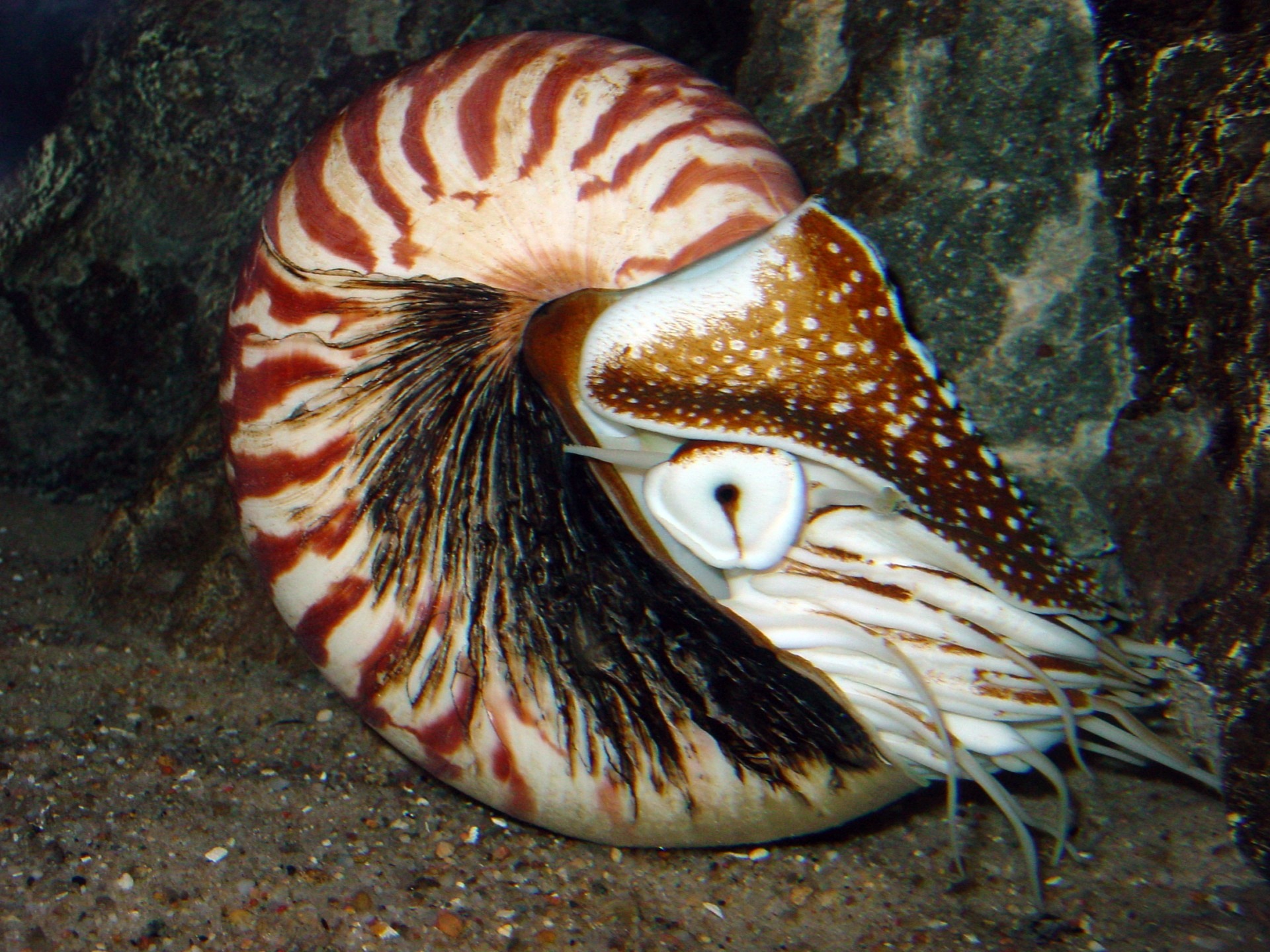
The Nautilus is an ancient cephalopod that predates the existence of the dinosaurs. They have roamed our oceans for 480 million years, remaining mostly unchanged evolutionarily for 150 million years. They are perfectly adapted to their small and stable niche, which has allowed them to survive on earth for so long. However, despite their success for millions of years, like many other marine organisms, humans have pushed them to being “threatened” under the Endangered Species Act.
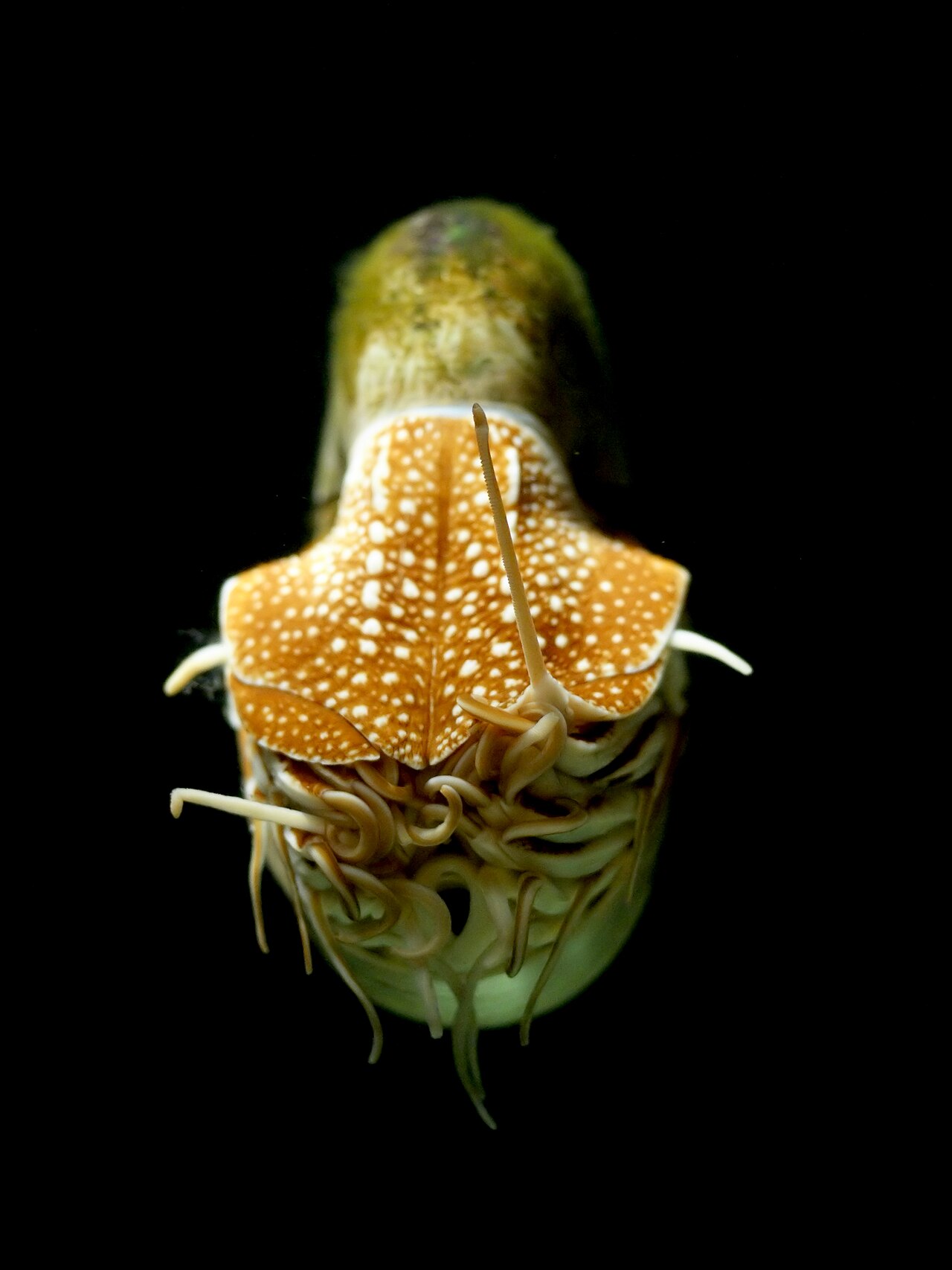
Many tropical marine mollusks no longer serve medicinal or religious value like they used to. Now, they serve mostly as sources of food and specifically sources of ornaments and decorations. The Nautilus is largely used for their beautiful shells in international trade, rather than for local food supply or cultural significance. This has led to major overfishing of their stock and a decline in their numbers.
Due to Nautilus’s slow life history and low reproduction rates, overfishing has a disproportionately large effect on their extinction. The knowledge of their life history is essential for further conservation. There has been no observation of Nautilus laying eggs in nature, as it’s only been observed in aquariums. An important area that needs further research is finding where and when Nautilus’s lay their eggs so we can specifically protect those areas and support the long period of embryonic growth (a little less than 12 months).
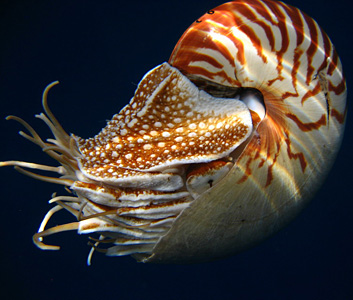
Photo courtesy Greg J. Barord https://www.biologicaldiversity.org/news/press_releases/2016/chambered-nautilus-08-25-2016.html
Managing the international trade of Nautilus shells is a very complicated matter. In Indonesia, Nautilus shells are used in the making of novelty furniture and do not come from a traditional practice or art, rather is a craft developed specifically for international tourists. There is a large amount of illegal trade in areas that protect Nautilus’s, specifically in Indonesia. The problem of this craft is that it is not part of a traditional practice, nor does it serve cultural significance. It was created for foreigners, promoting the exploitation of local areas. Lombok and Bali are centers of nautilus shell trade and thus need to be regulated much closer by the Indonesian government.
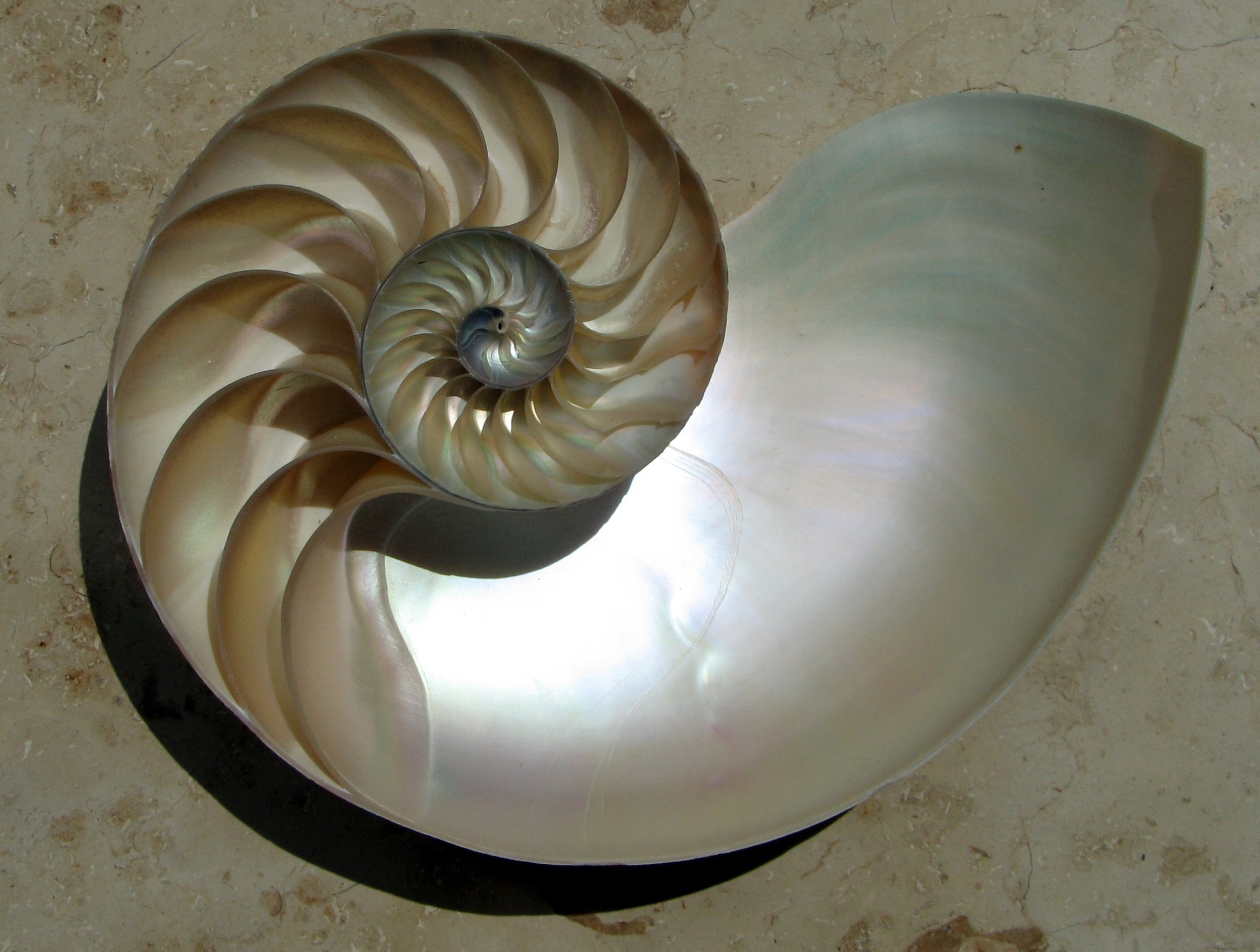
By Chris 73 / Wikimedia Commons, CC BY-SA 3.0, https://commons.wikimedia.org/w/index.php?curid=19711
Nautiluses are a very rare cephalopod and are much less known than octopi, squid, or cuttlefish. Yet, they are incredibly beautiful and ancient animals that deserve the same amount of respect and conservation. The use of their shells purely for decoration to be sold for profit is such a waste of life, rather than providing a food source.
Spreading awareness for their threatened state is crucial for putting pressure on governments to regulate the exploitation of shells. Any problem with illegal selling of goods is very convoluted and difficult to solve, however, informing the public of the importance of their protection and how they’re currently being exploited is a step in the right direction.