Bioluminescence, the ability of living organisms to produce light, is one of the most widespread yet least understood phenomena in the ocean. Around 75% of marine organisms living in the ocean are capable of bioluminescence, but most of these organisms are difficult to observe due to their habitat and sensitivity to bright light. This trait is found in organisms ranging from microscopic plankton to deep-sea fish and plays a critical role in how marine species survive, interact, and navigate their environment. Although it is often associated with rare or unusual sightings, bioluminescence is actually a common adaptation, particularly in darker regions of the ocean where sunlight cannot reach.
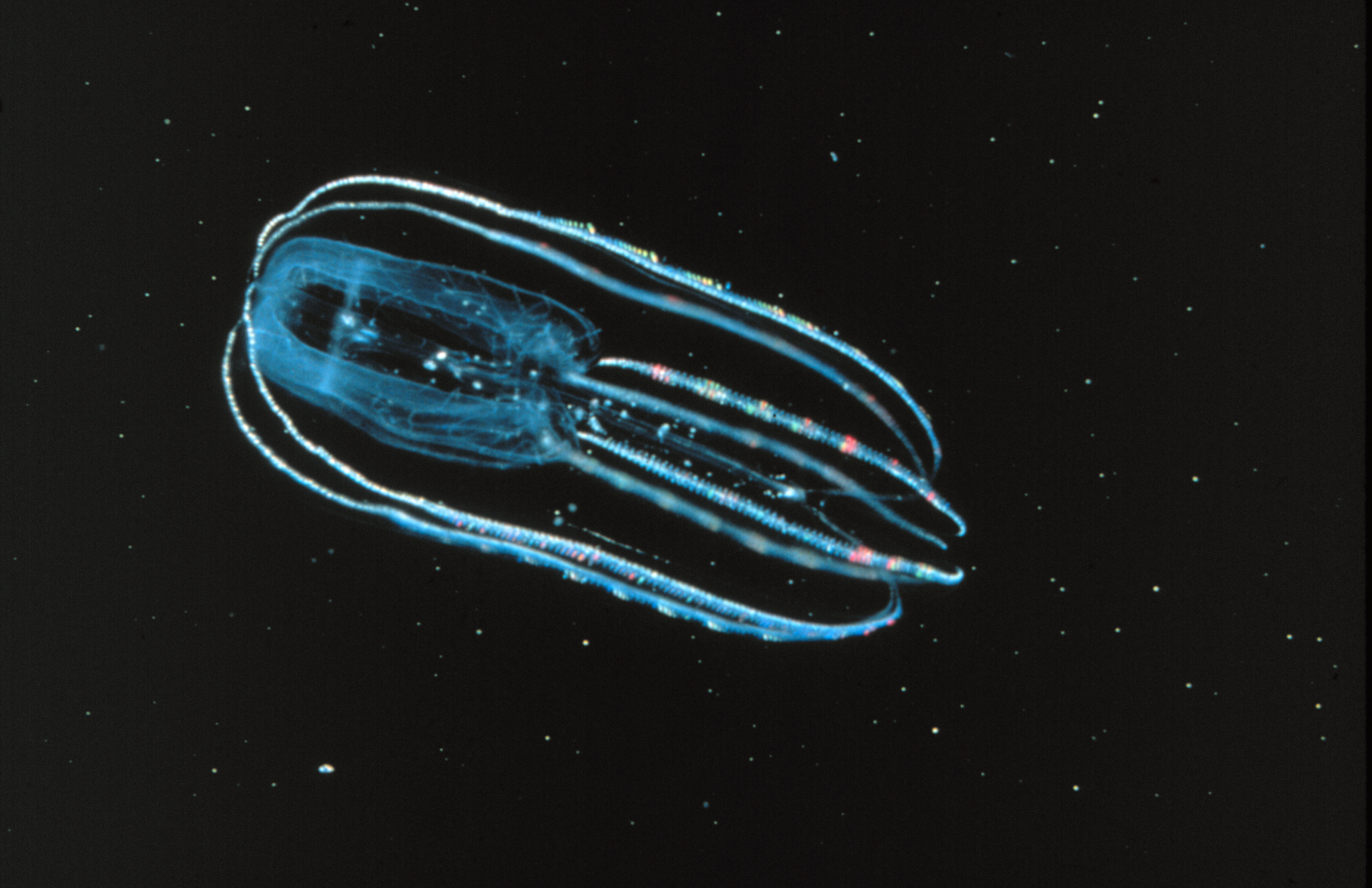
Caption: A lobate ctenophore (Bolinopsis infundibulum) emits a soft bioluminescent glow as light is produced through chemical reactions within its body. Like many marine organisms, this light can play a role in defense or communication in low-light ocean environments (Image credit: OAR/National Undersea Research Program (NURP)).
At a chemical level, bioluminescence is both simple and highly efficient. It occurs when a light-emitting molecule called luciferin reacts with oxygen. This process is catalyzed by the enzyme luciferase. Instead of releasing energy as heat like many other chemical reactions, this reaction produces visible light. Little energy is lost, allowing organisms to generate bright flashes or steady glows of light without expending large amounts of energy. This efficiency is especially important in marine environments, where energy and resources can be limited.
Rather than serving a single purpose, bioluminescence has evolved to fulfill multiple ecological roles. One of its most immediate uses is defense. Many small organisms, particularly dinoflagellates, emit brief flashes of light when disturbed. This response is not random. The sudden illumination can startle predators or expose them to larger predators nearby. In this way, a tiny organism can reduce its chances of being eaten by briefly drawing attention to the threat itself.
This same ability to produce light is also used in a very different way in predators. In the deep sea, where darkness is constant, some species rely on bioluminescence to locate and capture prey. A well-known example is the anglerfish. This fish uses a glowing appendage to attract smaller organisms, What appears to be a harmless light source, becomes a trap, allowing the anglerfish to capture prey that would otherwise be difficult to find in complete darkness. Here, bioluminescence shifts from a defensive mechanism to an offensive strategy, demonstrating its versatility.
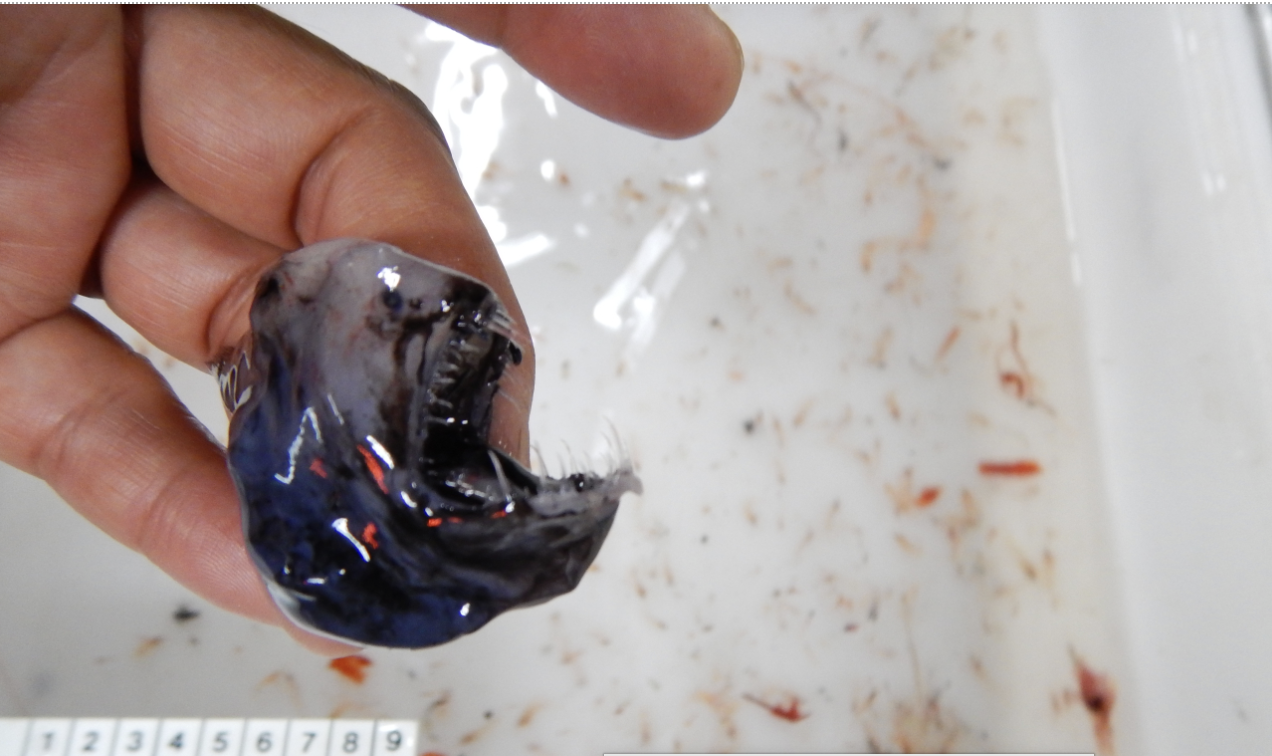
Caption: An anglerfish collected from the deep scattering layer during a nighttime trawl demonstrates how bioluminescent predators use light to attract prey in the dark ocean. This adaptation allows them to hunt effectively in environments where sunlight cannot penetrate (Image credit: Allen Shimada).
In addition to survival and feeding, light production can also facilitate communication. In the vast, often dark ocean, finding a mate, or identifying members of the same species can be challenging. Some organisms use specific light patterns or flashes to signal to one another, ensuring that these interactions occur efficiently. This adds another layer of complexity, as bioluminescence becomes not just a response to the environment, but a way of actively shaping interactions within it.
Bioluminescent organisms are especially abundant in the deep ocean, but they are not limited to these extreme environments. In coastal regions, microscopic plankton known as dinoflagellates are responsible for glowing waves sometimes visible at night. When the water is disturbed, by waves, swimmers, or passing boats, these organisms emit flashes of blue light. This response is triggered by mechanical stimulation. This means that even small movements can activate the chemical reaction that produces light.
Beyond ecological roles, bioluminescence has become an important tool in scientific research. The same chemical reaction that produces light in marine organisms is not widely used in laboratories. By attaching bioluminescent markers to specific genes or proteins, scientists can track biological processes in real time. This technique allows researchers to observe how cells function, how diseases develop, and how genes are expressed. This provides insights that would be difficult to obtain through other methods.
Overall, bioluminescence illustrates how a single biological mechanism can serve multiple purposes across different environments. What might appear to be a simple glow is actually a complex and highly adaptive trait. Whether used to avoid predators, capture prey, or communicate, the ability to produce light allows marine organisms to survive and interact in ways that would otherwise be impossible in the dark ocean.