By: Abigail Hines
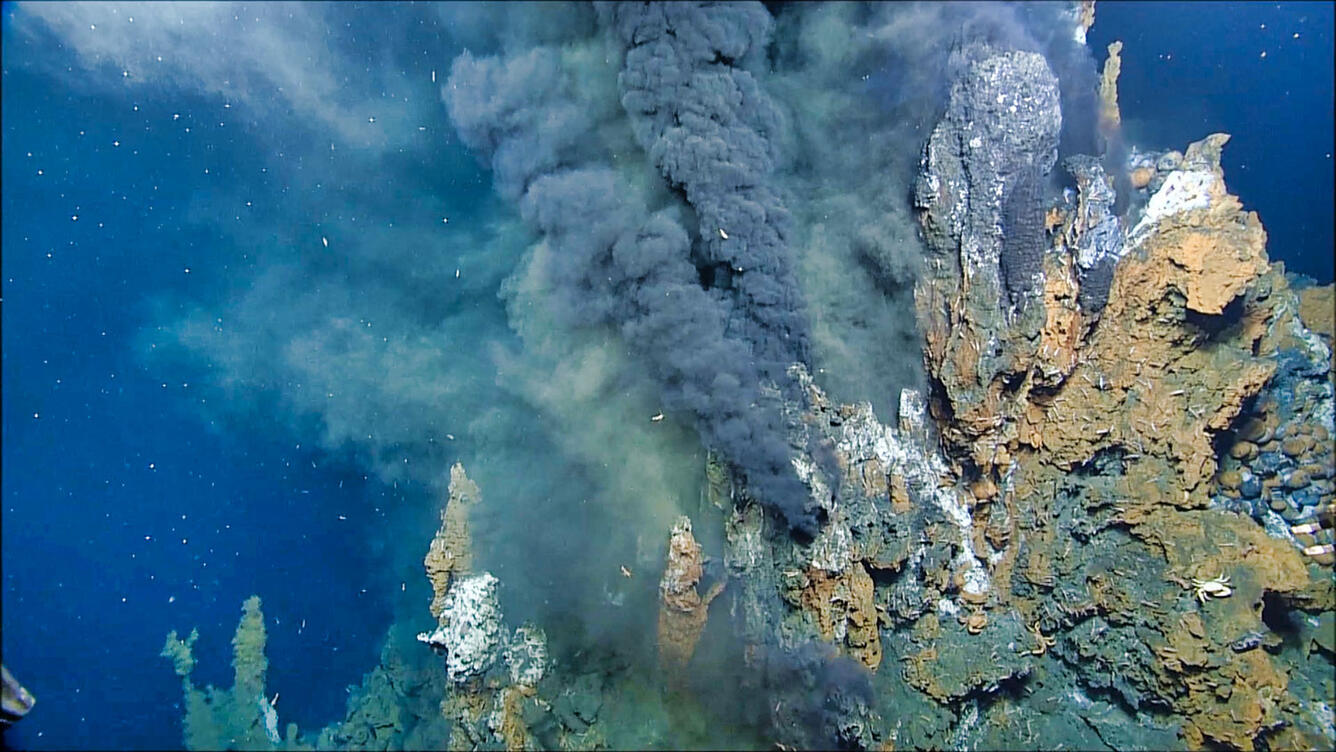
Hydrothermal vents are very similar to underwater volcanoes. They are openings in the seafloor that release an insane amount of heat and mineral-rich water. Some of the hottest hydrothermal vents produce a sulfide-rich fluid that looks like black smoke rising out of natural chimneys. These vents are predicted to have been the key to the first signs of life on Earth. Even today, it is home to many organisms that can withstand environmental conditions humans could not even go near.
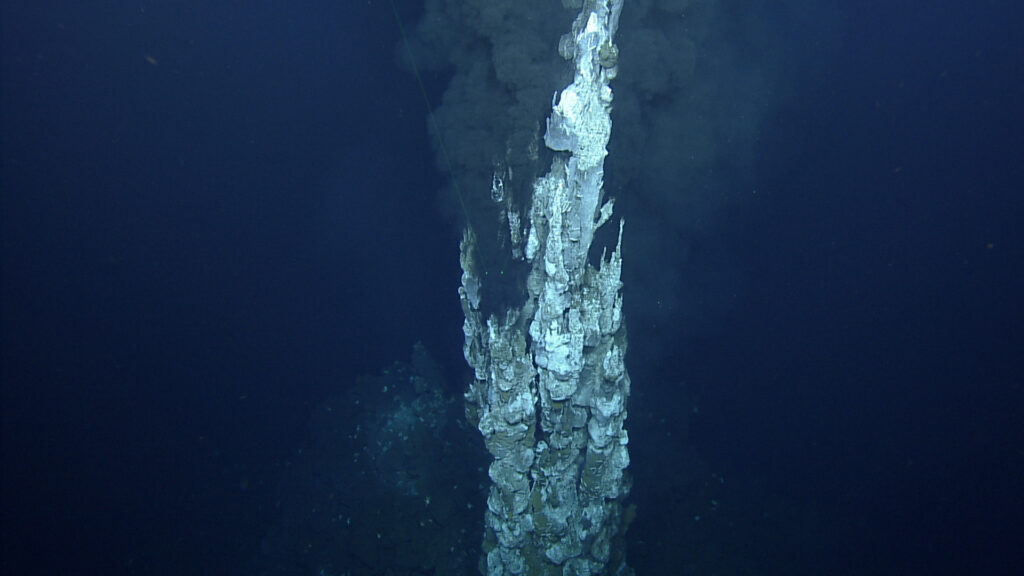
Hydrothermal vents normally only live for a couple of decades to years due to the level of tectonic activity found where these vents originate. However, in the right conditions, these vent systems could last for hundreds of thousands of years. Most vents are found at mid-ocean ridges due to the high tectonic plate activity. They form anywhere between 2,000 and 4,000 meters deep in the ocean. These vents form when seawater enters cracks in oceanic crust caused by plate activity. This heats the water to a temperature of around 400 degrees Celsius. The water then rises out of these cracks, carrying up dissolved minerals. Some of the minerals the rising water carries then cools, creating the chimney-like structures. There are two types of hydrothermal vents. There are black smokers and white smokers. Black smokers are much hotter and carry dark colored minerals, which are iron sulfide. The white smokers are slightly cooler and carry lighter-colored materials like barium, calcium, and silicon.
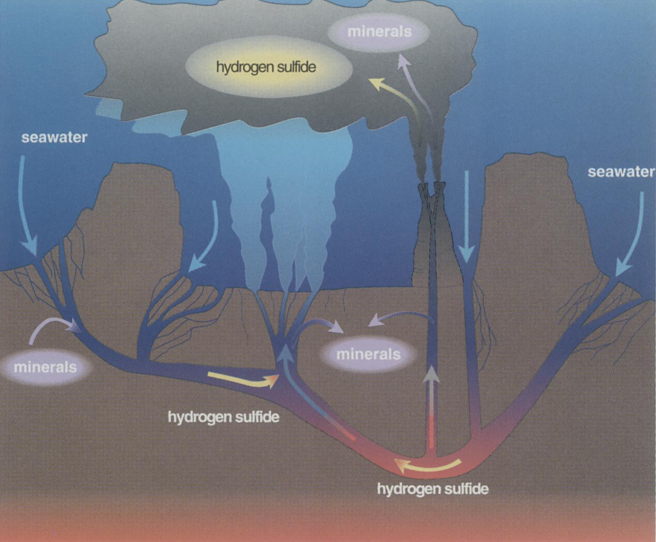
Hydrothermal vents support ecosystems where sunlight can not reach and are low in oxygen. Since the bacteria that live in these vents can’t perform modern-day photosynthesis, they use chemosynthesis. Chemosynthesis is when microbes use chemical energy, like hydrogen sulfide, to produce the food and energy they need to survive. Chemosynthesis existed before photosynthesis. These vents first formed billions of years ago, when Earth’s atmosphere had no oxygen. Chemosynthesis is still the basis of the food chain in modern hydrothermal vent ecosystems, rather than photosynthesis. These vents are extremely important for scientists to study since they reveal the answers to Earth’s conditions and its earliest forms of life.
Hydrothermal vents are teeming with life, with their own ecological pyramid. At the first trophic level live the primary producers, the chemosynthetic bacteria. Then it also has its common organisms that live on/near vents, such as giant tube worms, vent crabs, shrimp, clams, and mussels. These organisms have preferred adaptations that allow them to live in these environments with extreme conditions. They all have the ability to survive in areas with intense heat and pressure, along with no light. All of these organisms need to rely on chemical energy. Many of these organisms also have their own symbiotic relationships since survival near the ocean floor is very challenging.
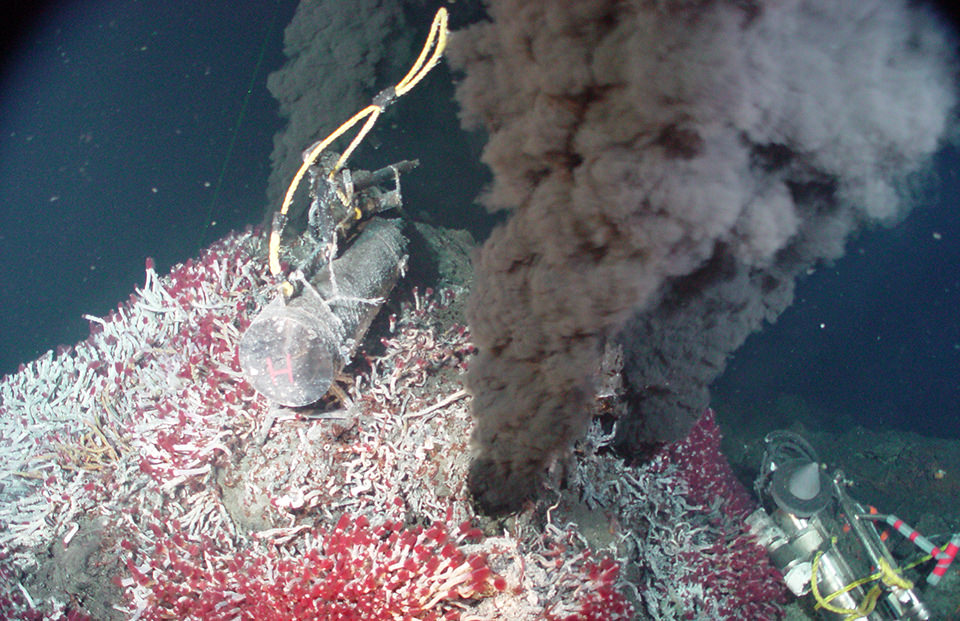
Hydrothermal vents hold the answers to the fascinating science behind where the first life on Earth was created. These chimney-like features, which are fueled by Earth’s magma, carry dissolved minerals into the ocean and create extremely hot environments. Bacteria that live in these ecosystems, supported by hydrothermal vents, use chemosynthesis to produce their food. These vents are home to many ocean creatures.
Sources:
National Oceanic and Atmospheric Administration. (n.d.). What is a hydrothermal vent? NOAA Ocean Service.
https://oceanservice.noaa.gov/facts/vents.html
National Geographic Society. (2023). Deep-sea hydrothermal vents.
https://education.nationalgeographic.org/resource/deep-sea-hydrothermal-vents/
Tunnicliffe, Verena (n.d.). [Hydrothermal vent research article]. JSTOR. https://www.jstor.org/stable/pdf/29774685.pdf?casa_token=LmLKjFovZXgAAAAA:ty7l1z8bhLPl2AiIrgWyZ-1pQHY-n6J5D4dlM1rcHSWLlx2UnEVXMzMZGETQN1yBZdwzYipXZROsrfxfxiRlwqIAmGDPDOzD88s39SYbJuK6yrh2xw
U.S. Geological Survey. (2019). Hydrothermal vent (image).
https://www.usgs.gov/media/images/mineral-laden-water-emerging-a-hydrothermal-vent
National Oceanic and Atmospheric Administration. (n.d.). Hydrothermal vent field (multimedia). NOAA Ocean Exploration.
https://oceanexplorer.noaa.gov/multimedia/hafa-adai-nydrothermal-vent-field/