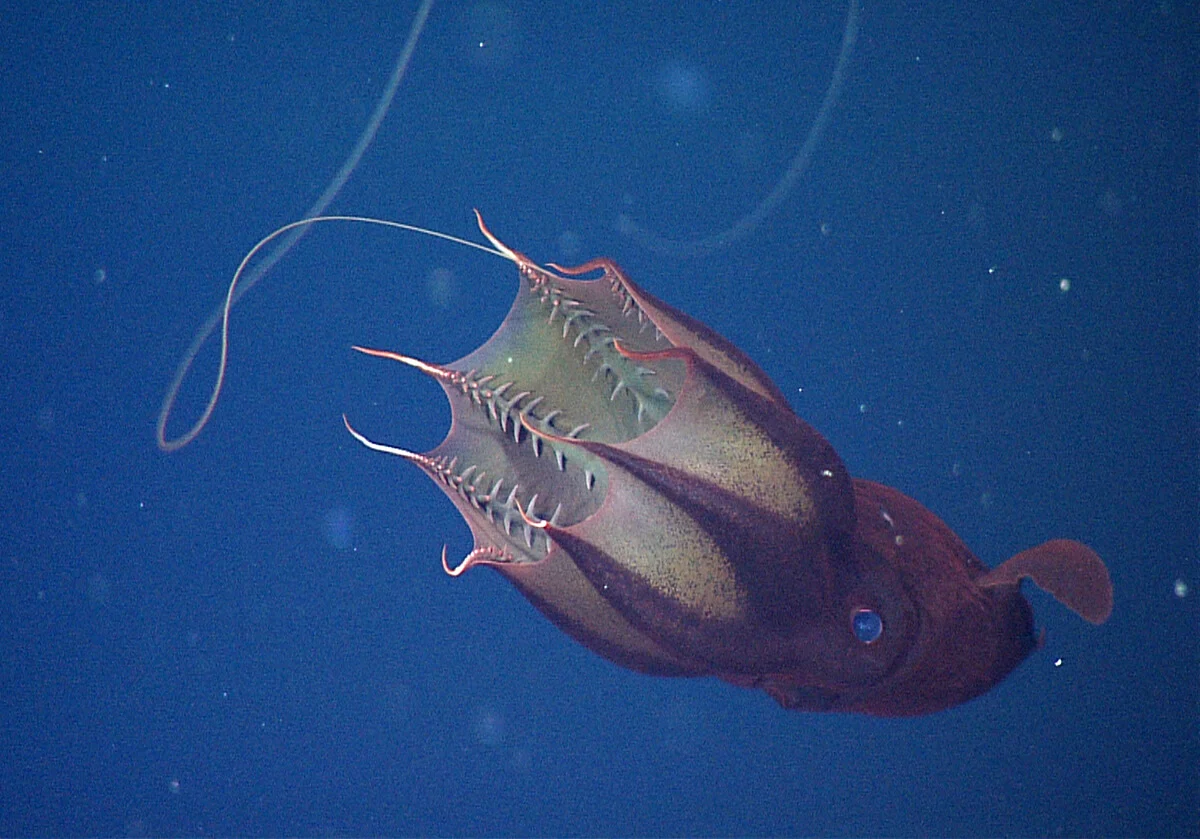
Vampyroteuthis infernalis (common name; Vampire Squid) are gentle creatures, despite their daunting appearance, who live in the Aphotic zone. They get their name from their bright red eyes and dark color, they don’t actually drink blood! There is still limited knowledge on the behavior of this deep sea dweller, but more is being discovered all the time.
One behavior that is particularly interesting about vampire squid is how they utilize bioluminescence. There are three main light-emitting organs that can be found in these creatures, with the main goal being to distract predators. The vampire squid is covered in special cells called photophores, which produce quick flashes of light, and large complex photophores at the base of their fins. The third being some composite organs – two clusters of small nodules located behind their eyes. With these organs they utilize two main methods of bioluminescence. In the first, they produce flashes of light at all eight tips of their arms. The second is the “glitter bomb” or a luminous cloud of mucus that surrounds the animal to hide/distract their predators.
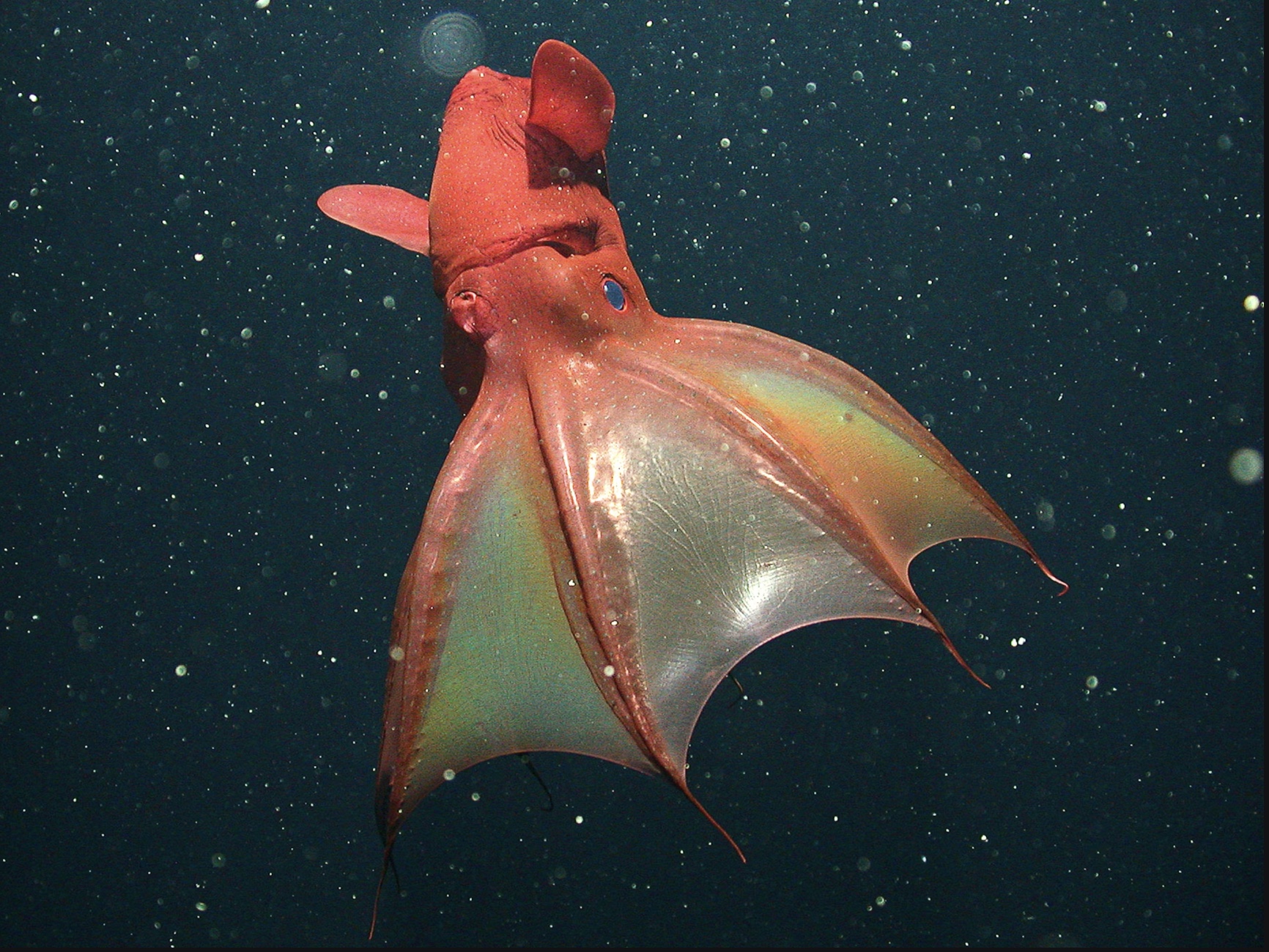
Vampyroteuthis infernalis moving through the deep (Image from National Geographic)
True squid have an inc sac which stores a mixture of melanin and mucus, expelled through the siphon when threatened. Because the vampire squid isn’t actually a true squid, they do not have a traditional inc sac. The vampire squid has something similar however; glands within the mantle that contain dense populations of light-producing bacteria, which are combined with ink and mucus during release through the siphon. This is what creates the “glitter bomb”, something very rare within cephalopods.
Other than the obvious use of the luminous cloud surrounding the squid so it can get away, the reflective mucus has additional uses too. Because their fluid is sticky, it will often adhere to the predator they are fleeing from, acting as a sort of warning system, as the bioluminescence now painted on cannot be easily removed, alerting other prey of its existence, as well as making it vulnerable to secondary predators.
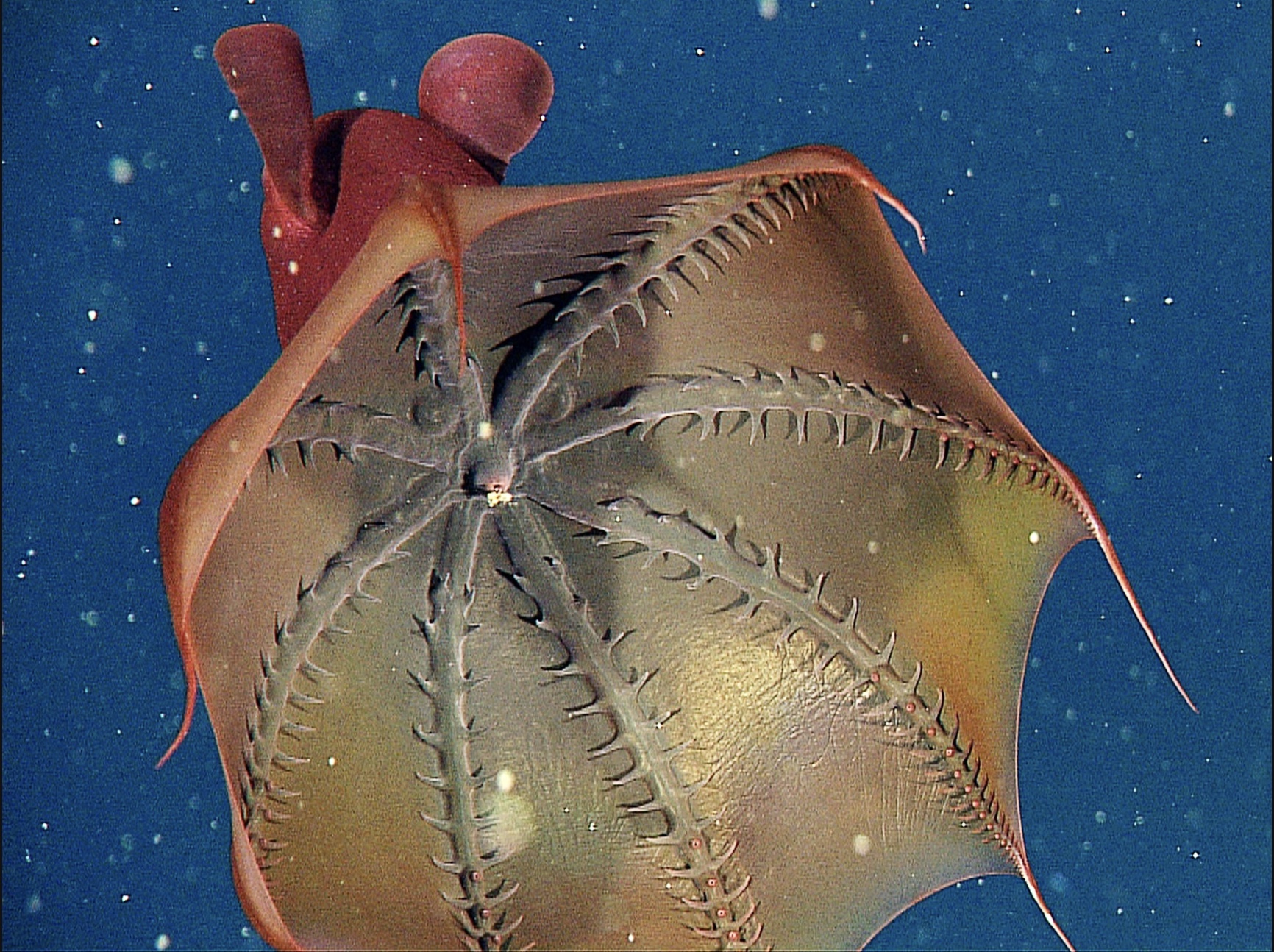
Image of the vampire squids “pineapple pose” – another defense mechanism (Image from National Geographic)
This is just one extraordinary behavior of these overall fascinating creatures, with plenty of features and behaviors that make it stand unique from its cephalopod class. Like almost all marine organisms however, they are subject to the effects of climate change. As the ocean warms it creates oxygen “dead zones” which effects their survival in the deep. Due to this it is incredibly important that we continue researching and studying more about the vampire squid, and continue focusing on conservation efforts to ensure their survival.
Below is a great video of some of their unique behaviors, where you can also see some of those photophores lighting up it’s skin!
Feature Image of Vampyroteuthis infernalis (Image from Monterey Bay)