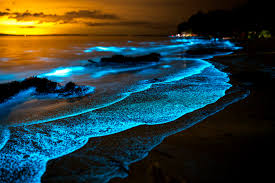
When the Ocean Glows: The Wonder and Science Behind Bioluminescence
This glowing effect is called bioluminescence, or the ability of living organisms to produce light through chemical reactions inside their bodies. Where fireflies get most of the attention on land, the ocean is where bioluminescence truly shines. Scientists estimate that more than 75% of deep-sea animals can produce their own light. Where sunlight doesn’t exist, glowing is a survival strategy, not a party trick.
But how does it work?
Bioluminescence is a chemical reaction between two key molecules: luciferin and luciferase. Luciferin produces the light and luciferase is an enzyme that helps the reaction occur. When these two molecules mix with oxygen, they release energy in the form of light. Different species can have different reactions using these two molecules, resulting in different bioluminescent colors, such as deep greens, icy blues, and even reds. In the open ocean, blue bioluminescence is the most common, as it travels farthest through seawater.
Bioluminescence chemical reaction: The enzyme, luciferase, helps bond together the substrate, luciferin, and oxygen. The reaction creates the products oxyluciferin and light. The enzyme is recycled after the reaction, and can be used again.
But why glow at all?
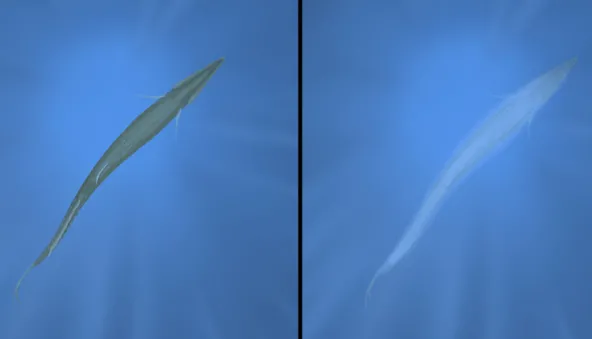
The reasons are as varied as the creatures themselves. Some animals use bioluminescence to hide. Certain fish and squid use “counter-illumination,” glowing on their undersides to match the light from above and hide themselves from predators below (shown in image below). Others use light to hunt, like the anglerfish, which dangles a glowing lure in front of its mouth to attract prey. Others even use it to communicate, sending flashes to potential mates (like fireflies do) or warning signals to predators.
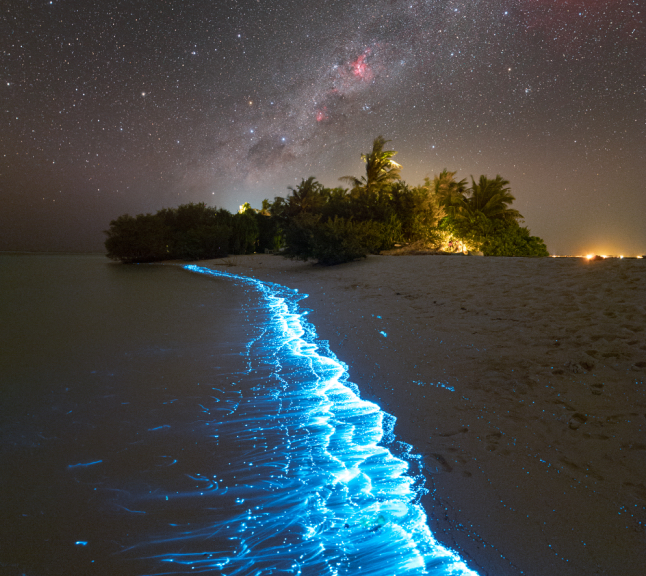
Tiny planktonic organisms, usually dinoflagellates, are responsible for the glowing waves that can be found at the beach. When disturbed by movement, they emit a quick flash of blue light which scientists believe is designed to startle predators or attract bigger predators to eat the ones trying to eat the plankton. Its not only a breathtaking display, but also a clever defense strategy.
Bioluminescence isn’t just beautiful; it’s scientifically valuable. Researchers study glowing organisms to develop new medical tools, from imaging techniques to potential cancer-detection methods. The same chemical reactions that light up the sea are helping scientists light up the mysteries of the human body.
Bioluminescence reminds us that the ocean is full wonders we rarely see. Beneath the surface, life has evolved in extraordinary ways to survive in darkness, turning chemistry into art. The next time you hear about glowing waves or deep-sea creatures that shine in the dark, remember that this isn’t fantasy, it’s a real and living part of our ocean.
Featured Image: https://www.globalrescue.com/common/blog/detail/bioluminescent-beaches-travel-safety-guide/ (Credit: Getty Images)