Across the globe commercial fishing is decimating marine populations and is destroying crucial habitats. According to the FAO, over one third of all fisheries are now classified as overfished, and nearly 90% of all global fish stock are either fully exploited or overfished. Despite this the demand for seafood has nearly doubled since 1961.
Some of the hardest hit areas include the Southeast Pacific, the Mediterranean Sea, and the Black Sea. In contrast to this, US waters have seen record lows in overfishing recently. This is in part due to several Marine Protected Areas (MPAs) that have been put in place by past administrations. We also have some of the best managed fisheries in the world. However, the US can no longer be considered the safe haven it once was for marine life and overfishing, as the current administration has continued to try and remove all MPAs from US waters. This will be devastating for the marine life we value and study here.
One population that is being particularly affected by overfishing is Sharks. Most shark species have slow population growth rates which makes them especially susceptible to overfishing, as it takes much longer for their populations to rebuild. It’s commonly known that shark populations have been under attack due to shark finning industries around the world, but commercial fishing poses a threat outside of finning as well. Over the past 50 years, certain shark populations have been severely wiped out by over 70%. Others have seen their populations drop by over 90% in the last century. This often occurs through bycatch, an event in commercial fishing where on average approximately 10% of all global catch is discarded as unwanted, often dead, fish and marine life.
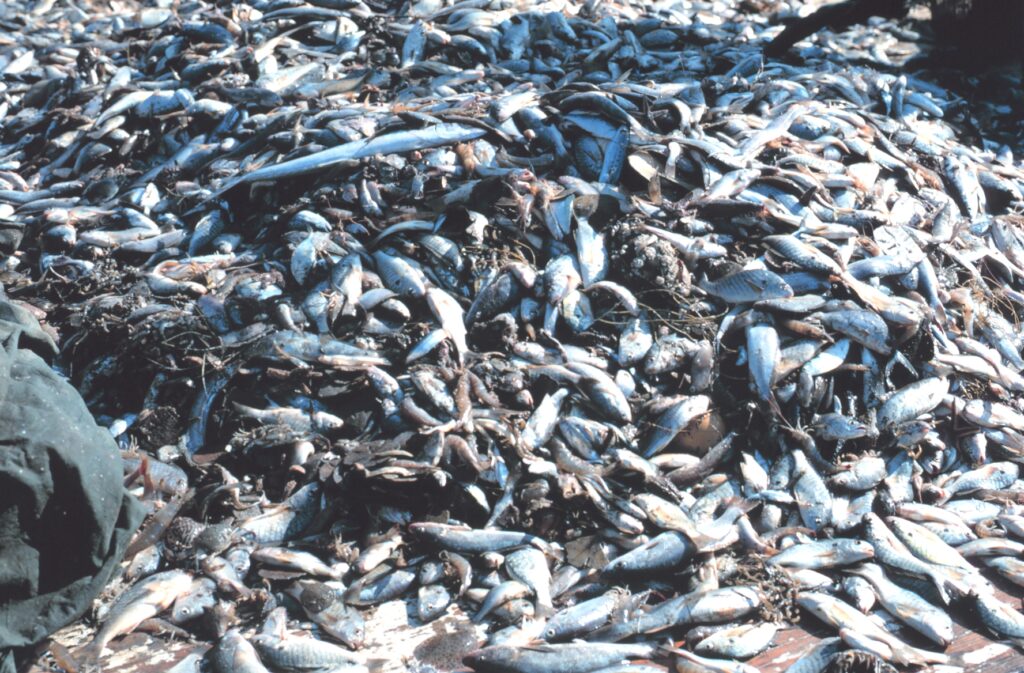
Bycatch from a commercial shrimp fishing vessel (Image from NOAA)
Over fishing isn’t the only threat these sharks face. On the east coast we have seen increasingly more Mako Sharks, Spinner Sharks, and other species native to warmer waters. Due to the rise in ocean temperatures and the rich hunting ground the New England continental shelf offers, we have seen many of these sharks spending more time in northern east coast waters of the US. There’s several ways that this could go for the US. If we continue to keep up our sustainable fishing practices, these species could find a safe haven and have time for their populations to recover from population loss in their native waters. However, if we continue to pull back on MPAs and policies like the Magnuson-Stevens Act, we could see a severe decrease in their populations here as well, either due to wiping these waters clear of the fish they feed on, or by way of falling prey to bycatch themselves.
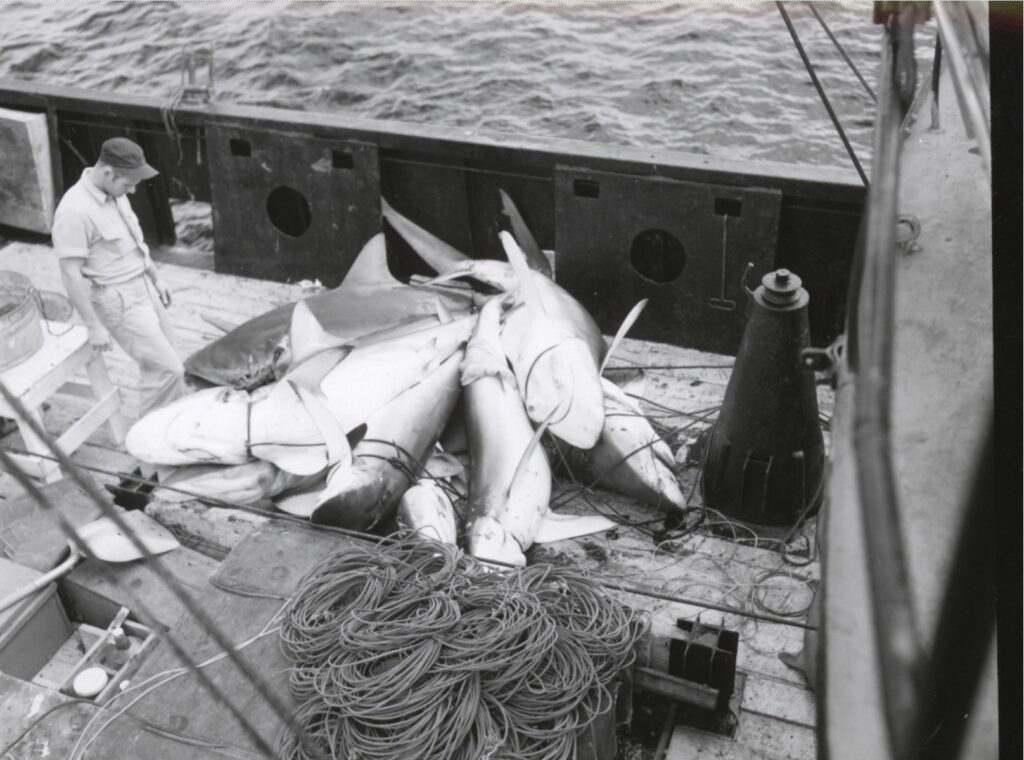
Sharks on deck of commercial shark fishing vessel (Image from NOAA, NOAA Central Library Historical Fisheries Collection)
Below are some great resources on how to get involved, understand, and work towards maintaining our Marine Protected Areas in the United States:
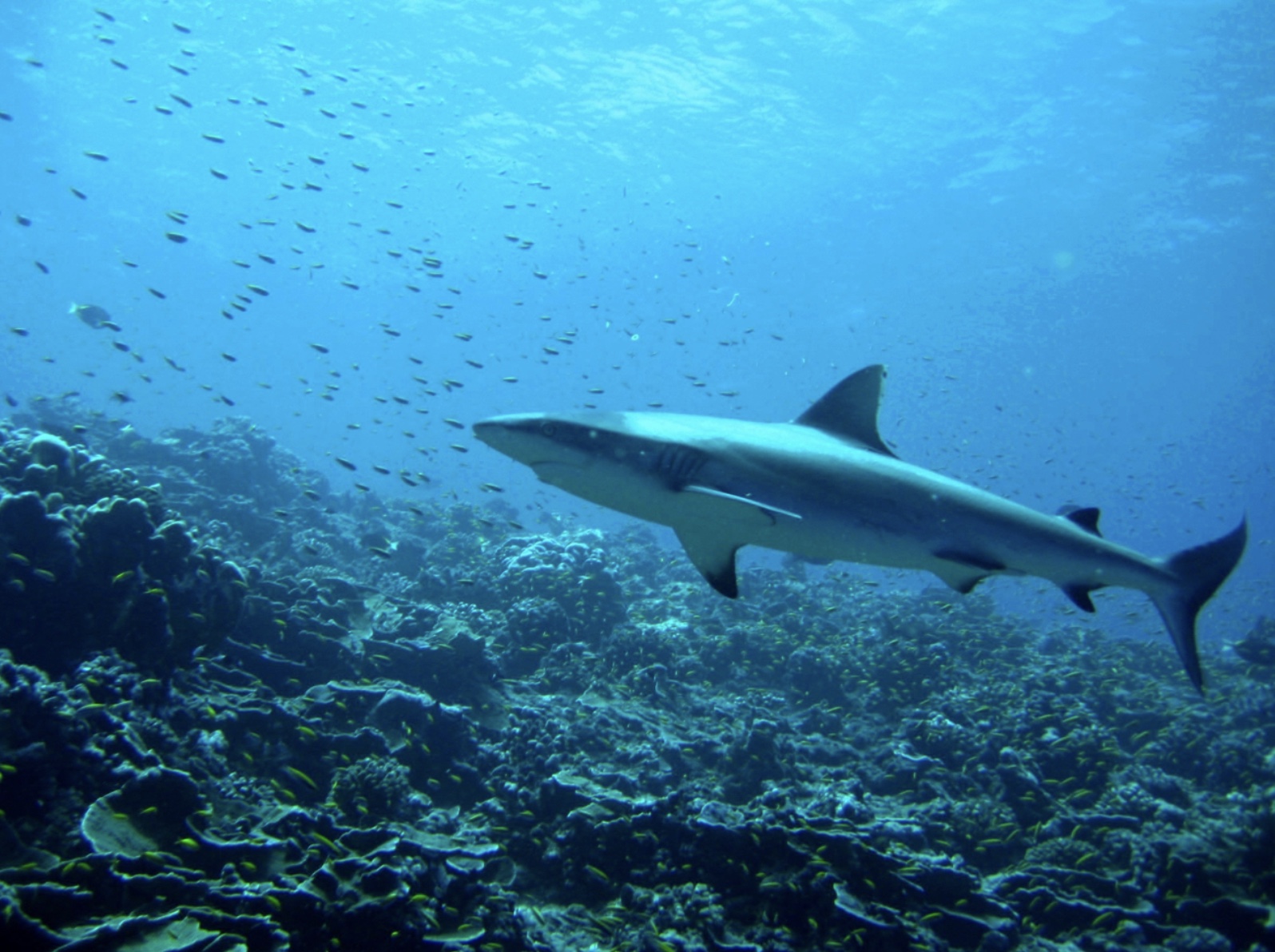
Featured image: Silvertip shark (Carcharhinus albimarginatus) (Image credit: LCDR Eric Johnson) Image from NOAA