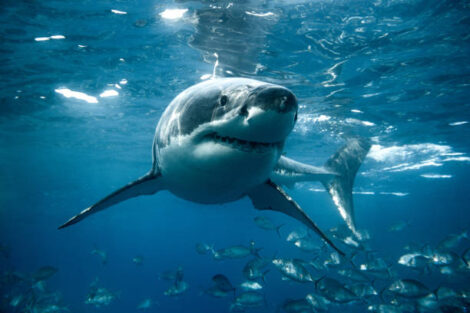
You can ask a kindergartner, an adult, or even Google what the deadliest shark is and most of them would tell you the same thing, a great white shark. The image of this supposedly deadly creature has been programmed into our heads from a young age. This image as well as its name Great White is misleading of this organism’s behavior. It is why marine biologists refer to the species as its true name, a white shark.
As an apex predator, the white shark sits at the top of the marine food web. It primarily feeds on seals, sea lions, fish, and occasionally carrion. By targeting weak, sick, or injured individuals, white sharks help maintain healthier prey populations. This natural regulation prevents overpopulation and supports balance throughout the ecosystem. When apex predators decline, trophic cascades can occur, disrupting marine communities in ways that affect fish stocks, coral systems, and overall biodiversity. In this way, sharks are not destructive—they are stabilizing forces in the ocean.
The idea of the “man-eating” shark is also misleading. Shark attacks are extremely rare, and fatal attacks are even rarer. In most recorded cases involving white sharks, scientists believe the shark mistakes a human for its usual prey, such as a seal. Surfers on boards can resemble seals from below. Typically, the shark takes a single exploratory bite and then releases the person once it realizes the mistake. Humans are not part of their natural diet.
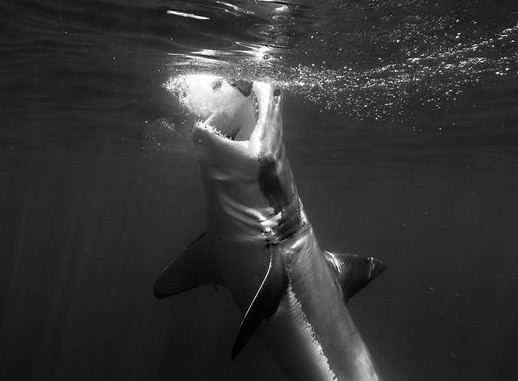
Ironically, while people fear sharks, sharks have far more reason to fear humans. Millions of sharks are killed every year due to commercial fishing, bycatch, and shark finning. White sharks are particularly vulnerable because they grow slowly, mature late, and produce relatively few offspring. This means their populations recover very slowly from declines.
Beyond their ecological importance, white sharks are remarkable marine organisms. They are capable of long-distance migrations across entire ocean basins. Some individuals travel thousands of miles between feeding and breeding grounds. They also possess highly specialized sensory systems. Electroreceptors in their snouts allow them to detect the tiny electrical signals emitted by prey, even when hidden beneath sand. Combined with a strong sense of smell and good vision, this makes them highly efficient hunters.
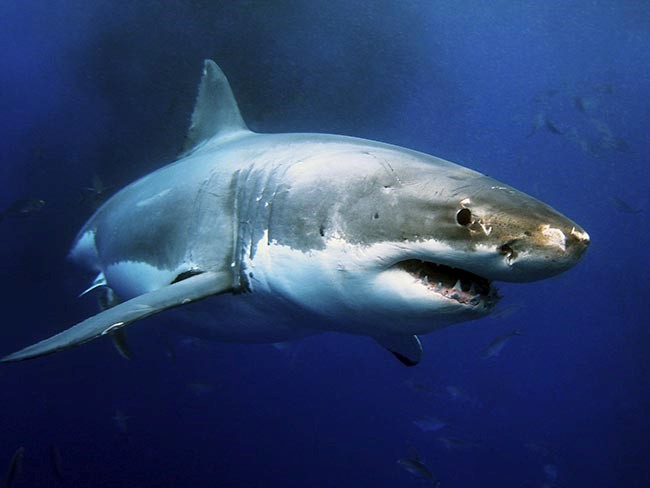
Rather than viewing the White shark as a monster, it is more accurate to see it as an ancient survivor. Sharks have existed for hundreds of millions of years, long before humans appeared. They are not villains of the sea—they are essential components of healthy marine ecosystems.
Feature image shows large White Shark looks straight into the camera. Captured in the clear blue waters of South Australia.
istockphoto-1438305496-612×612