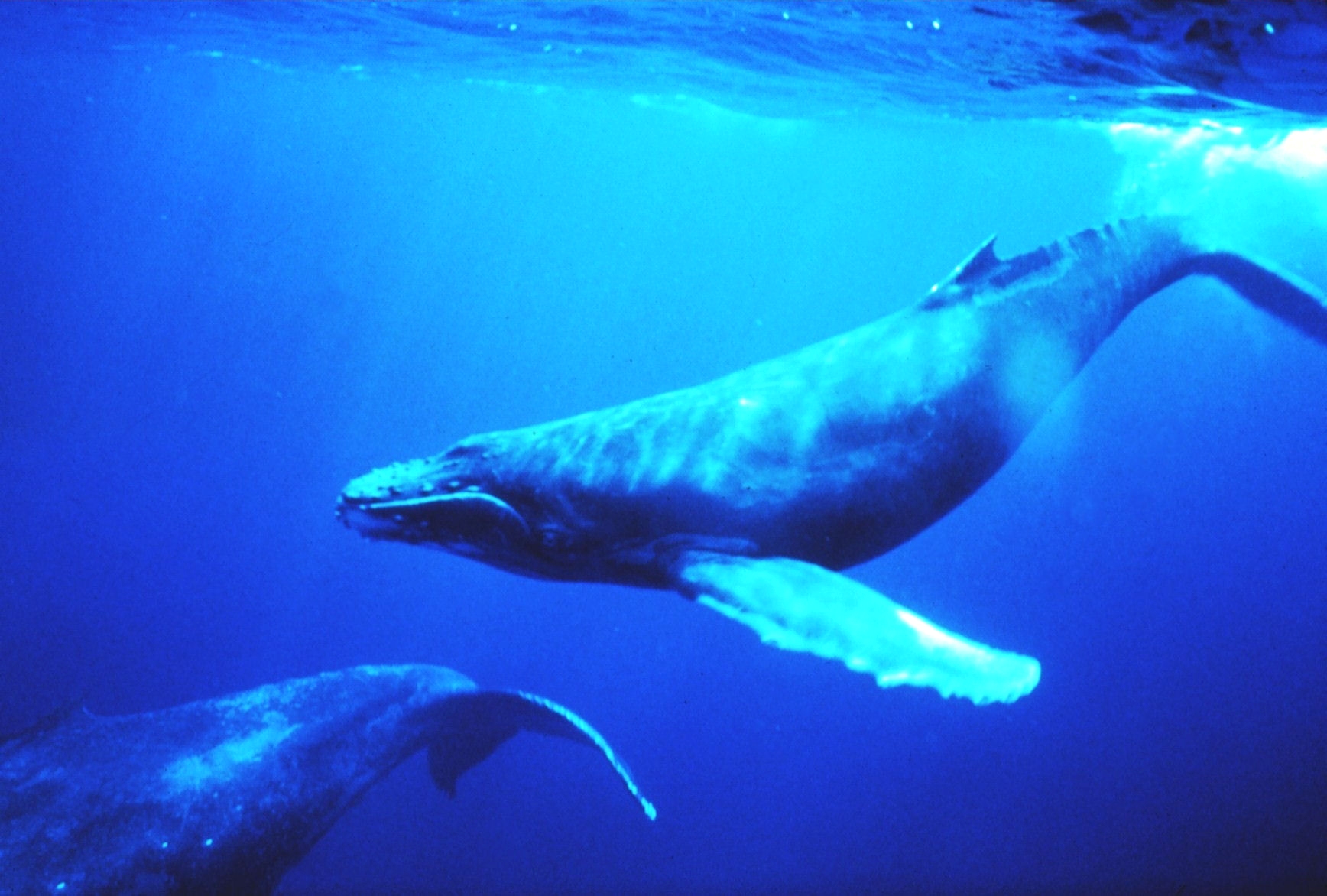
When being attacked by orcas, humpback whales will stop at nothing to protect their calves. They are also seen fiercely protecting other species of animals from the attacks of orcas.
One example of this behavior is when humpback whales defended a young whale carcass after it had been killed by orcas. Multiple humpback whales were seen in a six and a half hour stand off with a pod of killer whales after the orcas killed a grey whale calf. Around 14 humpback whales showed up after the orcas killed the whale calf to protect the calf’s carcass, preventing the orcas from eating it. Using their tails and flippers to slash at the orcas whenever they would try to feed the humpback whales did not back down despite thick swarms of krill nearby. This type of behavior has been observed multiple times by researchers studying humpback whales.
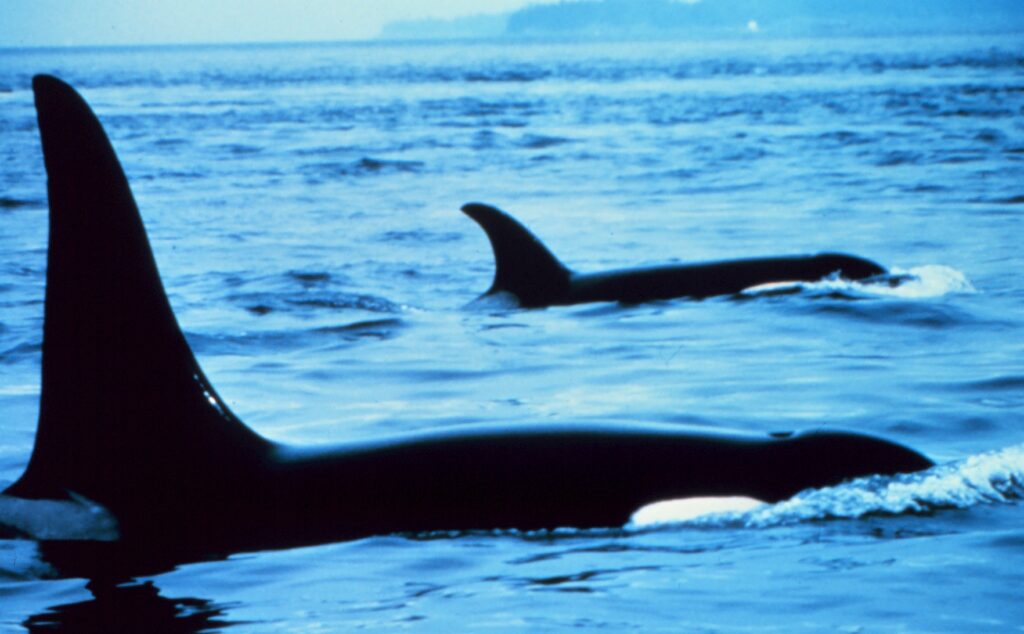
There have been over 115 reports of humpback whales preventing orcas from hunting. Sometimes they are protecting juvenile humpbacks, but in 89% of these reports, the prey being protected was from another species. There are many theories as to why this happens, but the question remains. Why do humpback whales prevent orcas from hunting and eating prey? Part of the answer may lie in how humpback whales defend themselves against orca attacks.
Humpback whale calves are often victims of orca attacks along with other species including pinnipeds and dolphins. Prey typically only have two choices when it comes to their defense: to fight or flee. However, humpback whales are the only prey known to put up a fight against the orcas. They typically opt for combat as their physical structure prevents them from out-swimming predators. They are often seen using their tail and pectoral fins as they are equipped with sharp barnacles while also being flexible and maneuverable. The orcas on the other hand don’t come without their own defense mechanisms housing four rows of razor sharp teeth. Although these are helpful, the humpback’s fins will cause deep wounds on the orcas, sometimes leading to infections.
One theory suggests that humpback whales intervene because doing so could lead to the protection of their young. This is thought because when humpbacks are young, they struggle against orcas, but once they become fully grown, they could take on an entire pod if necessary. Some scientists believe they attack when they are older to protect their young. This is prominent as many young humpbacks will return to the same feeding grounds as their mothers.
_with_calf_Moorea.jpg)
The idea that the behavior may be linked to a personal vendetta due to previous orca attacks has also been suggested. Many of the humpbacks preventing hunting have scars from previous orca attacks. Now that they are grown they take their revenge.
Some researchers believe that humpback whales respond to the sounds of orca predation without knowing what species is being attacked. They are responding to the orcas predation calls to protect their own. Once they realize it is not another humpback they are already in the hunt.
A final theory proposes that humpback whales may be capable of empathy towards other species. Although this behavior is rarely seen, it is not completely out of the blue. Humpback whales are capable of high-level thinking, which could lead to empathetic responses.
Humpback whales have been observed preventing orcas from hunting and eating prey. Some theories as to why this happens is because they are trying to protect their young, it’s unclear what type of prey they are hunting, and even that they are empathetic towards other animals.
Cover Image: NOAA Photographer: Dr. Louis M. Herman. The image shows two humpback whales close to the surface heading back to lower waters.