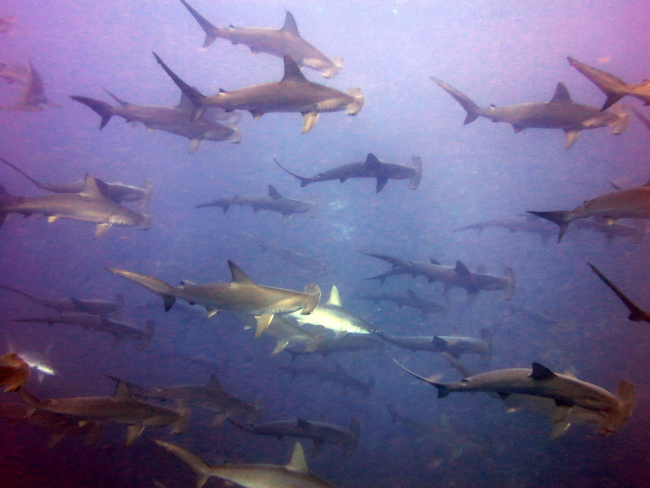
Scalloped hammerheads are a migratory species of hammerhead. They receive their name from the scalloped front edge of their head. They are a species with a wide-ranging global habitat, as they are found in warm temperate and tropical waters in the Indian, Atlantic, and Pacific oceans.Scalloped hammerheads are a critically endangered species.
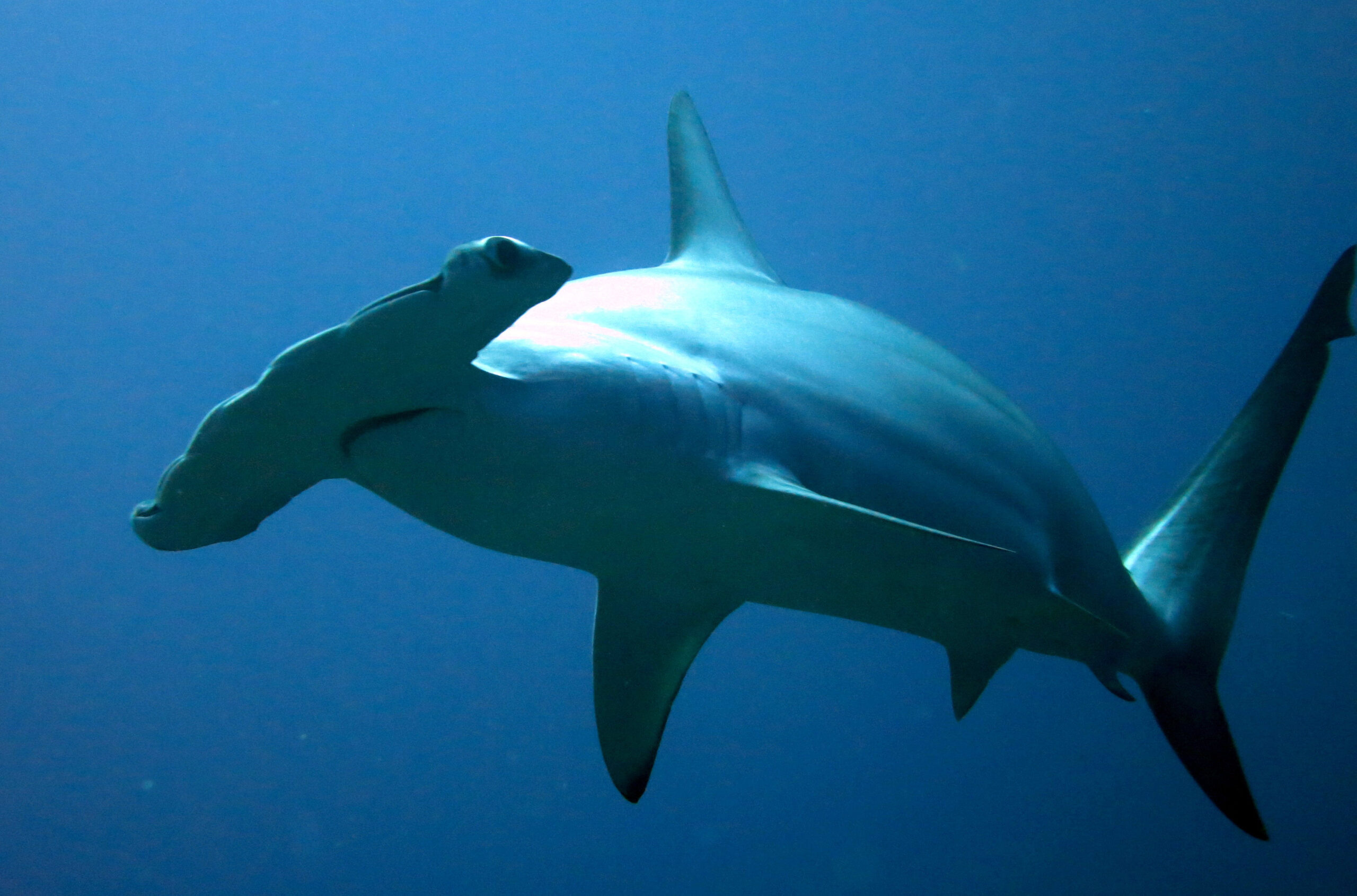
Scalloped Hammerhead Shark in the open ocean. Credit NOAA photo library
The main contributing factor for their endangered species status is due to shark finning practices. Due to their wide range and migratory patterns, they pass through many potential fishing grounds and come in contact with many fishing vessels. In order to develop policies that best protect and rebuild their populations, more studies are needed. Most current studies use the tagging of individual sharks to acquire locational data. This method can be helpful in obtaining data in places where and during times when boats can’t necessarily follow, but it also possesses some downsides. The biggest downside is the smaller data pool, as one tag is representative of only one shark, limiting the data. Another other big concern is the lifespan of the tag, because the tag’s battery can fail, or the tag may come off. More robust studies of the shark’s migratory patterns will help ensure their survival as a species.
Since they are a migratory species and cover large ranges in the global oceans, scalloped hammerheads also use a wide range of habitats throughout their lives. Females, especially, are variable in the habitats they use during their lives, much more so than their male counterpart as reproduction plays a role in the habitats they use. Scalloped Hammerheads have a very complex spatial pattern, as the newborns, juveniles, and adult females and males all typically occupy different habitats.
Scalloped hammerheads are viviparous reproducers, meaning they have a live birth. Their birth usually takes place in the nearshore coastal waters. Although the mother can be found in oceanic waters during the 9–12 month gestational period, she normally returns to nearshore coastal waters to give birth to litters of 12-40 pups. The newborn pups then stay in the coastal waters to avoid the higher predation rates in other parts of the ocean. After birth the mother returns to oceanic waters and the pups remain in the estuary until they are developed enough to venture out. Juvenile females however are often found in coastal estuaries. This is thought to be due to good sources of food and protection from predation while developing into adulthood. After maturing to full adulthood, female scalloped hammerheads migrate out to oceanic waters where they spend large periods of their life. When females are ready to give birth, they will then make the migration back to the nearshore coastal waters to give birth just as their mothers did. Adult male scalloped hammerheads have slightly different lifestyles than their female counterparts. Adult males participate in one of two migratory patterns, depending on the individual. The first migratory pattern is the coastal pattern. These individuals will remain in coastal waters their whole life. It is thought that the reason for this is to optimize their reproductive abilities, as they may come across more females as they enter or depart coastal waters. The second of the two migratory patterns is called pelagic migration, as the male sharks leave the coastal waters and migrate to the pelagic ocean. One advantage of this migration is thought to be the widening of the gene pool, as traveling farther from shore means you’re more apt to spread your genes farther than if you were to stay nearshore in the same small population of sharks.
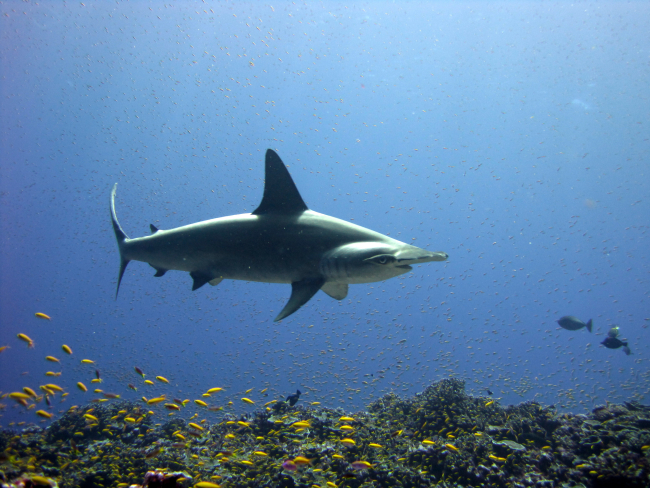
Featured image shows a group of scalloped hammerheads. Credit NOAA photo library