The life cycle of Pacific salmon is that of constant change and transition. Pacific salmon are anadromous fish that hatch in freshwater, grow in the ocean, and return to freshwater to reproduce before dying. Species such as Chinook salmon, Sockeye salmon, Coho salmon, Pink salmon, and Chum salmon follow a complex pattern of development that connects freshwater rivers to the North Pacific Ocean. Each stage of their life cycle is essential for their survival and the continuation of the species.
Freshwater and Early Development
The reproductive cycle begins in freshwater streams and rivers when adult salmon return from the ocean to spawn. Salmon almost always return to the same rivers and streams where they were born. Females dig shallow nests called redds in gravel beds using their tails. Their eggs are fertilized through external fertilization, as males release sperm over the eggs after they are laid. After hatching, the young salmon, called fry, begin feeding on small aquatic organisms. Depending on the species, juvenile salmon may remain in freshwater for several months or even a few years. During this time, they grow steadily and prepare for their migration to the ocean.
Marine Transition
When they grow large enough that their natal streams can no longer support them, juvenile salmon begin preparing for migration. Before entering the ocean, they undergo a physiological transformation known as smoltification. This process allows them to transition from freshwater to saltwater by developing the ability to regulate salt levels in their bodies. Their appearance also changes, as they develop a silvery coloration that provides camouflage in open ocean water. After smoltification, salmon are ready to begin the next stage of their life in the sea.
Marine Growth
Although spawning occurs in rivers, most salmon growth takes place in the ocean. The nutrient-rich waters of the North Pacific provide abundant feeding opportunities that support rapid development in both juvenile and adult salmon. As young salmon adapt to marine life, they begin feeding heavily and experience significant increases in body size. Their diet shifts as they mature, allowing them to grow stronger and build muscle mass.
Depending on the species, salmon may spend one to five years in the ocean. During this period, they gain and store large amounts of energy. These energy reserves are essential for survival, as salmon stop feeding once they begin their return migration to freshwater. The energy stored during their marine phase fuels their long journey upstream, as well as the demanding processes of spawning and reproduction
Final Migration and Reproduction
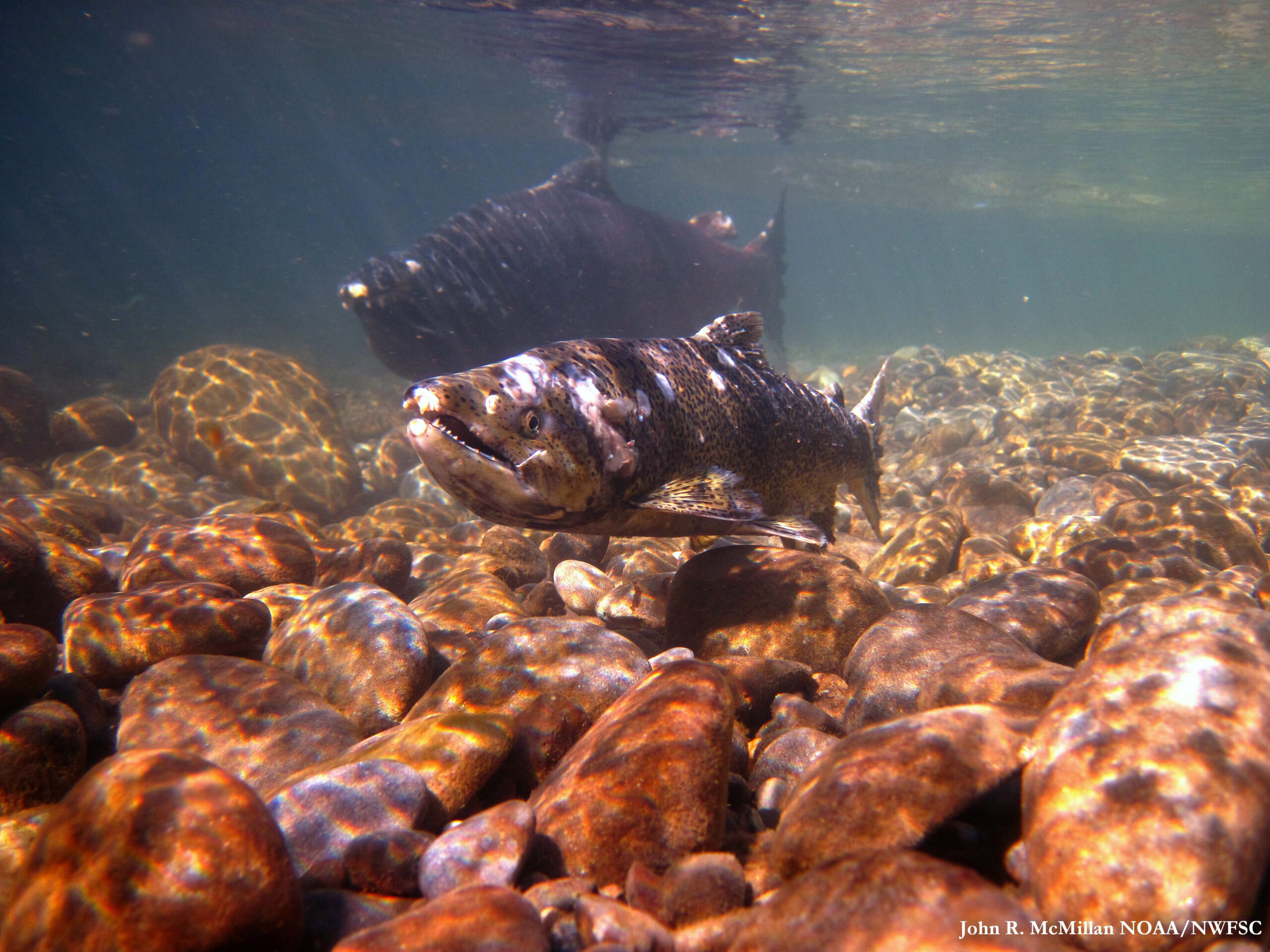
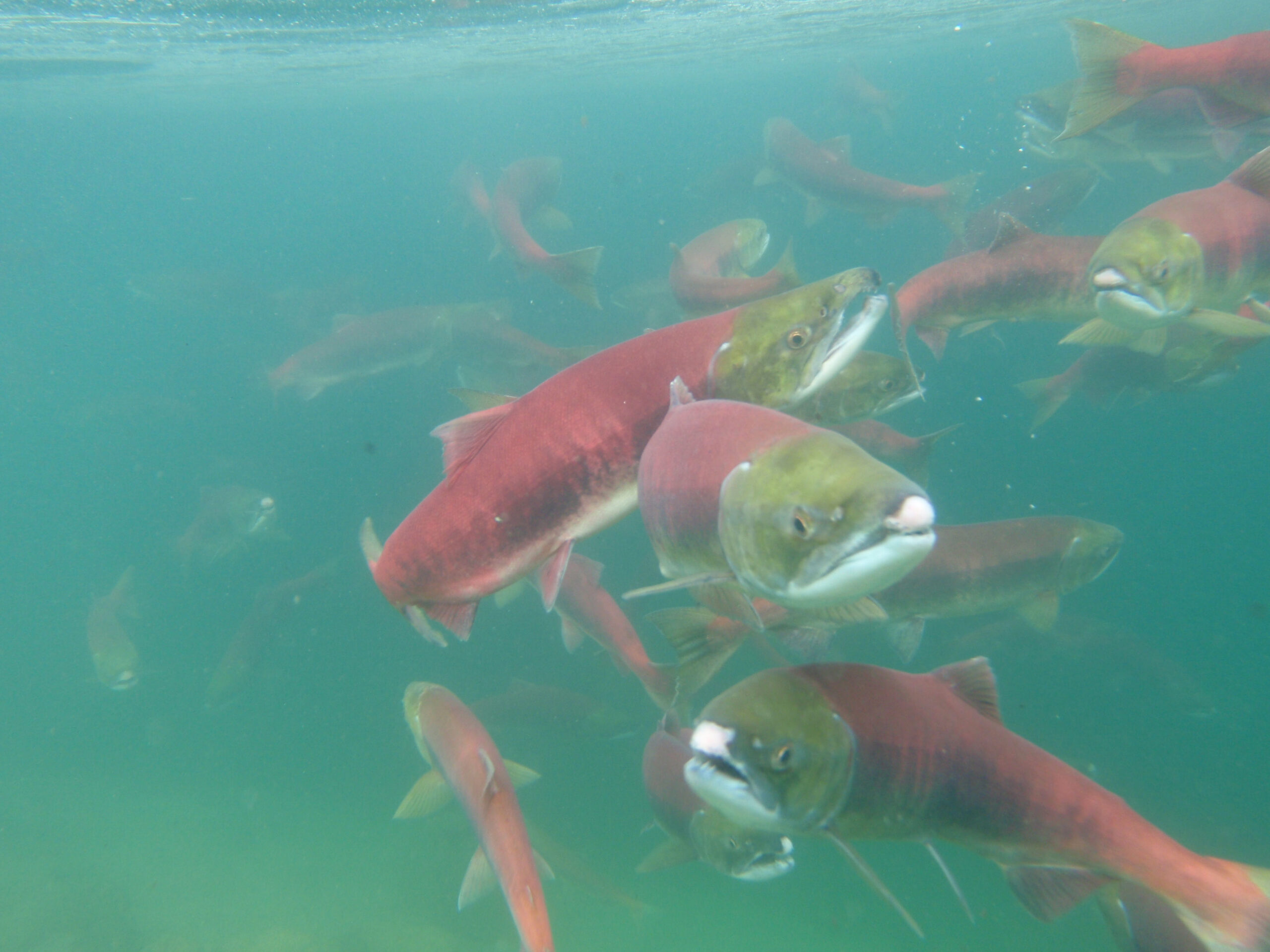
After years of growth in the ocean, salmon begin their final migration back to freshwater. Guided by environmental cues, they return to the very stream where they were born. Once they re-enter freshwater, they stop feeding entirely and rely solely on the energy reserves accumulated during their marine phase.
As they move upstream, their bodies undergo dramatic physiological changes, including reverse smoltification as they readjust from saltwater to freshwater conditions. Their coloration intensifies, and their remaining energy is redirected toward reproductive development. Pacific salmon are semelparous, meaning this single spawning event marks the end of their life cycle. After spawning, their bodies gradually die and decompose in the freshwater system, releasing marine-derived nutrients that enrich the surrounding ecosystem.