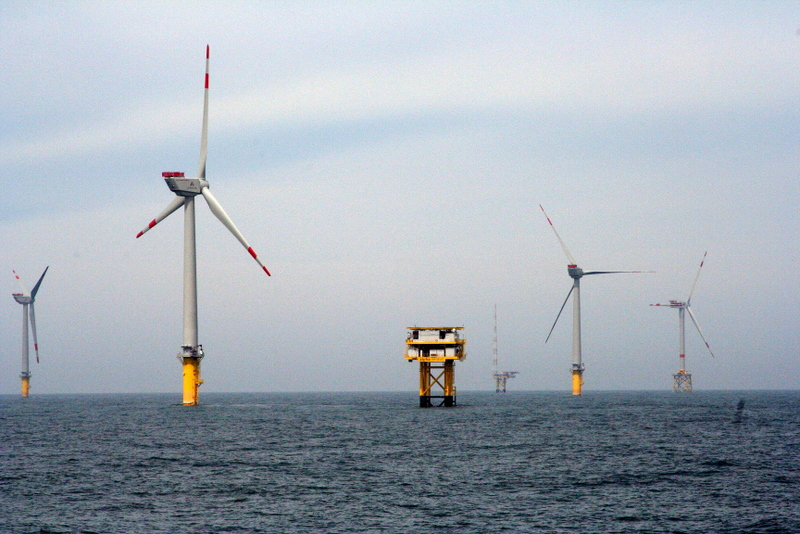
Offshore wind has been a highly debated topic in recent years, those in favor see it as a sustainable way to harvest energy and cut back on fossil fuel usage, those in opposition of offshore wind consider the windmills to be an eyesore that’s harming marine life. The reality of the wind farms isn’t so black and white.
Offshore wind is a renewable, clean energy source. The offshore wind project off the coast of Rhode Island, led by Revolution Wind is set to produce 400 MW of offshore wind power to Rhode Island and 304 MW to Connecticut.
The most common argument against offshore wind is that these turbines are responsible for a recent increase in whale deaths, in part due to the frequencies that the turbines emit. However, there is no data that suggests any correlation between increased whale deaths and offshore wind, and these turbines operate at a different frequency than the one used by marine life for echolocation. In reality, the increase in whale deaths is likely caused by the increase in whale population in New England waters, now that they are no longer being hunted to near extinction, like they once were.
The biggest environmental concerns of offshore wind are seabird collisions, and noise pollution and seafloor disruption during installation. Seafloor disruption is already an issue with oil drilling that’s currently happening in the ocean, so while offshore wind isn’t worse in this category, it isn’t much better if it’s causing the same issues. New studies also suggest that offshore wind could change ocean currents, which could disrupt the ecosystem as a whole.
Unfortunately, recent attempts to shut down offshore wind projects have been motivated by a desire to increase oil consumption, rather than actual concern for the ocean. Overall, offshore wind is a better, more sustainable alternative, but unfortunately, we won’t know the long-term effects of these turbines until potential issues start to become apparent, so we have to consider if better is good enough when it comes to a delicate ecosystem, where there is still so much we don’t know about. It is important to continue monitoring these wind products to ensure that any potential complications to our oceans are minimized before it is too late. It is also worth noting that there are other forms of renewable energy, like solar, that can maximize energy intake without disrupting the ocean.