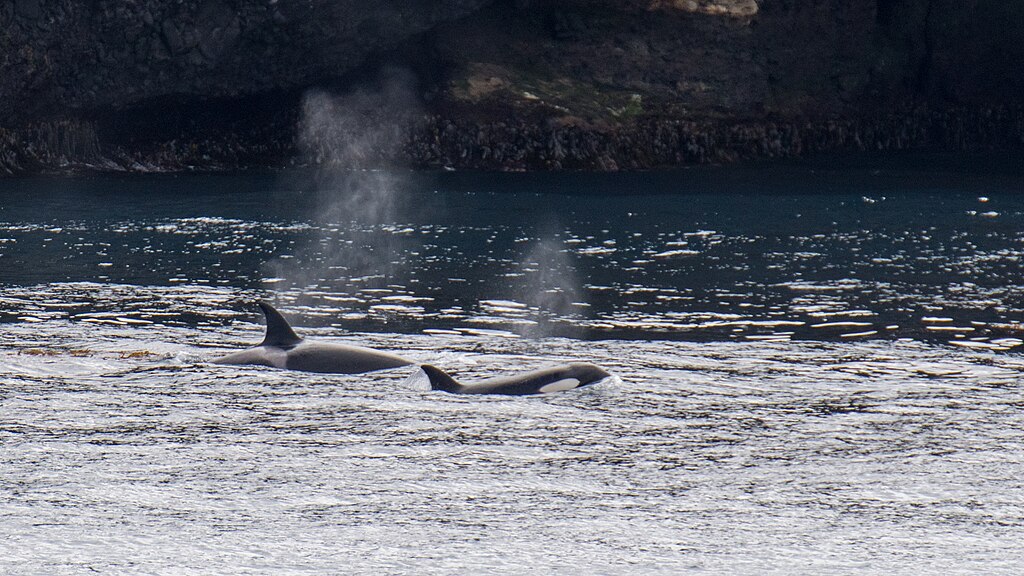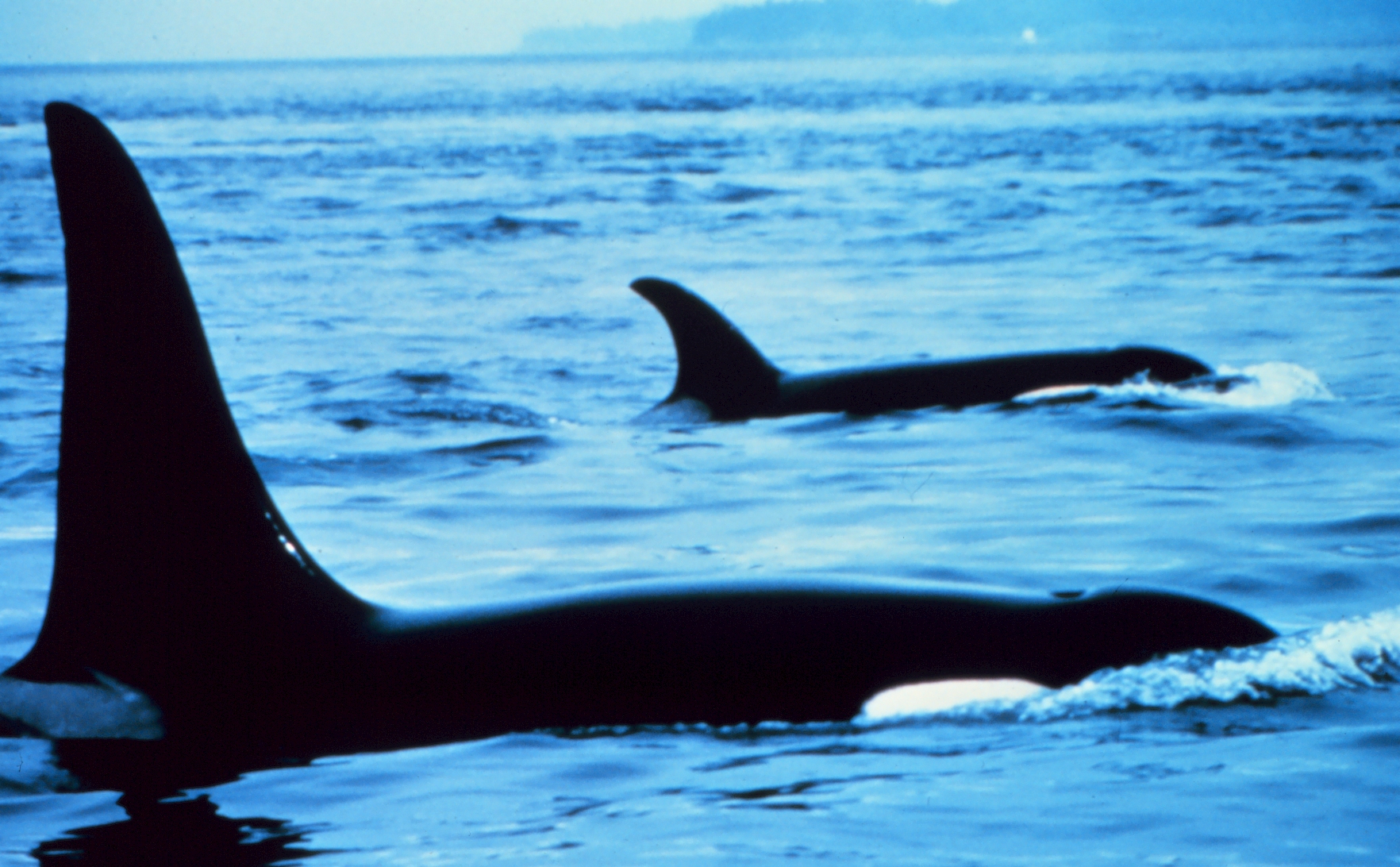
Cover Image: A pair of killer whales. Credit: Captain Budd Christman, NOAA Corps
Over 600 vessels have been “attacked” by one species of killer whale, the Iberian Orca, Orcinus orca. This species of orca is found off the Iberian Coast with an estimation of fewer than 50 left in the wild. They came into the spotlight after multiple reports of orcas “attacking” sailboats and other vessels, sinking a total of 6 ships. These interactions stumped scientists, as orcas have not shown these behaviors towards boats before. Sailors noticed that the animals head-butted the rudders until they broke, then continued to play with the rudders. They also observed that each interaction involved the same group of 15 orcas. These observations brought more questions, including: Why were the orcas “attacking” the rudders of the boat, with seemingly no malice behind the interactions? And how can these interactions be prevented or avoided?
Two hypotheses have been formed, the fad hypothesis and the trauma hypothesis. Believers of the fad hypothesis think the orcas created a new game and are repeating the action as they find it fun. Young orcas, given that prey is plentiful around the Iberian Peninsula, are often known to cause mischief with the extra time they have. This hypothesis is supported by the fact that their interaction with boats have no malice behind them, with only a few boats being left with teeth marks. Along with this, in many cases where we see the rudder is broken off, they continue to play with the piece, pushing it back and forth between each other. The alternate hypothesis states that orcas were attacking these vessels, as they once experienced trauma involving boats and are trying to stop the boats to prevent recurrences. A few members of the group of 15 individuals are mature adults that have scar marks resembling injuries from boats. Scientists do not know which hypothesis is more accurate, or what event could have triggered these interactions. However, they are pushing for the world to change their terminology around the situation and call these interactions and not “attacks” as there is no malice behind them.
As the reasoning behind these interactions is unknown, scientists are recommending ways to avoid these situations, as they can be costly to both the orcas and humans. As orcas repeatedly hit the rudder with their head, they are putting more pressure on their brain which could lead to injuries. As rudders are broken, the vessels begin to sink, which leads to a dangerous situation for the members on the boat and an expensive repair once the boat is towed back to shore. Scientists recommend that boaters frequently check maps of recent orca locations and avoid those areas. With all of these recommendations and research conducted, scientists hope to decrease orca interactions, creating a safer environment for vessels and for the animals.