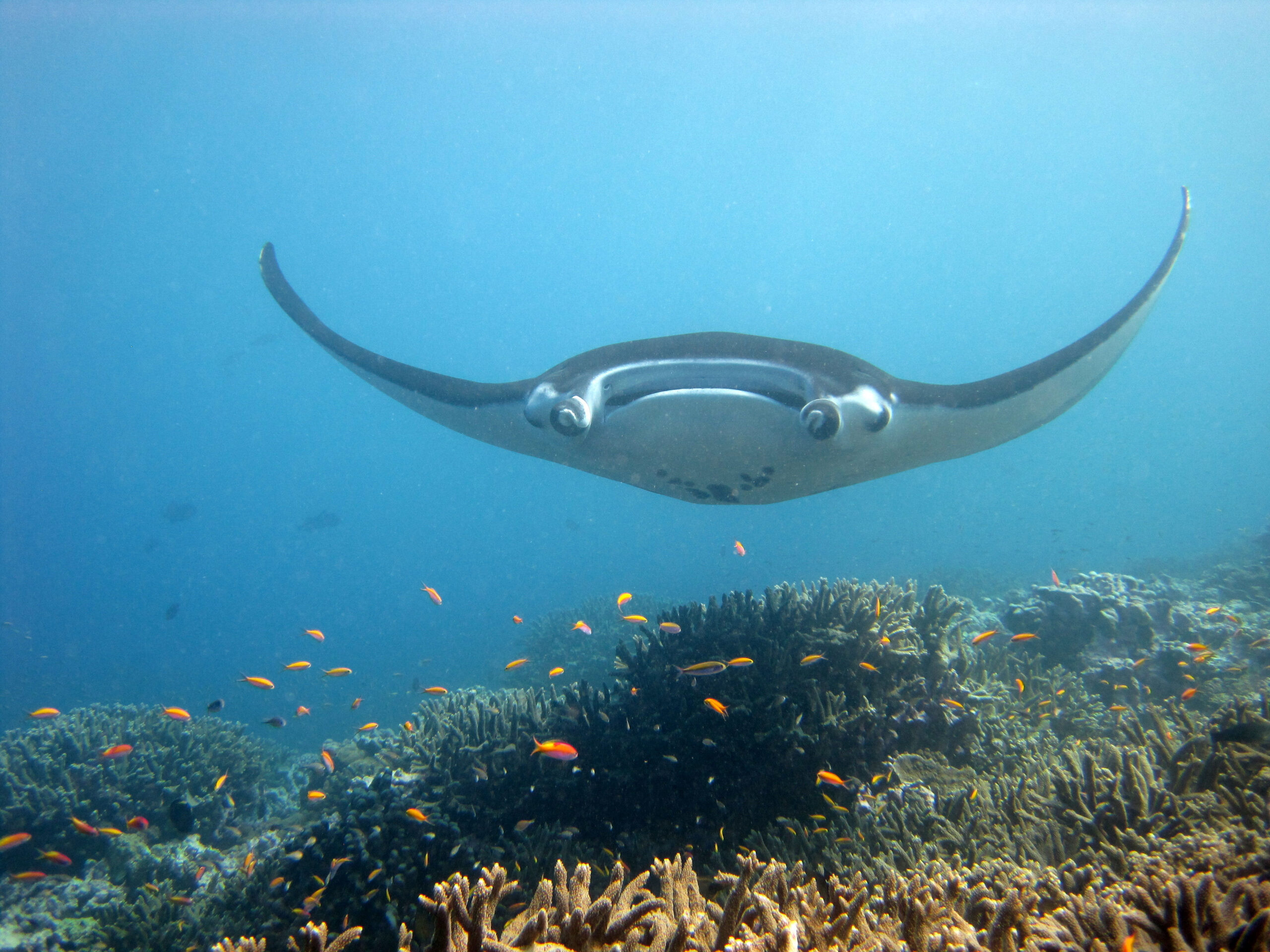
Manta rays are one of the many fascinating creatures of the sea, known for their high intelligence, giant sizes, and graceful acrobatics, while also playing a key role in nutrient cycling. But, what many people do not know, is that they are in danger.
A landmark global study led by the Manta Trust and a network of international experts revealed the first scientifically robust estimate of manta ray mortality worldwide: an alarming 265,000 individuals killed every year. This alarming rate is detrimental to the overall population, as they have a low fecundity rate and therefore do not reproduce fast enough to counteract this mortality rate. NOAA officially added their first species of manta ray, the Giant Manta Ray, to “Threatened” under the “Endangered Species Act” in 2018.
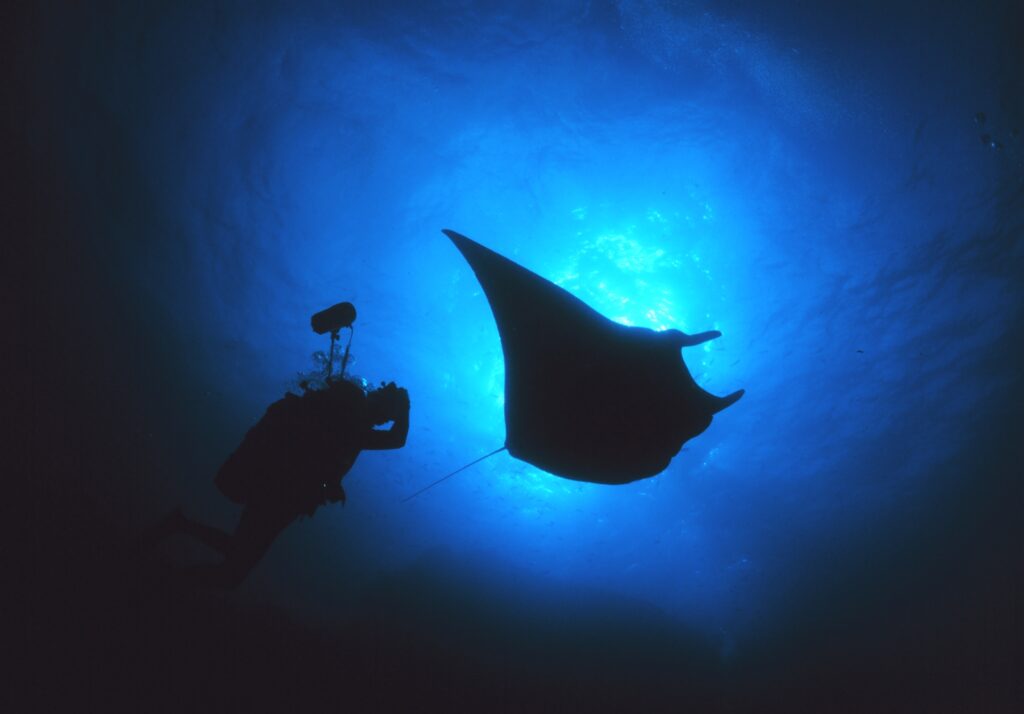
A Manta Ray blocks out the sun (Image credit: Jackie Reid)
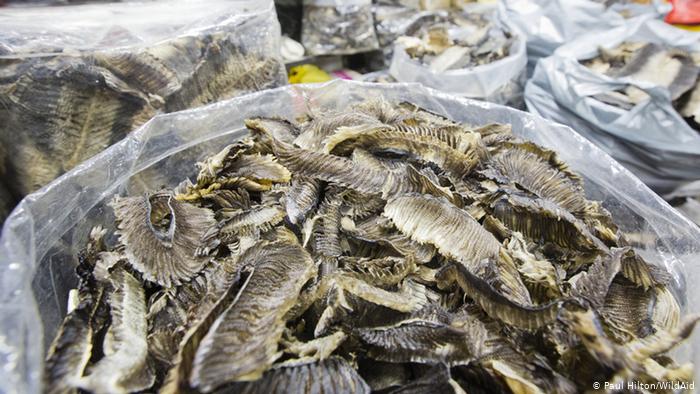
Manta Rays are specifically hunted for their gill rakers. These gill rakers, also known as gill plates, are a major part of the manta rays diet system, filtering their food intake. Mantas will swim with their mouths wide open and their cephalic fins extended to funnel water through their mouths and over their gills, where their specialized gill rakers will filter out the plankton.
Gill plates are hunted primarily in the indo-pacific region, specifically Indonesia and China. In order to extract the gill plates, the rays must be killed. These plates are being hunted because they are speculated to have medicinal value. It is said by Traditional Chinese Medicine retailers that the incorporation of gill plates in your diet can increase your amount of breast milk, detoxify blood, cure chickenpox, and clear smokers lungs. They are made into a broth, which is then used as a base in soup. Even though there are many claims advertising these gill plates as beneficial, there is no scientific evidence that they actually do anything for a person’s health. It is even speculated that the gill plates are harmful when ingested. According to WildAid, toxicology tests of Guangzhou market samples detected Arsenic and Cadmium levels far exceeding permissible limits of heavy metals in herbal medicines and foods as outlined by the Pharmacopoeia of China.
Not only is manta ray hunting detrimental to their populations and ecosystems, it is also extremely harmful to local economies. According to Manta Ray Advocates, manta ray tourism drives local economies, providing jobs, and unforgettable experiences. A study done proved the 23 countries where people see manta rays generate over $73 million yearly from diving and snorkeling tours. They also state that if the extra money tourists spend on hotels and food is considered, the total economic impact is about $140 million yearly.
Manta rays are far more than awe-inspiring ocean giants. They are extremely important to their ecosystems, and the economy. Although there have been some notable efforts to restore the manta population, hunting still remains as a critical threat. Without stronger conservation efforts and public awareness, manta rays may disappear before many people even realize what has been lost.
Featured Image: Manta ray (Manta birostris) (Image credit: Kevin Lino)