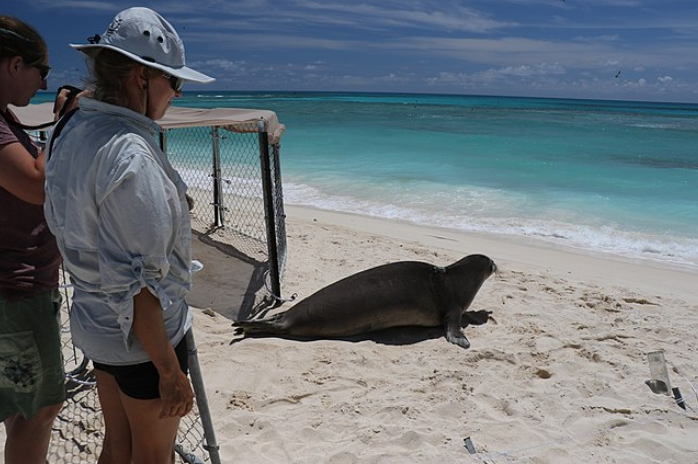
Seals capture the hearts of many people with their big eyes, fatty blubber, and behaviors that are adored by everyone, bestowing nicknames upon them such as “the puppies of the sea”. As with so many animals in our wild world, they can get injured by human activity, abandoned at birth, or simply misplaced and lost. That’s where rehabilitation is essential: taking these animals in and helping them heal before releasing them back to the wild. This, however, is much easier said than done. One of the main concerns of rehabilitation is the effect of human interaction on the release of rehabilitated animals.
Most of the examples of rehabilitation we see are fine, where seals peacefully return to the wild and do not interact with humans. However, according to NOAA, a small percentage of seals may have a hard time being reintroduced to the wild. Typically after about six months of rehabilitation these animals can be released. At times release may be paused or cancelled. Some reasons that pinnipeds may be non-releasable include chronic medical conditions, blindness, deafness, or other illnesses that would decrease chances of survival. Another factor preventing release is if an animal was orphaned – they may need more socialization before returning to the wild. Finally, if seals become too habituated with humans, they could associate humans with food or care, which also decreases their chances of survival.
Some research conducted on seal pup rehabilitation from sources such as Tara Seal Research (TSR), show that association with humans is not imprinting, but more likely a lack of fear displayed when it comes to humans. When reintroduced into the wild with this lack of fear of humans, they may display behavior that is dangerous to survival. One example of this is when seals are on land, they are in safe areas known as haul-out sites, where they rest, moult, and breed. When disturbed, they escape to the safety of the water. Pups that have been reintroduced into the wild may sleep so deeply that they are abandoned by the herd. There have also been instances where the pups wake up and see the human or disturbance, and simply do not leave, as they have associated humans with safety.
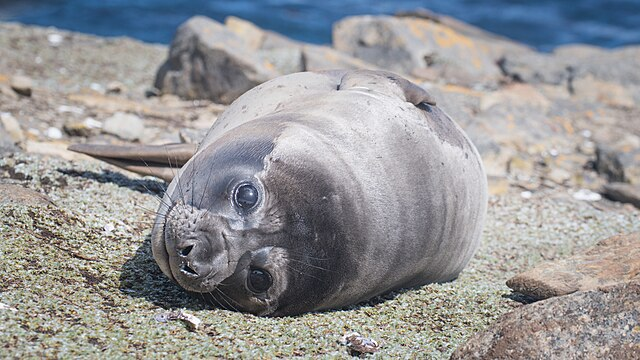
Seals and other pinnipeds at haul-out sites can sometimes become used to humans, losing fear and risking danger. Neil, a juvenile Southern Elephant seal in Tasmania, is a prime example. According to sources such as Sealo, when he began his moult, he came ashore, most likely attracted by the heat of the pavement as moulting can cause Southern Elephant seals to become cold. Curious locals, unaware of the risks, crowded around him, trying to pet or feed him. Over time, Neil became less fearful of humans. He began exploring streets and traffic cones, which increased his danger of injury or attack. Despite multiple relocations by scientists, he kept returning. Rehabilitators tagged him and finally relocated him to a remote, undisclosed area where he could survive without human contact.
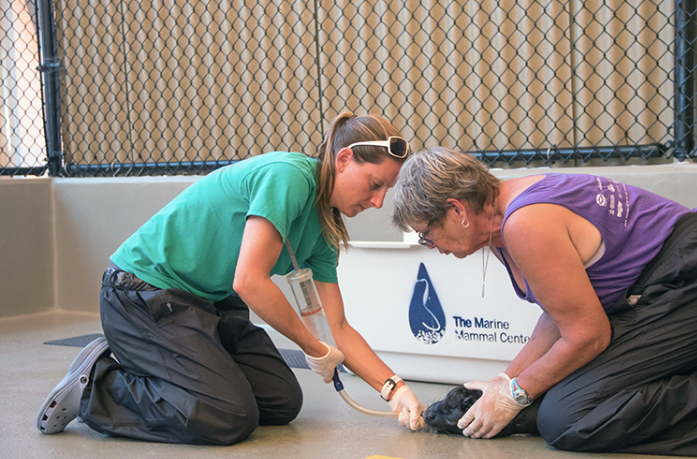
While Neil was able to safely be relocated, other seals are not as lucky, and continue to come into contact with humans and need more rehabilitation. Organizations such as NOAA have organized a very efficient system of rehabilitation to ensure that human interaction is limited, keeping the percentage of human-habituated seals to a minimum. Rules such as no eye contact, no hand feeding, and quiet voices ensure that seals in rehabilitation do not become used to the presence of humans. They also make feeding variable, so that seals do not associate a door opening and a human walking in with food. Some organizations install one way glass, so that seals cannot see the rehabilitators, but they can safely view the seals. Finally, any playing or social interaction between seals and humans while in rehabilitation is prohibited, so that when released into the wild there will be little chance these creatures will be enticed if a human comes too close. Although much work is done to ensure these wild animals stay wild, we can see the effects of human interaction on rehabilitated animals.