Extinction is more than an elimination of a species; it is the erasure of entire branches of evolutionary history that have been shaped for millions of years. Living in the warm, slow-moving rivers and lagoons of northern Australia and southern New Guinea is one such lineage. A turtle that is the last of its evolutionary kind and is living history, history about to be erased. The Fly River turtle (Carettochelys insculpta), also known as the Pig-nosed turtle, is the last living member of both the genus Carrettochelys and family Carrettochelyidae.
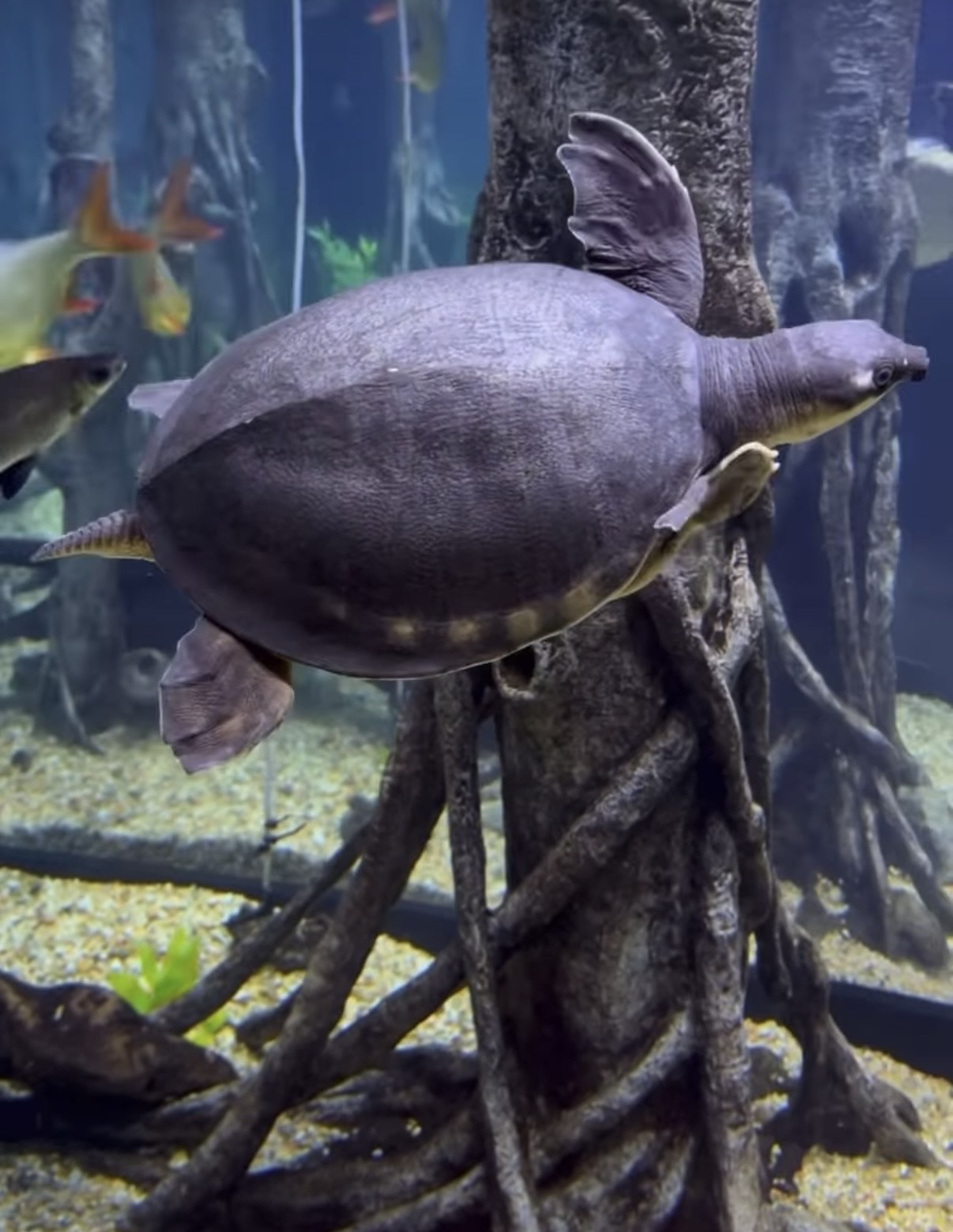
Fly River turtles are also known as Pig-nose turtles because of their unique snout that looks nearly identical to a pig’s snout. Their pig-nose is more than just a pretty look though, with it providing benefits vital to their survival. One benefit is allowing them to breathe while almost fully submerged, almost like a snorkel. That isn’t all though, with another benefit being the snout acting as a sensory organ, which heavily aids the Fly River turtle’s search for food in the murky waters it inhabits. Fly River turtles are also unlike other freshwater turtles for reasons other than their nose.
While other freshwater turtles have webbed feet, Fly River turtles have flippers, almost identical to marine turtles. Even though Fly River turtles they have flippers identical to sea turtles and have been mistaken time and time again for sea turtles, they are a completely different species from each other. Sea turtles are apart of the superfamily Chelonioida, while Fly River turtles are apart of the family Carrettochelyidae. So although they look similar, there are millions of years of genetic evolution separating them.
These differences can range from being miniscule such as a small change in their non-protein coding DNA, to a large difference, such as only being able to survive in a specific habitat (saltwater or freshwater) The evolutionary distinctiveness of the Fly River turtle is further supported by phylogenetic and paleontological evidence. As the sole surviving member of the family Carettochelyidae, the species is now isolated in freshwater systems in New Guinea and Australia.
But back in the Miocene Era, fossil records show that related Carettochelyid turtles were once more widely distributed across different parts of Asia and the Indo-Pacific region. This shows that at one point of the time, that these turtles had a more expansive lineage. Over time, climatic shifts and geological changes probably contributed to the limiting of this family’s range, leaving Carettochelys insculpta the sole survivor, leaving them confined to the river systems of New Guinea and northern Australia. Its continued survival shows us a glimpse into an ancient evolutionary branch that has otherwise disappeared from the fossil record.
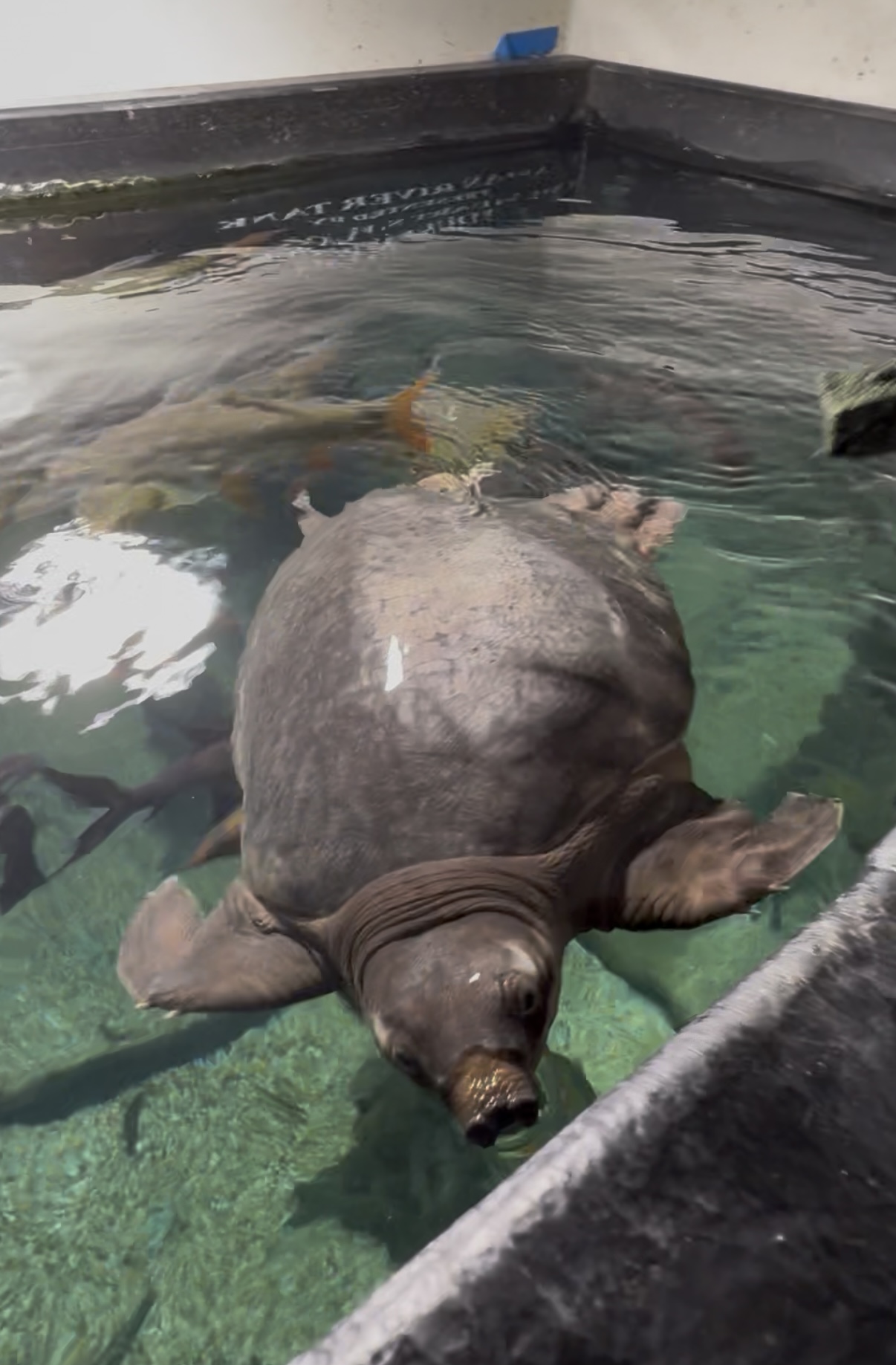
Despite its long and distinctive evolutionary history, it now is the sole survivor and faces the very real threat of extinction. The IUCN Red List has classified the Fly River turtle as an endangered species. Their current major threats are habitat loss and degradation and human activity such as pollution, illegal pet trade, and hunting. Although now with the species being classified as endangered, there are more conservation efforts at work to protect them such as legal protections against illegal pet trade and habitat preservations such as limiting river pollution. The conservation of the Fly River turtle represents more than the protection of a single freshwater species, it is the protection of the last surviving representative of an ancient lineage, and its extinction would mean the loss of millions of years of evolutionary history.