Imagine a depth few have gone to; a depth far greater than the height of Mount Everest – the tallest place on Earth. The temperature is a few degrees above freezing and you are surrounded by darkness. Its high pressure is 8000 times the standard atmospheric pressure at sea level, powerful enough to turn you to dust immediately. This depth is known as the Challenger Deep (11,000 meters deep), the deepest point in the Mariana Trench. The Mariana Trench was formed millions of years ago through subduction. Currently, the trench is located in the Western Pacific east of the Philippines. It’s shaped as a crescent scar measuring more than 1,500 miles long and 43 miles wide.
In 1875, the HMS Challenger Expedition encountered the Mariana Trench. They threw a weighted rope overboard to conduct a routine depth sounding; but the rope just kept on falling. They calculated a depth of 8,184 meters. This was the first scientific survey of the Mariana Trench region. Almost a century later, the British Survey Ship Challenger II in 1951 confirmed the trench’s depth, this time measuring 10,863 meters with echo sounding equipment.
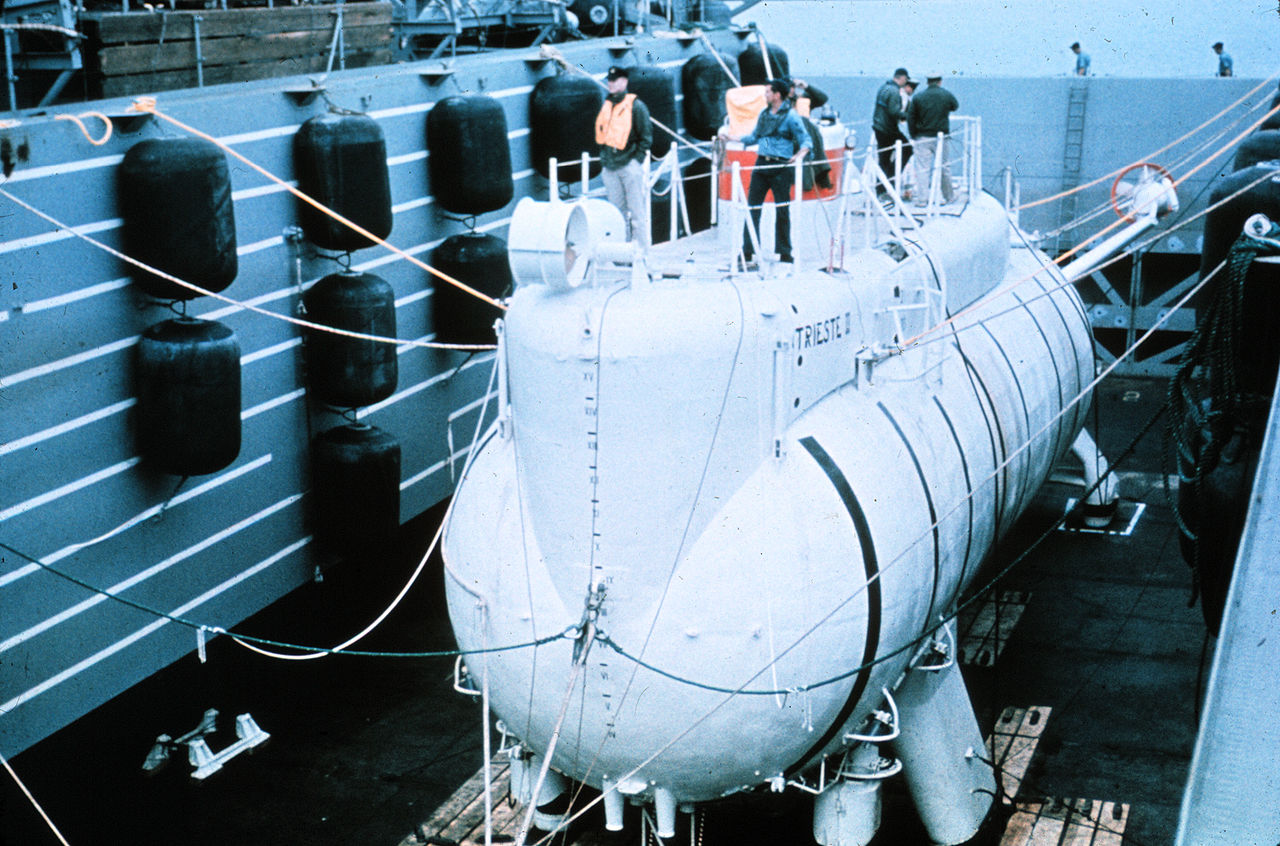
Prior to 2019, only three people have explored the depths of the Mariana Trench. These three people proved not only the possibility of exploring the great depths, but stimulated more scientific curiosity of the ocean’s deepest point. It all started in 1960 with Jacques Piccard and Don Walsh. Neither were trained scientists, but were determined to prove the ability to reach Challenger Deep; and that they did. On January 23rd, they made the descent in the U.S Navy bathyscaphe Trieste, reaching a record depth of 10,911 meters. Despite 8 hours of total ascent and descent time, Walsh and Piccard only spent 30 minutes on the ocean floor. There they took simple observations using mercury vapour lamps and checking the water temperature. In order to descend, Trieste carried 16 tons of iron shots as ballasts. Additionally, each time Walsh and Piccard experienced a thermocline, they would release gasoline from the submersible in order to match the cold dense water’s temperature. Ascending took less time, as Trieste would drop iron shots.
For 52 years, no-one else dared to travel to the Mariana Trench’s Challenger Deep. Not until March 26th 2012 where James Cameron, a renowned director known for his movies Avatar and the Titanic among others, was the first to solo dive to Challenger Deep, reaching 10,908 meters. This event was known as the Deepsea Challenge. Unlike Trieste, James Cameron spent three hours on the bottom of the ocean and five hours between the dive, descent, and ascent. What also set James Cameron apart from the 1960 exploration was his immense amount of scientific sampling which led to the identification of at least 68 new species. The Deepsea Challenger was designed partly for this purpose, as it was equipped with a hydraulic manipulator arm for taking samples and numerous cameras to take high-resolution 3D images of landscapes and life-forms. To handle the high amount of pressure, the Deepsea Challenger had Isofloat syntactic foam for the buoyant hull along with pressure-resistant battery packs.


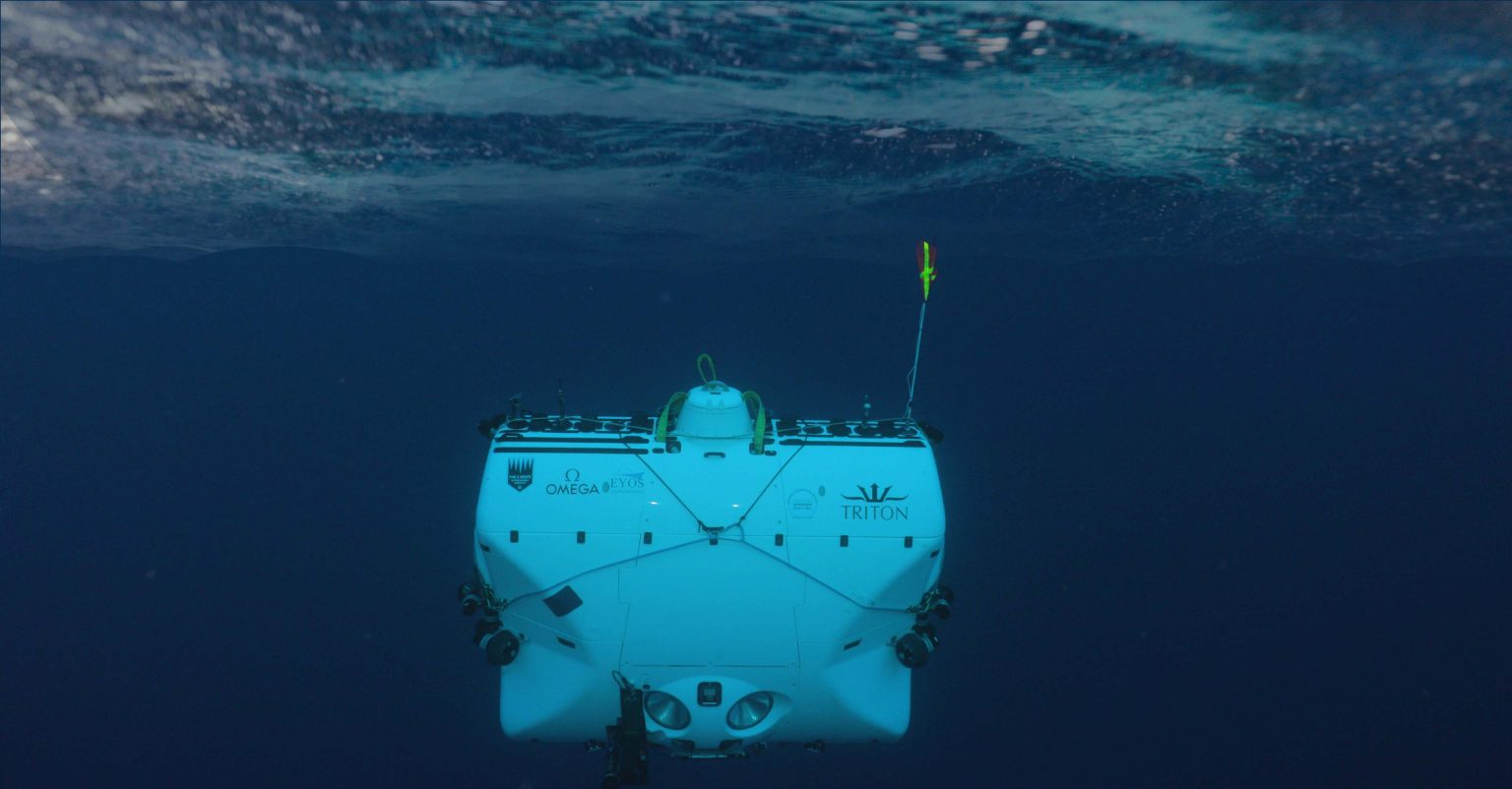
Since James Cameron’s ambitious descent, over 20 more people were encouraged to explore Challenger Deep for themselves. Most of which made their descent in the submersible Limiting Factor, a submersible specifically built to be used time after time again. The main mechanism that allowed the submersible’s repeatability was its sole focus on vertical descent and ascent, differentiating from previous submersibles that also incorporated horizontal movement. This would allow the submersible to reach Challenger Deep more efficiently, saving power and time. Additional key features in Limiting Factor include a 90mm thick weld-free titanium pressure hull, a large 65kWh battery that allows dives more than 16 hours, and a simple design to minimize complexity. The Limiting Factor is also equipped with 4k cameras, a high-performance lightening rig, scientific sampling equipment, and a multi-axis manipulator arm.
It is important to note how influential Trieste and the Deepsea Challenger were to ocean exploration. The two submersibles proved the extent technology can serve in reaching previously thought unattainable areas. Although progress has been made in ocean exploration over the years, 2/3rds of the ocean still remains a mystery with 91% of the ocean’s species yet to be discovered. There is still a lot to be accomplished in understanding the workings of Earth.
Feature image: Open Ocean (Image from Pixabay)