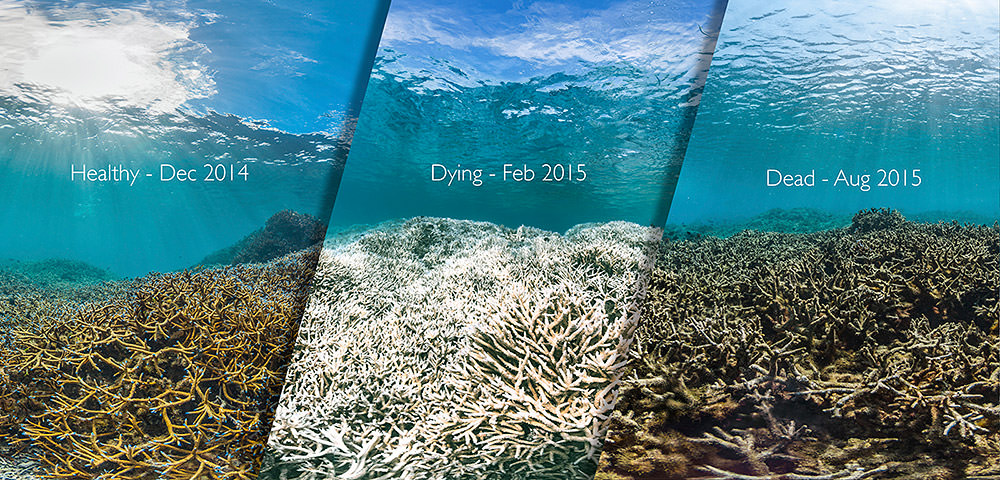
Ocean acidification, the increase of pH and temperature from global warming, is bleaching coral reefs. Corals can’t adapt fast enough and are getting bleached or dying because their evolution rate is much slower than the ocean acidification occurring. Zooxanthellae, a type of microalgae, lives inside of coral tissue and is what causes corals to come in thousands of colors. This algae has a mutualistic symbiotic relationship with coral since the algae provides sugars for photosynthesis and the coral provides protection and carbon dioxide for photosynthesis. Due to climate change, these corals can now be seen as white, due to an absence of the microalgae. This occurs because the warmer, more acidic water causes the algae to become bleached. When it is consumed by the coral, it gets rejected, leaving the coral white. In this stage, the coral is not yet dead but bleached. If this act continued long-term, then the corals would die since they need the Zooxanthellae to survive.
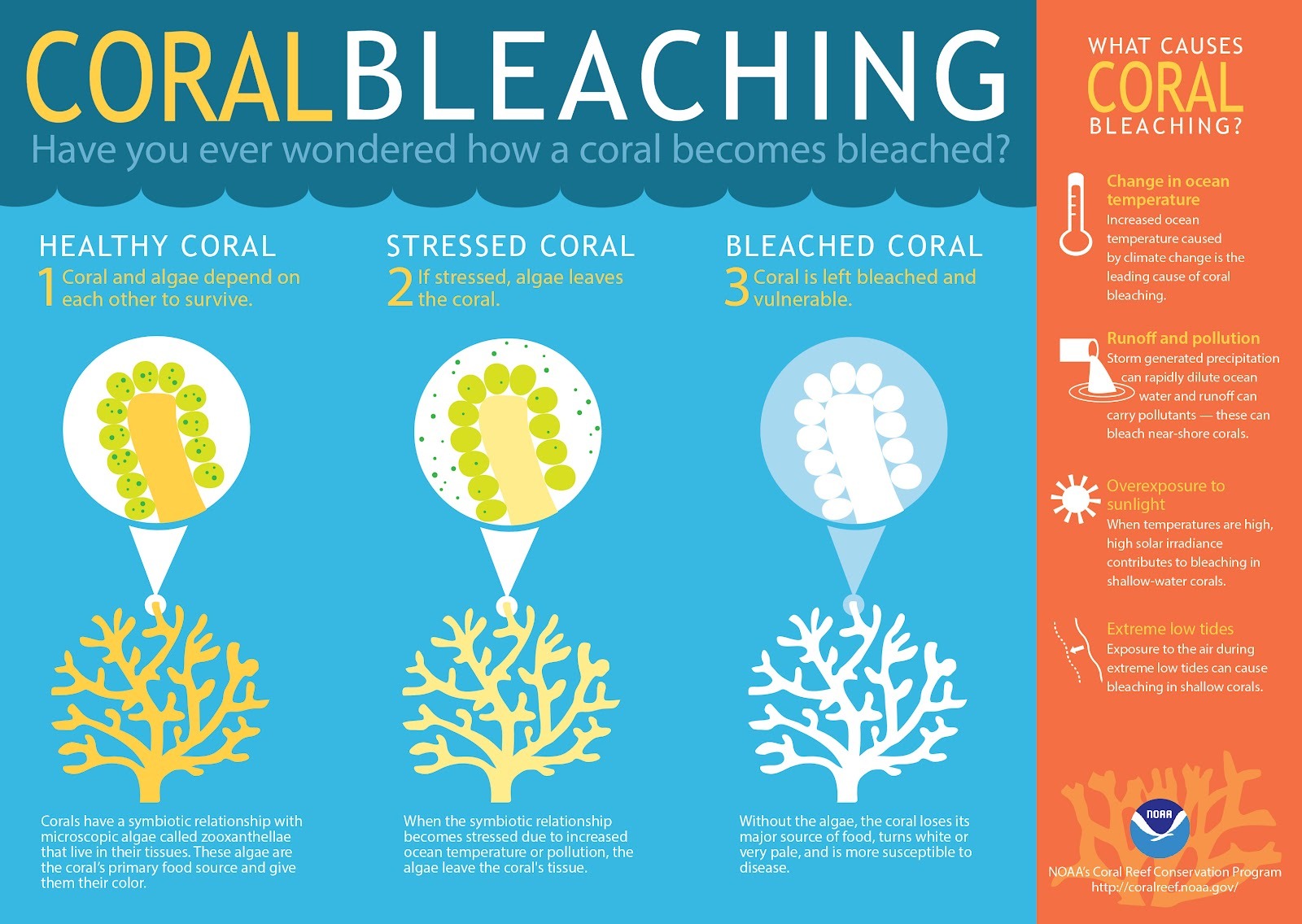
The loss of symbiosis for corals means that they have a reduced survival rate for disease. When the Zooxanthellae expels itself from the corals, this makes the reef unhealthy and lose the ability to fight disease, leading to their death. Even though disease and bleaching can happen simultaneously, disease is a more significant issue since it causes irreparable harm to coral tissue unlike bleaching. Bleaching is a stress response to ocean acidification while disease targets the coral tissue directly. This is a substantial issue because the bleaching and death of these corals has a directly proportional impact on the surrounding ecosystem. The biodiversity relying on these corals for shelter, food, or a mating ground are now losing this keystone species. Without these reefs, the surrounding biodiversity either dies or has to migrate to another area.
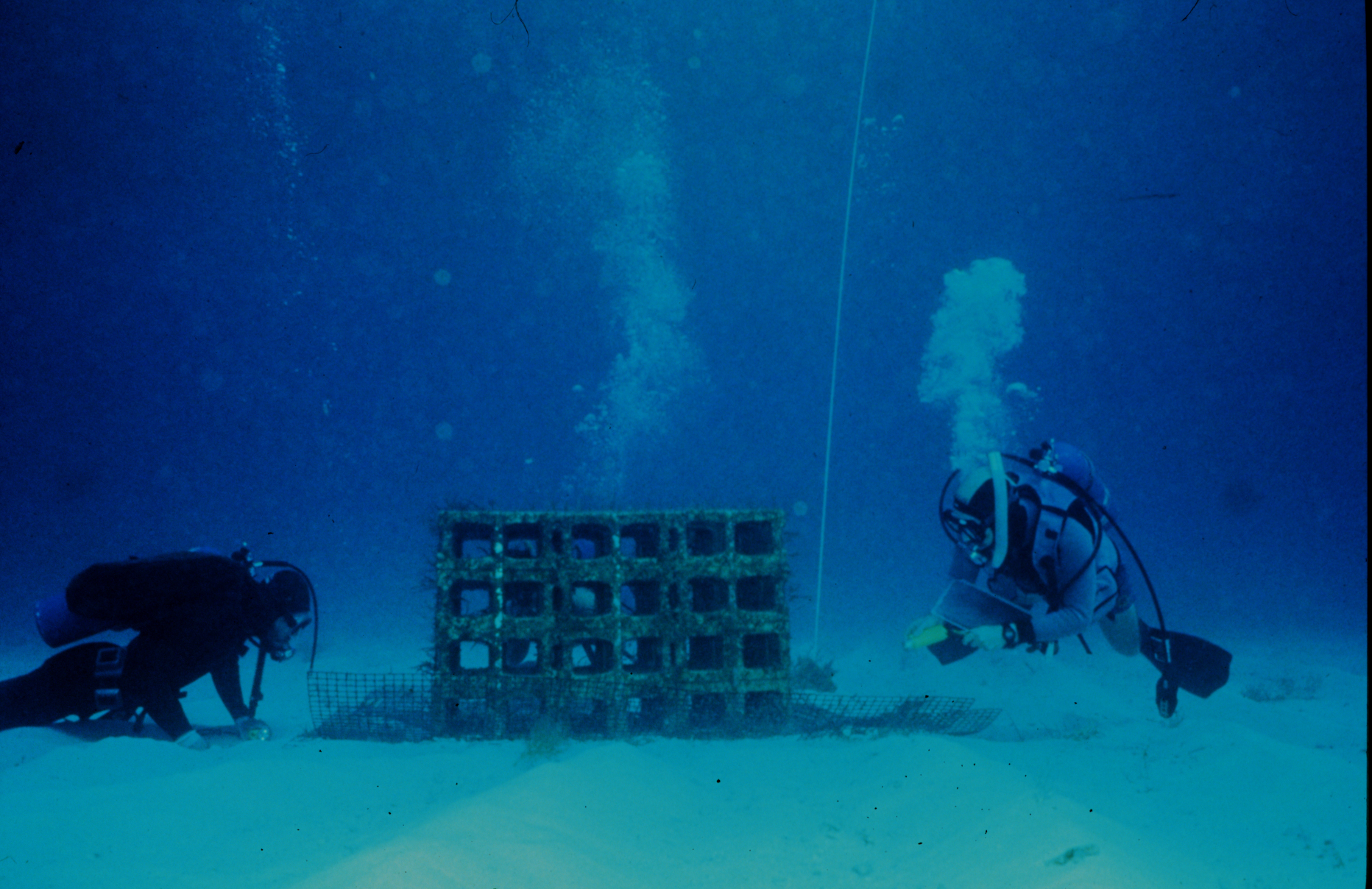
Finding a way to combat climate change is important but focusing on solving the health of these ecosystems to aid organism resilience is important as well. Artificial reefs are being planted to try to repopulate these dying reef populations. Lab grown coral polyps are tied onto structures on the bottom of the ocean to then have an entire artificial reef grow or allow another place for native coral to populate. In July 2023, Florida waters had reached a temperature of about 35°C. This has caused the artificial reefs to die since the threshold for coral survival in warming waters is typically no more than 30°C. The Australian Institute of Marine Science (AIMS) has been researching ways to create the most heat resilient corals. They are breeding heat tolerant corals and symbiotic microalgae together to create an algae that is resilient against oceanic warming.