Credit: Matt Curnock / Ocean Image Bank
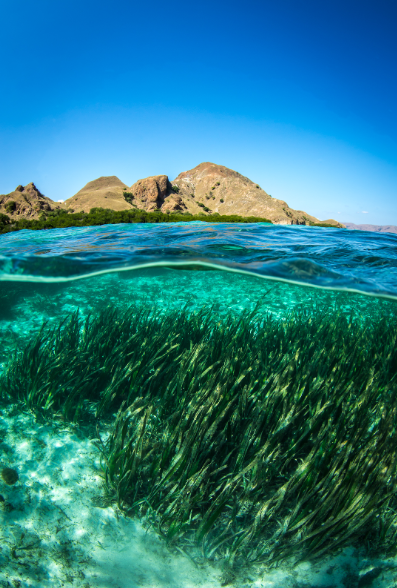
Most people assume that forests are the largest global source of carbon sink, and when we think of fighting climate change, we should focus on protecting our forests. However, forests are not the main source of carbon sink. The main source is the oceans, and a part of that is blue carbon. Blue carbon is the carbon that’s captured and stored by the ocean and coastal ecosystems. Mangroves, tidal marshes, and seagrass act as a blue carbon sink. Mangroves are tropical forests found where the land meets the sea and are flooded by tides. Tidal marshes are coastal wetlands with deep soils that build up with mineral sediments and organic material, then are flooded with ocean water brought in by tides. Seagrasses are submerged flowering plants with deep roots that are found in the ocean’s meadows along almost every shore. These areas are some of the most threatened ecosystems on Earth, with 340,000 to 980,000 hectares destroyed each year. This is the size of 636,000 to 1.8 million American football fields! Eventually, within the next hundred years, these ecosystems will be lost if nothing is done.
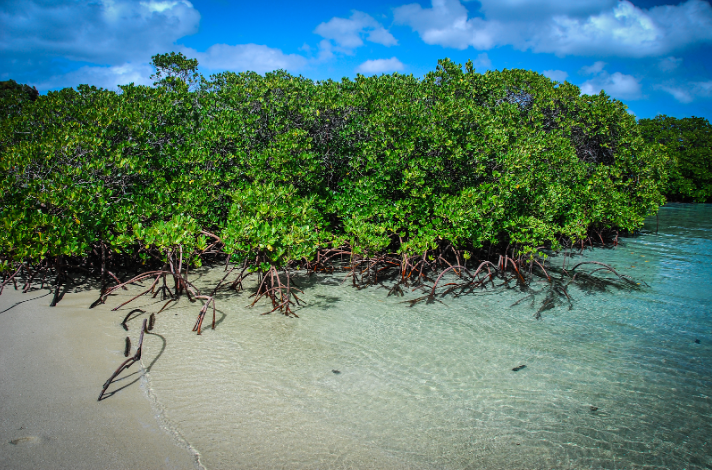
These ecosystems store blue carbon in sediments for a long period of time. They act as carbon sinks by capturing and holding the excess carbon, then storing it in local soils. Carbon is essential for organisms and is the fundamental building block of life on Earth and the planet’s formation. However, too much can be harmful to the environment. An excess of carbon, like carbon dioxide, traps more heat in the atmosphere, driving climate change. Climate change is long-term temperature and weather patterns shifts, resulting in sea level rise, extreme weather, and disruptions in ecosystems.
Credit: Liam McGuire / Ocean Image Bank
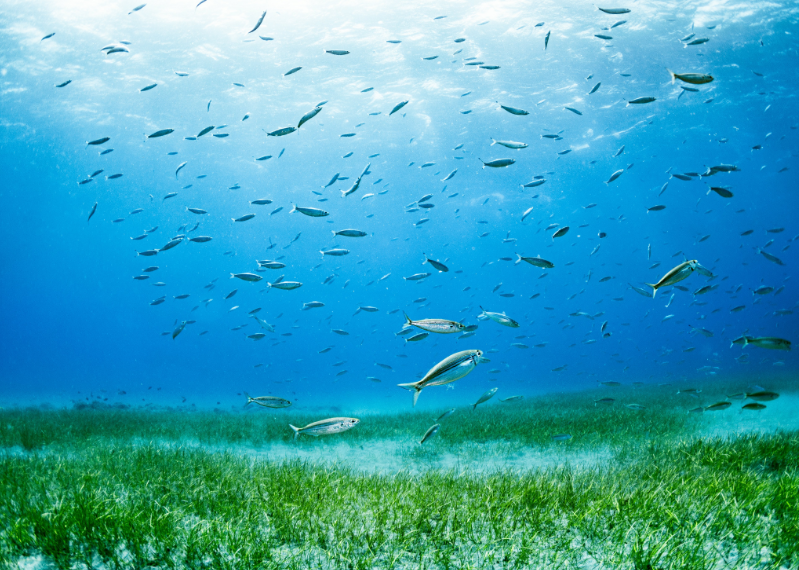
Human activities are the main cause of degradation and poor conservation of Earth’s blue carbon ecosystems. These activities are aquaculture, agriculture, mangrove forest exploitation, terrestrial and marine pollution, and industrial and urban coastal development. When these activities cause ecosystem destruction, they become a significant source of greenhouse gases like carbon dioxide and methane into the environment. The habitat destruction releases stored greenhouse gases, adding to climate change. Not only does it affect the atmosphere, but it also affects the biodiversity of marine life. Many creatures such as birds, fish, invertebrates, mammals, and reptiles, need these ecosystems to survive. Currently identified, there are 190 threatened species that need blue carbon ecosystems for survival.
Protecting blue carbon ecosystems is important to slow the detrimental effects of climate change. Policies, coastal management strategies, and tools for restoring blue carbon ecosystems are currently being developed and implemented. One method that is being used is through the economy. Blue carbon ecosystems are being used in the carbon market by buying and selling offsets, which produces a financial incentive to restore and conserve the ecosystems.
If you are interested in learning more about why protecting blue carbon ecosystems is important to reduce the effects of climate change, then check out the video and some of the articles below.
https://www.edf.org/bluecarbon