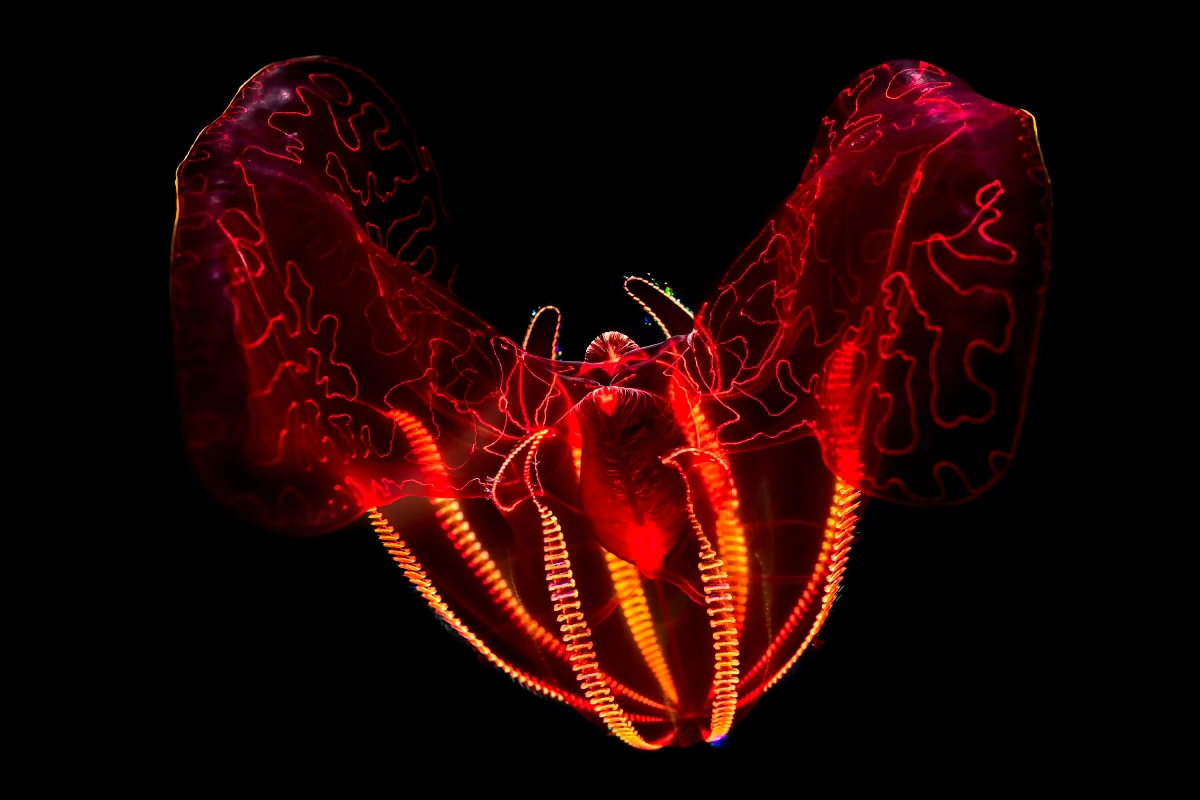
Bloody-Belly Comb Jellies (Lampocteis cruentiventer) were first discovered around 1979 off the Coast of San Diego, California, and were later first described and named by Monterey Bay Aquarium researchers, George Matsumoto and Bruce Robison in 2001.
These fascinating creatures primarily use bioluminescence and light-diffracting cilia for defense in the deep sea. They have rows of tiny, hair-like cilia arranged in comb-like plates called ctenes that beat rhythmically to propel the animal through the water. As they move, light reflects and diffracts off the cilia, which creates a shimmering, rainbow-like effect. However, the “sparkling” rainbow display seen on the outside is not bioluminescence, but rather light diffracting off the moving, cilia-covered combs. Their red stomach serves a different purpose: it masks the glow of any bioluminescent prey it consumes. Because red light is absorbed quickly in deep water and does not reach very far in depth, red becomes virtually invisible, making these animals appear black, effectively concealing them from predators. For additional self-defense purposes, they–like other comb jellies–may emit sudden bioluminescent flashes to startle or confuse predators.
These creatures inhabit the mesopelagic (midwater) zone, typically ranging from 250-1,500m meters deep. They live in waters where sunlight barely penetrates and conditions are cold and high-pressure. They are found in the North Pacific Ocean, ranging from Canada down to California and across to waters near Japan. While many comb jellies eat plankton, crustaceans, and small fish, the specific diet of the Lampocteis is still largely unknown. Researchers believe their diet likely consists of bioluminescent organisms, such as copepods and various larvae.
Like other ctenophores, they capture prey using specialized sticky cells called colloblasts on their tentacles, rather than stinging cells like jellyfish. These colloblasts release an adhesive substance that traps prey upon contact.
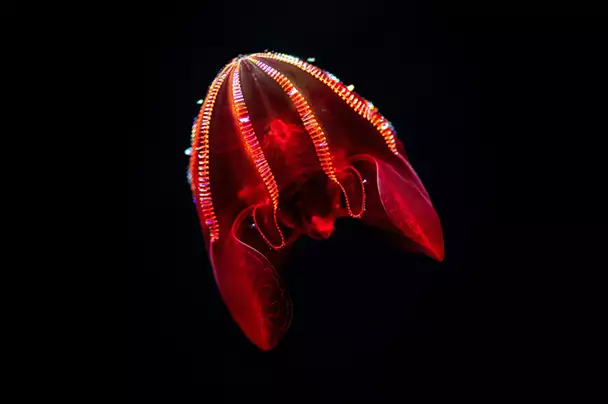
Bloody-belly comb jellies (Lampocteis) differ from the more commonly seen, transparent comb jellies in both coloration and structure. In addition to their deep red internal pigmentation, they feature a distinct deep body notch between the comb rows and blind-ending internal canals. Despite increasing study through remotely operated vehicles (ROVs), many aspects of their life cycle, reproduction, and ecological role remain unknown, highlighting how much there is still to discover about life in the deep ocean.
Lastly, I highly recommend checking out the NOAA video recorded by those on Dive 04 of the 2021 North Atlantic Stepping Stones expedition. The video displays a yellow (colors can vary), Bloody-belly ctenophore drifting through the water. Additionally, Monterey Bay Aquarium has released a video of a dark red bloody-belly comb jelly featured in their “Into the Deep” exhibition, offering another captivating look at this remarkable deep-sea species.