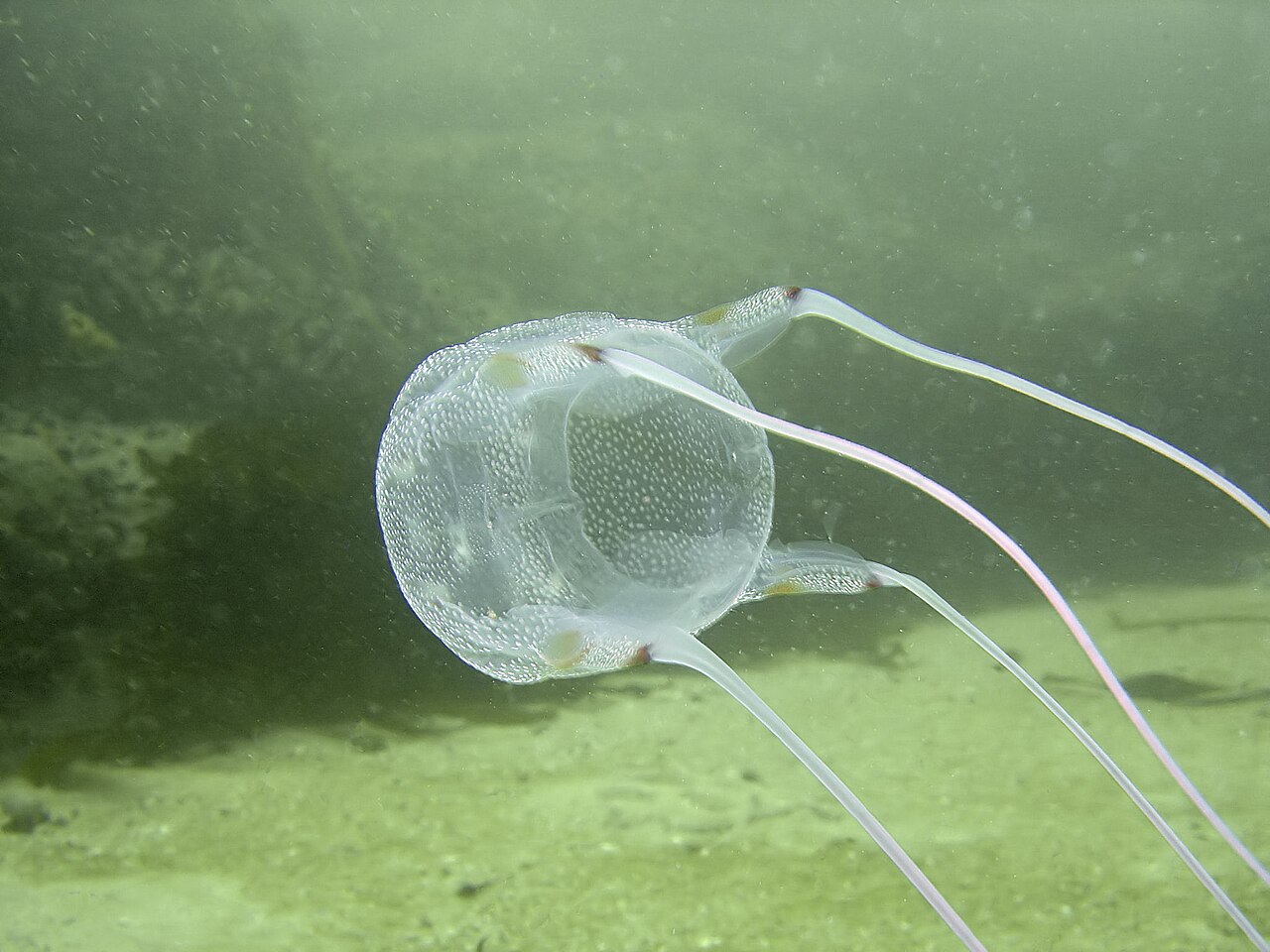
If you enjoy spending time at the beach, you’ve most likely heard a great deal about jellyfish, but there is one that regularly closes beaches, or even entire dive zones after just a few sightings! The box jellyfish, an umbrella term for jellyfish in the class Cubozoa, with around 50 species having been described. Members of this class are known for being some of the most venomous creatures on the planet, especially noting their physical characteristics.
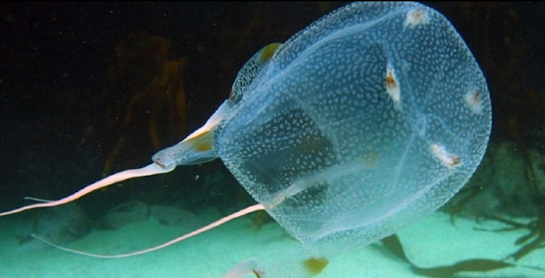
Cubozoans all have relatively similar body plans, with a “box” shaped bell, transparent/transleucent bodies, four distinct clusters of tentacles, and the presence of eyes (yes, EYES). The tentacles are all held on four muscular pads called pedalia, used for locomotion, and they can hold up to 15 tentacles per pad. The presence of eyes in itself isn’t unheard of for other jellyfish, but Cubozoans have around twenty-four complex eyes, some even equipped with retinas and corneas, but overall able to capture their environment enough to avoid obstacles, as well as hunt for food.
Size is also a distinguishing factor among cubozoans, with some fully grown individuals having a bell diameter from 1-35 cm. One among the Cubozoans, the Irukandji, is fully grown at around 1 cm, or the size of a sugar cube. In classic Aussie fashion, this species also happens to be one of the most deadly members of the Cubozoan class, with a separate syndrome being named after the effects of its sting.
Box jellyfish are often seen in the Indo-Pacific, especially around the Philippines, Malaysia, and very frequently in Northern Australia. Most beachgoers in these areas are familiar with “stinger seasons”, or times of the year when they are most frequently found. These times vary greatly depending on the location, though they tend to last 6-8 months, and are usually concurrent with warmer temperatures, or the wet season. More often than not, public beaches in the box jellyfish range will put up warning signs on beaches, because of increased sightings or stings from these box jellyfish.
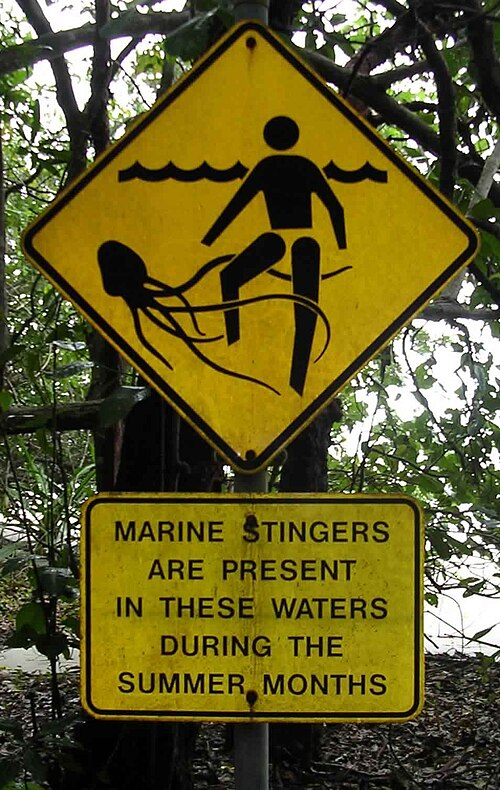
Wikipedia Contributors. “File:Marinesting1.Jpg.” Wikipedia, Wikimedia Foundation.

Despite warnings, there are many incidents related to Cubozoan stings per year. Stings themselves can number in the thousands, but only around 50-100 deaths actually occur per year. This has to do with the length of tentacles that swimmers get exposed to on an average sting. The largest of the Cubozoans, Chironex fleckeri, has tentacles that grow to about 3 meters(around 10 feet), but it takes roughly that same length of tentacle exposure to prove fatal to a fully grown human. However, this can realistically be shortened down due to the fact that most Cubozoans have more than one tentacle per pad.
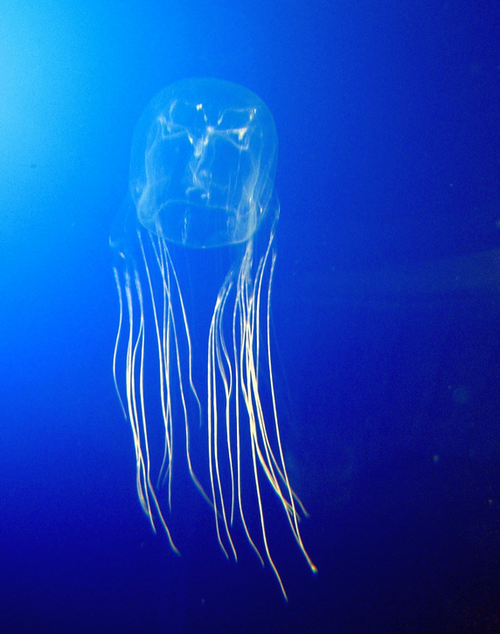
Wikipedia Contributors. “File:Avispa Marina Cropped.png.” Wikipedia, Wikimedia Foundation.

Now all this may sound a bit frightening, but it is important to note that these animals are not out to sting you, nor are they a reason to never enter the ocean again. If you are aware of their presence, and you understand what the dangers truly are, as well as where to find them, they aren’t as dangerous as they are made out to be.