At 200m, or about 656 ft, down you enter the infamous Deep Sea. This vastly unexplored part of our Earth makes up for over 90% of the oceans’ livable space. Light from the sun can no longer be seen at these depths, it is pitch black to the human eye. Except for the occasional whale fall, Abyssal plains are a never-ending “desert” of nothingness. The only way to reach these alien-like worlds are by Remotely Operated Vehicles, or ROVs. Yet despite all these challenges, the deep sea offers a plethora of unique organisms endemic to these harsh conditions. One of the most challenging of these deep sea ecosystems is known to many as black pools of death.

Brine pools are deep sea craters filled with extra salty water that allow it to remain separate from the rest of the ocean. These salty black lakes have acquired many names: Underwater lakes, Brine pools, Goo Lagoons, and even Lakes of Death. Not only is there higher salinity here, but also higher temperatures and more acidic water than the surrounding ocean. So salty in fact that the brine can be 3-7x more salty than the water surrounding it. The formation of these mysterious pools can occur in many ways. In areas like the Arctic, they can form concurrently with sea ice. As sea water freezes, salt is left behind. These salt deposits accumulate on the seabed in craters where they can dissolve into water. The more salt water has, the more dense it is. This is why this brine is able to sink and accumulate at the bottom of underwater craters. In the Gulf of Mexico salt deposits from a dissolved ancient ocean are reawakened and form similar pools. The salty water of these pools proves hazardous for many organisms. In fact, the reason some scientists refer to them as lakes of death is because the inside and surrounding area of these pools are littered with the carcasses of many different species. Crabs, sea cucumbers, arthropods, and fish have all succumbed to the brutal nature of these underwater lakes. But not all life is lost here. Scientists have discovered a type of bivalve that not only survives, but thrives on the lakebeds of these underwater death traps.
Located on the outskirts of many brine pools live a type of bivalve called Apachecorbula muriatica (See photo below). Unlike most organisms which can not tolerate the high salinity, high temperatures, low pH, and low oxygen levels of brine pools, these small clams have adapted to the harsh conditions. In fact, this particular species has only been found around such brine pools. No other live organisms except for bacteria and archaea have been found living around the pools as the bivalves do. These unique clams astonished scientists by not simply living, but thriving in an environment so harsh.

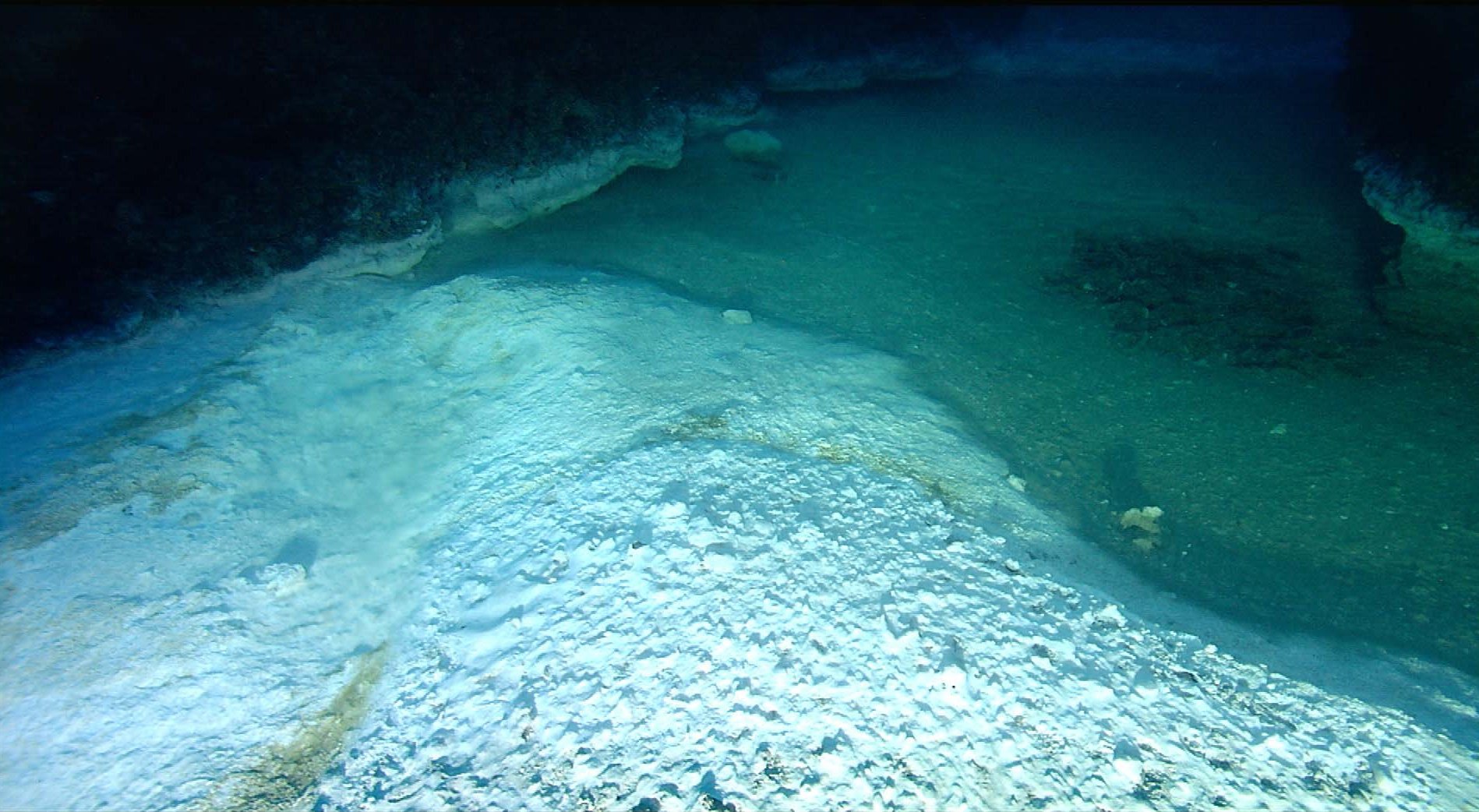
Featured Image: a Brine pool in Flower Garden Banks National Marine Sanctuary. (Image credit: Rhode Island Institute for Archaeological Oceanography; Secrets of the Gulf Expedition. NOAA/NOS/NMS/FGBNMS. | Institute for Exploration.)