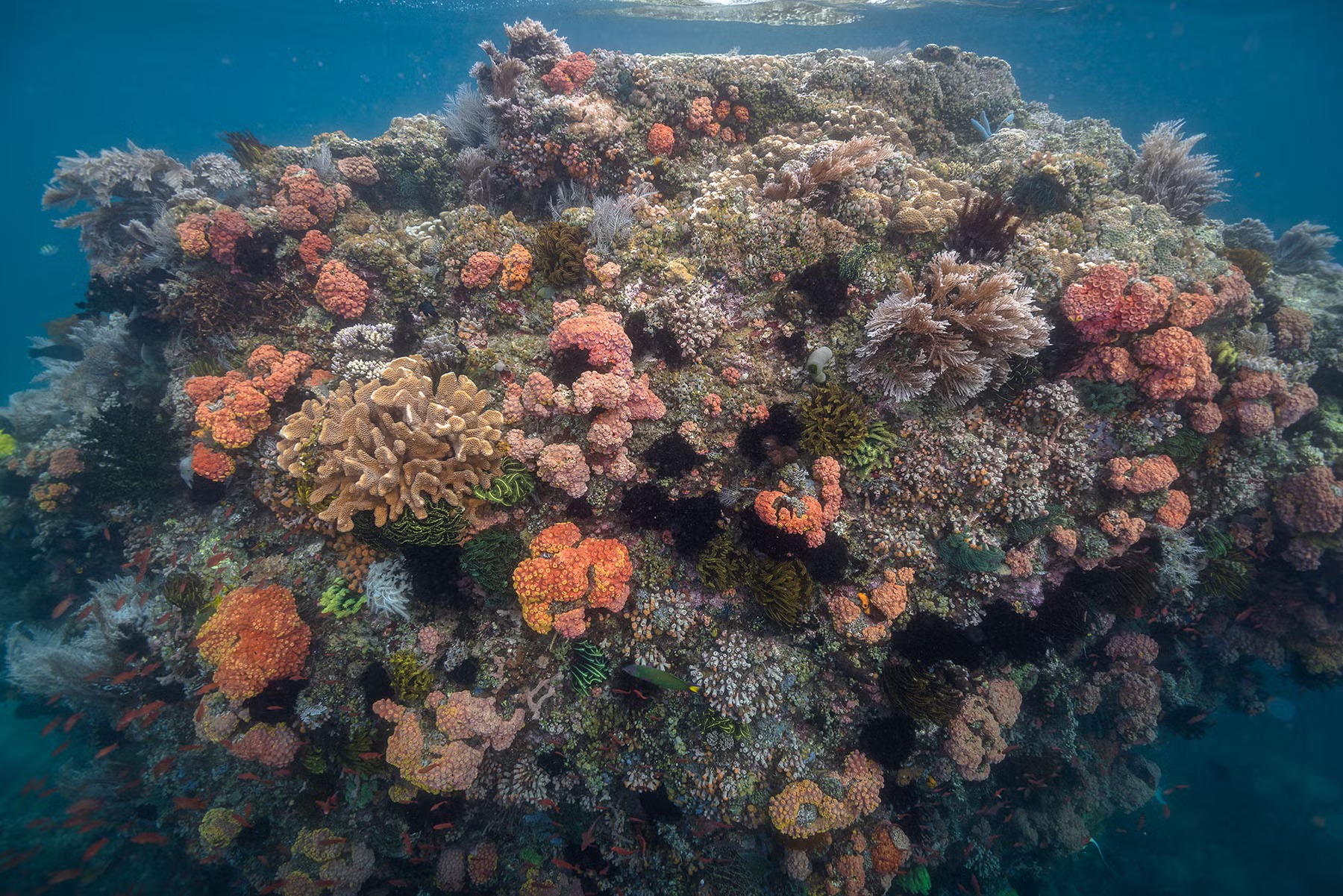
Pictured above is an image of a super reef in the Philippines. Caputo, A. (2022, April 28). Region of “super corals” discovered. UT Austin News – The University of Texas at Austin. https://news.utexas.edu/2021/09/15/region-of-super-corals-discovered/
Coral reefs are some of the most colorful, diverse, and important ecosystems on the planet. They’re home to thousands of species of fish, absorb wave energy that protects our coastlines, and support the livelihoods of millions of people. But what many people don’t realize is just how fragile corals really are, and how quickly they’re disappearing. Rising ocean temperatures are causing massive bleaching events that leave once thriving reefs pale, brittle, and lifeless. In some regions, entire ecosystems have collapsed in just a few months.
This is where “super corals” come in. Super corals are defined as those that have demonstrated the ability to tolerate or recover from stress and successfully reproduce after a stressor, such as ocean warming. Some naturally grow in warmer waters and already have built-in resilience. Others are created through assisted evolution, where scientists expose corals to gradually warmer temperatures so only the toughest survive. Researchers can also pair corals with special heat-tolerant algae, giving them an extra boost of protection. These methods don’t change what corals are. They simply help them adapt faster than climate change is forcing them to.
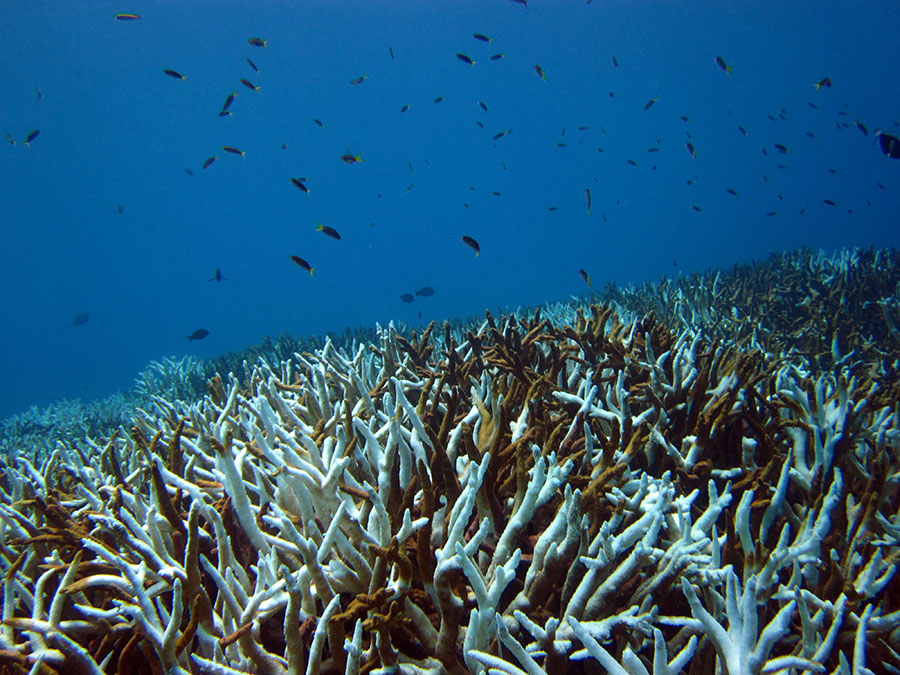
Above is an image of coral that has undergone some coral bleaching. Credit: Kevin Lino, NOAA/NMFS/PIFSC/ESD.
So why does this matter? Healthy corals are essential for reef stability, just like kelp, they are essential for kelp forests. Reefs built by strong, living corals provide food, shelter, and breeding grounds for thousands of marine organisms. When corals die, fish populations drop, algae takes over, and the entire ecosystem begins to unravel. Super corals have the potential to keep reefs alive long enough for natural recovery to take place and for global temperatures to hopefully stabilize. Here, coral communities’ species have been found to tolerate extreme temperature conditions: above 6 degrees their average summertime maximum for around three to four weeks (Fine et al., 2013). This is significant because most corals can only tolerate temperatures above 1 to 2 degrees above the average summertime maximum, and can only do so for 2 to 4 weeks (e.g.Hoegh-Guldberg, 2011).
Unfortunately, super corals are not a perfect solution. They can’t outpace climate change forever, and they can’t rebuild every reef on Earth. There are also concerns about losing genetic diversity or accidentally creating corals that outcompete natural populations. But for now, they offer something we desperately need, which is time. Time for reefs to recover, time for scientists to restore damaged areas, and time for us to reduce the greenhouse gas emissions that caused this crisis in the first place.
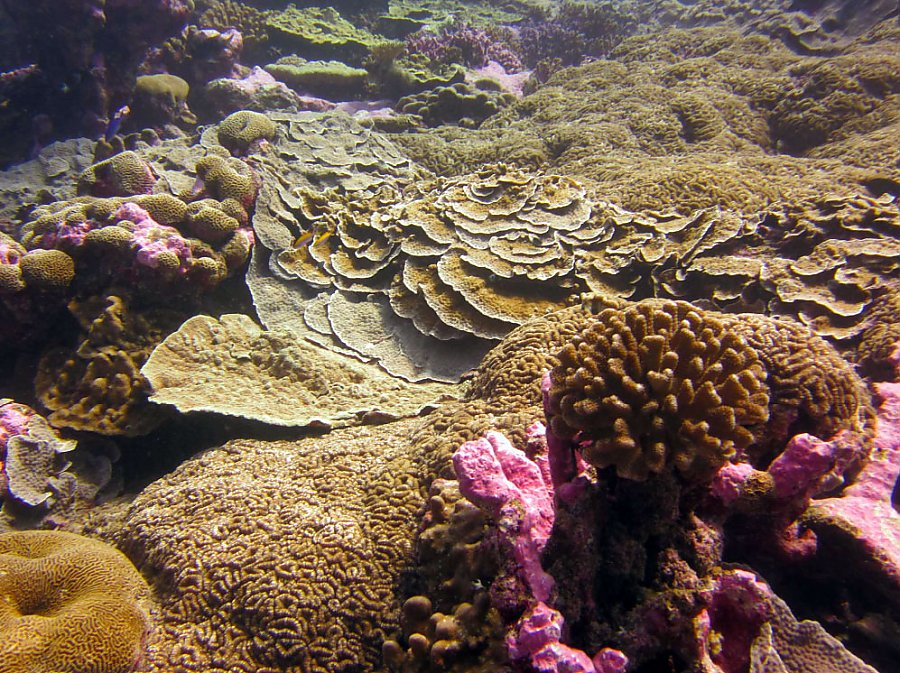
Pictured above is a super coral. It’s vibrant colors indicate that it is thriving. Credit: Michael Fox, Cohen Lab, WHOI
The future of coral reefs depends on the choices we make today. They are extremely important for marine ecosystems and can be a potential tool in the fight to preserve or restore coral ecosystems. Supporting marine conservation efforts, reducing pollution, and protecting coastal environments are all part of the solution. Super corals are a powerful tool, but they work best alongside strong climate action. Their story is a reminder that while humans have played a major role in damaging these ecosystems, we also have the ability and responsibility to help save them.